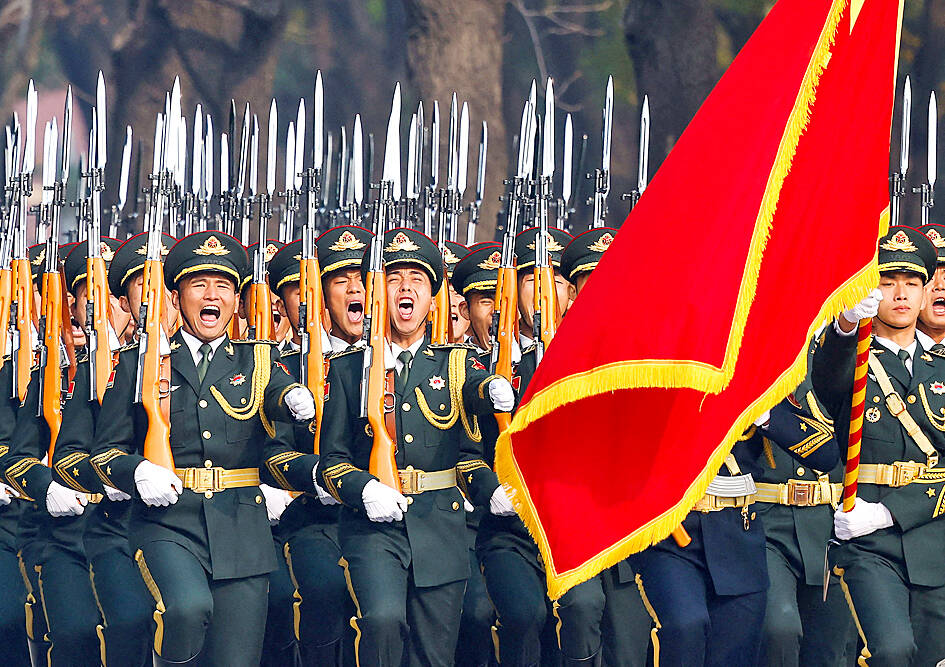
A German Marshall Fund report models 'minor conflict' and 'major war' scenarios between China and Taiwan through 2030, projecting severe military and economic losses — including PLA losses of more than half its active ground forces (roughly 100,000 troops), Taiwanese casualties of ~50,000 military and ~50,000 civilians, and US/Japan casualties — and economic damage estimates ranging from $2–3 trillion (Rhodium) up to $10 trillion (Bloomberg) in limited escalation. The study warns of potential near‑total trade embargoes, major sanctions, accelerated global de‑risking and supply‑chain shifts away from China (exports ~20% of GDP), disruption to energy and raw material imports, and significant social and political instability in China, representing substantial tail risks for global markets and regional security.
Market structure: A conflict risks accelerating de-risking away from China and re-shoring, benefiting US defense contractors (LMT, NOC, RTX, GD), semiconductor-equipment makers (ASML.AS, LRCX, AMAT), and logistics/near-shore manufacturers in Vietnam/India/Mexico. Direct losers are Chinese export-oriented sectors, Hong Kong financial intermediation, and Taiwan incumbents tied to island operations; expect China’s export share contribution to GDP (≈20%) to face a 10–30% effective hit in a major escalation over 6–24 months.
Risk assessment: Tail scenarios include a major war with multi-trillion-dollar economic costs (article estimates $2–10tn) and sustained sanctions causing >5–10% annual GDP contraction and capital flight; immediate shocks (days) manifest as risk-off moves, short-term (weeks–months) as supply-chain rerouting, long-term (years) as bifurcated trade blocs. Hidden dependencies: rare-earths, energy imports, and Taiwan’s semiconductor capacity create contagion channels; catalysts include miscalculation, US military engagement, and escalatory cyberattacks.
Trade implications: Tactical moves—buy defensives and security hedges, short China equity beta, and use volatility and rates hedges. Expect cross-asset: USD and JPY strength, Treasuries rally (TLT) in days, oil and gold spikes on supply/war premium; semiconductor-equipment demand should rise secularly as firms re-shore producing 10–30% revenue upside potential over 12–36 months.
Contrarian angles: Consensus underestimates selective upside in offshore contract manufacturers in Southeast Asia and semiconductor-equipment makers because firms will pre-emptively accelerate capex and inventory restocking even absent full war. The market may over-penalize Taiwan chip leaders (TSM) short-term—consider hedged long-exposure rather than outright avoidance; risk of rapid normalization exists if deterrence holds, creating mean-reversion opportunities within 3–9 months.
AI-powered research, real-time alerts, and portfolio analytics for institutional investors.
Request DemoOverall Sentiment
strongly negative
Sentiment Score
-0.80
