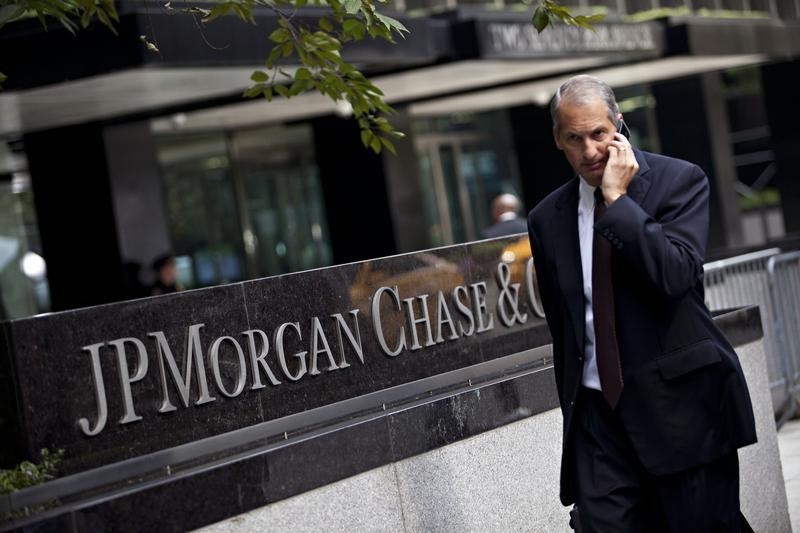
JPMorgan initiated Seaport Therapeutics at overweight with a $42 price target versus the $17.50 share price, implying substantial upside if its Glyph platform succeeds. The company’s lead programs, GlyphAllo and GlyphAgo, have shown early proof-of-mechanism/proof-of-concept in depression and anxiety, while the balance sheet is strong with a 17.46 current ratio. Seaport also recently priced its IPO at $18 per share, raising about $254.9 million gross, though the stock remains unprofitable with trailing EPS of -$10.04.
The immediate market reaction is less about the drug platform itself and more about the de-risking signal embedded in the coverage: a credible bulge-bracket initiation can compress the discount rate applied to pre-revenue biotech, especially right after an IPO when supply is still being digested. That said, the post-IPO upside is likely to be driven by a narrow window of “evidence beats valuation” trading over the next 1-3 quarters, not by near-term fundamentals, so the stock is likely to remain highly headline-sensitive around clinical updates and lockup expiration.
The second-order winner is not just SPTX but the broader early-stage neuropsychiatry basket, because a successful platform story can re-rate adjacent companies that have been priced as single-asset binary bets. Goldman’s separate initiation matters because dual-initiation coverage can create a temporary sentiment floor; if the name holds above IPO price through the first few trading weeks, it becomes a reference comp for other platform-biotech IPOs, tightening financing conditions across the cohort.
The main risk is that the current narrative assumes platform translation from mechanistic logic to commercial scale, but the market typically punishes any hint that clinical signal is not durable across broader, less-selected populations. Over the next 6-12 months, the key inflection is whether the company can convert “proof-of-mechanism” into a believable path to registration-grade efficacy; failure there would likely trigger a rapid multiple reset because the balance sheet strength mainly buys time, not certainty. The contrarian view is that this may be a good stock but a mediocre trade if enthusiasm has already pulled forward most of the near-term upside.
For JPM and GS, this is marginally positive for advisory/franchise credibility in early-stage healthcare, but not enough to move earnings; the real value is in potential follow-on mandates if the IPO tightens and the stock trades well. The cleaner expression is to use SPTX as a sentiment vehicle rather than a standalone fundamental long until the next clinical catalyst clarifies whether the platform deserves a premium versus other CNS names.
AI-powered research, real-time alerts, and portfolio analytics for institutional investors.
Request DemoOverall Sentiment
mildly positive
Sentiment Score
0.45
Ticker Sentiment
