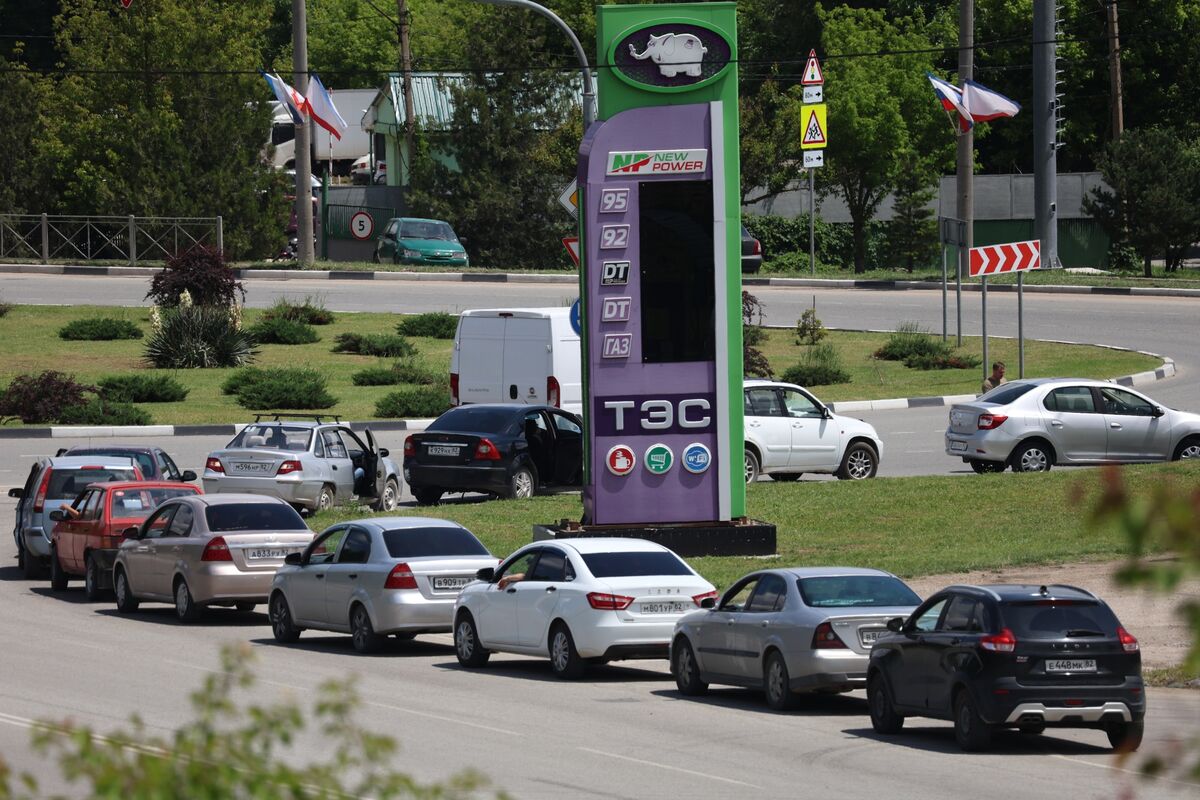
Russia-occupied Crimea is suspending fuel sales at filling stations and restricting supplies to essential state services starting Sunday 9 a.m. local time amid Ukrainian drone strikes on Russian refineries. The disruption follows overnight attacks that reportedly killed at least four people, highlighting escalating wartime pressure on energy infrastructure and regional logistics. The news is materially negative for local fuel availability and has broader geopolitical and energy-security implications.
This is less a Crimea story than a signal that the logistics backbone feeding Russia’s western war economy is becoming less reliable. Fuel rationing in an occupied territory implies the system is moving from resilience mode to triage mode, which tends to hit civilian mobility first and military tempo later; the second-order effect is a widening gap between headline oil availability and usable fuel distribution. That matters because refinery disruption usually shows up with a lag in transport, agriculture, and local government services, so the operational damage can compound over the next 1-3 weeks even if strikes pause.
The immediate beneficiaries are non-Russian suppliers of refined products and any assets tied to alternative regional supply routes, but the bigger market implication is a modest upward skew in diesel and middle-distillate risk premia rather than crude alone. Russia can redirect some barrels, yet refinery outages and localized fuel controls are exactly the kind of bottleneck that raises inland basis volatility and creates episodic shortages without necessarily moving Brent dramatically. If attacks continue, the more material macro transmission is through higher insurance/transport costs and a tighter European diesel balance, especially into autumn maintenance season.
Tail risk is asymmetric: if Ukraine sustains the strike cadence and Russia is forced into broader product rationing, the market could quickly reprice a larger supply disruption premium over days, not months. The reversal case is also clear: a temporary pause in strikes, faster repair crews, or administrative fuel release can normalize visible shortages while leaving latent capacity damage in place. The key contrarian point is that consensus may overfocus on crude and underappreciate refined products and defense logistics; the first-order price response may be muted, but the strategic damage to Russian internal mobility is the real constraint.
For portfolios, this is a better expression through distillates and defense than outright crude beta. The setup favors buying upside in diesel-sensitive proxies on any pullback, while keeping energy-equity exposure modest unless broader refinery outages become evident. If the attacks broaden, the trade shifts from tactical to structural: higher defense spending, higher transport friction, and a persistent risk premium in European energy inputs.
AI-powered research, real-time alerts, and portfolio analytics for institutional investors.
Request DemoOverall Sentiment
strongly negative
Sentiment Score
-0.65
