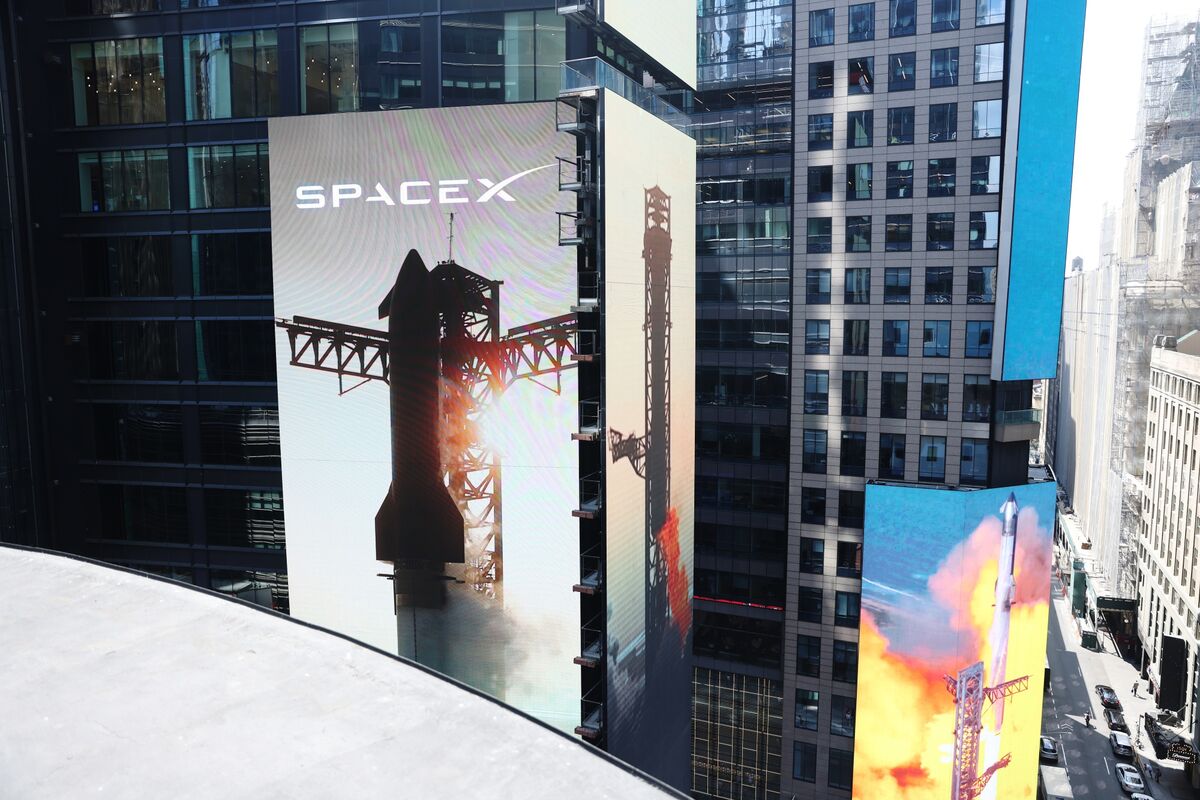
SpaceX shares rose as much as 7.7% to $173.30 in premarket trading after their blockbuster IPO Friday, extending a 19% first-day gain. The company closed last week with a market value of about $2.1 trillion following its record $75 billion initial public offering. The move reflects strong investor demand and momentum rather than new operating fundamentals.
This is less about a single issuer and more about the market re-pricing the entire private-to-public late-stage complex. A premier-name IPO ripping on day two typically widens the valuation gap for the next tier of private tech/space/defense-adjacent names, but it also tightens financing conditions for anyone still stuck in the private market: employees, secondary holders, and crossover funds now have a fresh mark to defend. The first-order winner is sentiment; the second-order winner is every company with a similar “scarcity + mission-critical infrastructure” pitch that can now argue for a higher clearing multiple in the next financing round.
The more interesting trade is in market structure rather than fundamentals. When a flagship IPO gaps higher, it forces under-owned growth funds to chase, while options dealers who sold early upside likely become incremental buyers into strength. That creates a multi-week reflexive bid, but it also plants the seed for a sharp reversal once the initial post-IPO float expands and insider/lockup supply becomes the dominant marginal flow. In other words, the next 5-15% move may still be up, but the expected path is increasingly dependent on liquidity rather than business execution.
The contrarian view is that the market is probably over-indexing on “new era” scarcity and underweighting how quickly supply normalizes in a mega-IPO. A $2T+ valuation compresses the future return profile unless growth, margins, and capital intensity all surprise to the upside over multiple years. Near term, the biggest risk to the trade is not bad fundamentals but a simple tape change: if broader growth momentum rolls over, this kind of crowded prestige deal can de-rate fast because there is no earnings anchor to stabilize sentiment.
For positioning, the clean expression is to fade weak, non-profitable growth against the strongest quality names rather than short the IPO outright. The IPO itself can stay elevated for weeks, but the asymmetric risk is that secondary supply and profit-taking hit just as the broader market loses its bid. That makes the setup better for tactical relative-value and options structures than for naked shorting.
AI-powered research, real-time alerts, and portfolio analytics for institutional investors.
Request DemoOverall Sentiment
strongly positive
Sentiment Score
0.72
