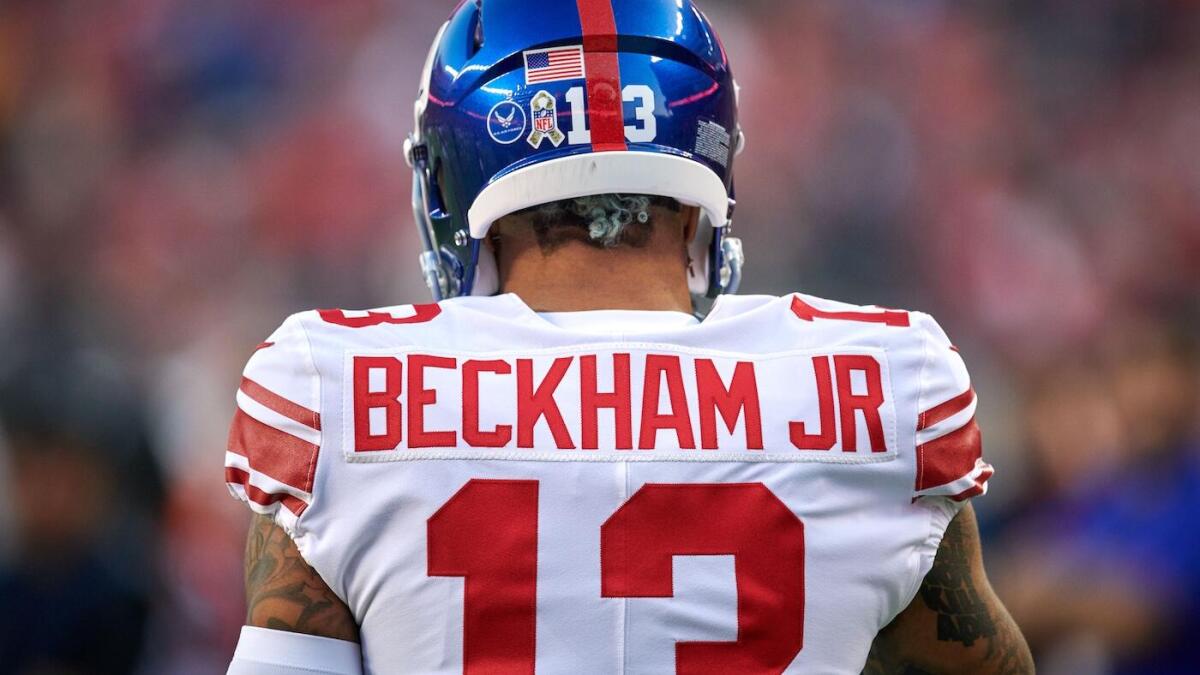
Odell Beckham Jr. signed with the New York Giants, marking a reunion after eight years away and his second workout with the team this offseason. The article frames the move as a depth addition rather than a No. 1 role, with Beckham likely competing for a roster spot behind Malik Nabers and other receivers. The signing is more notable for roster context and fan interest than for immediate market impact.
This is not a nostalgia trade; it is a coaching-familiarity and depth-arbitrage move. The key signal is that the staff is prioritizing a low-cost veteran who can compress uncertainty in a room that already has a defined target hierarchy, which usually means the marginal snap share for the newcomer is small unless injuries hit. That makes the signing more relevant as a roster-insurance hedge than as a needle-mover for the offense.
The second-order effect is on the fringe receivers and return-game usage. A veteran with name recognition can crowd out younger camp bodies because coaches tend to prefer reliability over upside once the preseason stress test starts, so the real losers are the WR5/WR6 types whose value is almost entirely tied to camp reps and special-teams versatility. If the team is already leaning on multiple established pass-catchers, Beckham’s main utility is as a substitution layer if one of the top options misses time, not as a weekly volume driver.
The market may be over-indexing on headline value and underpricing role risk. A successful outcome is modest: a handful of chain-moving snaps, situational red-zone usage, and avoiding negative locker-room externalities. The failure mode is clearer: if he lacks burst or cannot separate in camp, the contract becomes a quick-pruning exercise, and any fantasy/prop enthusiasm should fade by late August rather than waiting for opening-week confirmation.
Contrarian view: the signing is less about Beckham's remaining talent than about management confidence in the staff's ability to extract one last utility season without disrupting the room. That lowers the probability of a true roster miss, but it also caps upside because the team is signaling a floor, not a ceiling. In that sense, the move is structurally conservative: the downside is mostly opportunity cost, while the upside is limited unless injuries turn him into an unexpectedly meaningful target-share beneficiary.
AI-powered research, real-time alerts, and portfolio analytics for institutional investors.
Request DemoOverall Sentiment
neutral
Sentiment Score
0.05
