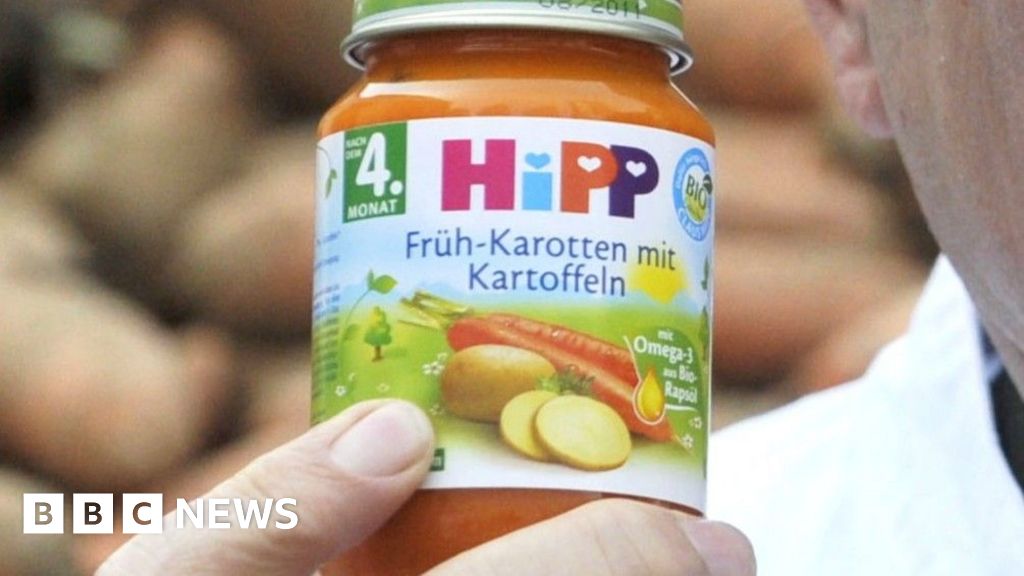
HiPP has recalled its entire range of jarred baby purées sold in more than 1,500 Spar stores across Austria after contamination and tampering fears, warning the products could be "life-threatening." Customers can return affected jars for a full refund, and the recall also covers Eurospar, Interspar and Maximarkt locations. The issue appears limited to Austria and does not affect HiPP products sold in other countries or the company's baby formula.
This is primarily a trust shock, not just a one-off recall. For a premium infant brand, the damage comes from the asymmetry between a localized event and a broad consumer inference: once parents perceive tampering risk, they often rotate entire categories to private label or pharmacy-channel alternatives, and that switch can persist for quarters because baby food is a habit purchase with low trial tolerance.
The near-term beneficiary is the retailer network’s competitors, not just the direct baby-food peers. Supermarkets with stronger own-label baby nutrition, pharmacy chains, and e-commerce grocers should see modest category share gains as consumers seek perceived safer substitutes; the second-order effect is margin pressure for branded shelf space if retailers increase compliance costs, security checks, and promotional support to rebuild traffic.
The key risk is escalation from reputational damage to litigation and regulatory tightening. If authorities treat this as a food-safety breach rather than an isolated tampering incident, the overhang can extend 3-6 months via inspections, SKU removals, and broader supplier audits, with knock-on costs to packaging, traceability, and insurance across the infant nutrition aisle. A faster reversal would require public identification of the tampering source and visible remedial controls, but absent that, the category remains vulnerable to precautionary pullbacks from parents.
Contrarianly, the market may over-penalize the entire branded baby-food set because contamination here is largely a channel-specific confidence event rather than a formulation problem. That creates a selective opportunity in companies with diversified geography and stronger control over direct distribution; the bigger concern is not earnings leakage from the recalled products themselves, but the possible halo effect on adjacent infant formula and prepared food categories if consumers generalize the safety issue.
AI-powered research, real-time alerts, and portfolio analytics for institutional investors.
Request DemoOverall Sentiment
strongly negative
Sentiment Score
-0.65
