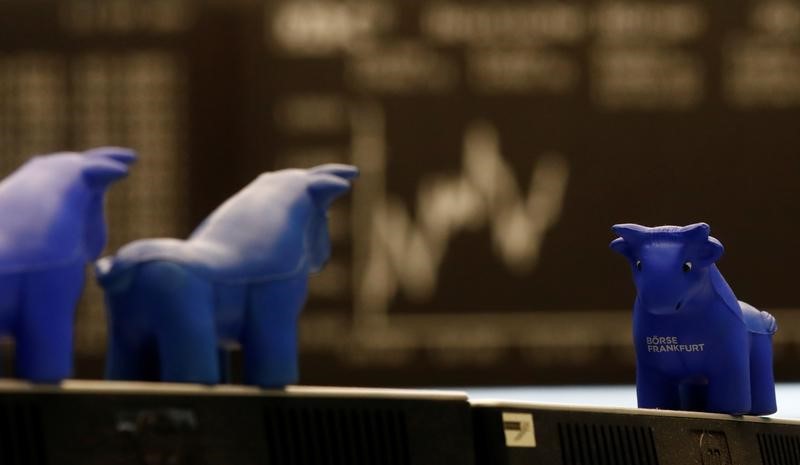
European equities were mostly flat to slightly higher, with the STOXX 600 up 0.1% near a record close and major bourses rising between 0.2% and 0.6%. The rally is being tempered by uncertainty around the U.S.-Iran truce, while falling crude prices pressured energy-heavy markets such as the FTSE 100. STMicroelectronics fell 2.5% after announcing a $1.5 billion dual-tranche convertible bond offering.
The market is pricing the truce as a de-risking event, but the more important second-order effect is that it removes an oil-volatility tax from European cyclicals just as margins were being stress-tested by higher financing costs. That should help domestic winners with energy-heavy cost bases more than the index-level move suggests, while the UK remains comparatively handicapped because its benchmark is still an implicit energy beta trade via Shell and BP. If crude keeps fading for even 2-4 weeks, the relative performance gap between continental Europe and the FTSE 100 could widen further despite the broader rally.
The bigger macro question is whether lower geopolitical risk actually improves earnings quality enough to offset the fact that Europe still lacks a genuine secular growth engine. The recent multiple expansion has probably pulled forward 1-2 quarters of good news, so the next catalyst is not peace headlines but margin resilience under elevated wages, sticky rates, and weaker pricing power. That creates a subtle loser/winner split: import-sensitive sectors and industrials should benefit from lower input costs, but energy, defense, and any company that used the conflict to justify pricing discipline may see revenue pressure sooner than consensus expects.
STM’s convertible issuance looks less like a simple one-off funding event and more like a signal that management is choosing balance-sheet flexibility over near-term equity upside into a still-choppy semiconductor tape. In a market rewarding AI-capex beneficiaries, a dilutive financing can underperform for weeks even if the fundamental story remains intact. The contrarian setup is that the selloff may be overdone if investors are misreading the issue as distress rather than opportunistic refinancing, but the stock likely needs a technical washout and bond market stabilization before it can re-rate.
AI-powered research, real-time alerts, and portfolio analytics for institutional investors.
Request DemoOverall Sentiment
neutral
Sentiment Score
0.05
Ticker Sentiment
