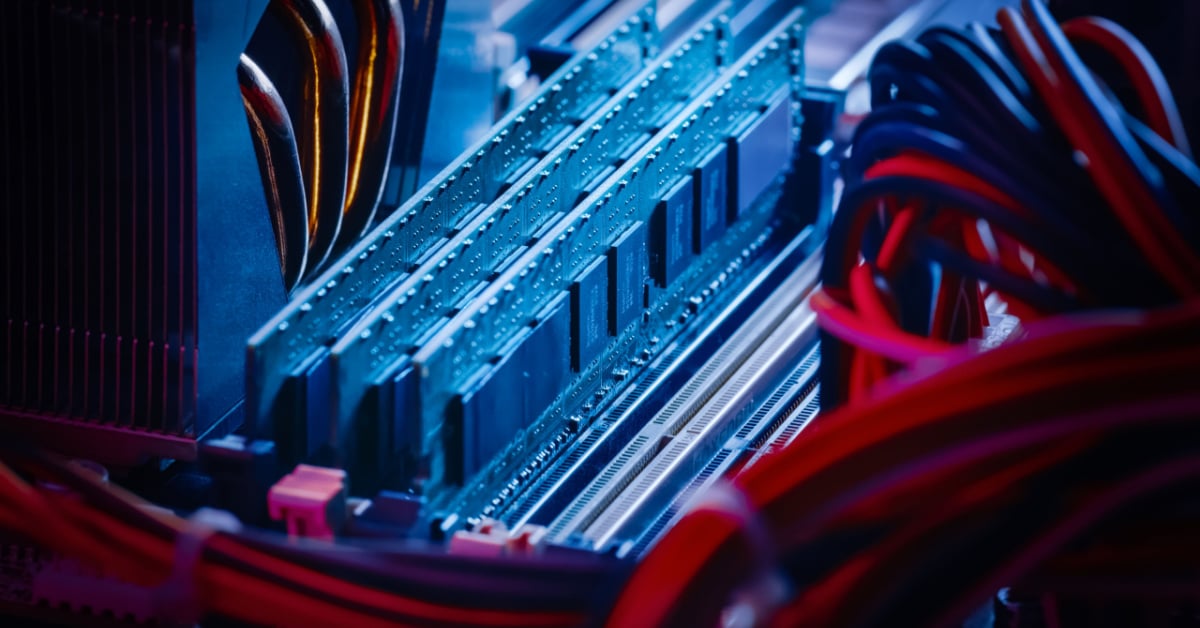
Surging datacenter demand from the AI boom has driven memory prices sharply higher, with linked indicators noting server prices could rise ~15%, commodity memory prices set to double, and reports of vendors like Samsung lifting prices by as much as 60%. The article argues this supply-driven price pressure exposes the costs of software bloat and suggests developers and managers must prioritize memory-efficient toolchains and applications, a shift that could materially affect IT capex, vendor procurement strategies and software development practices across technology firms.
Market structure: The immediate winners are DRAM/NAND suppliers and semiconductor-equipment vendors—Micron (MU), Samsung Electronics (005930.KS), SK Hynix (000660.KS), ASML and KLA—who gain pricing power as spot DRAM quotes have risen +30–60% recently. Losers are cloud/data‑center operators (AMZN, MSFT, GOOGL) and server OEMs (DELL, HPE) facing higher capex per rack and compressed gross margins if costs are passed through. Expect 1–2 quarters of pricing leverage for suppliers before new capacity changes the balance.
Risk assessment: Tail risks include a rapid capex-led oversupply within 12–24 months (DRAM cycles historically flip in ~18 months) or geopolitical export controls disrupting Korean/Taiwanese supply chains; either can collapse prices >40%. In the near term (days–weeks) earnings beats/misses tied to inventory guidance will drive volatility; mid-term (3–9 months) fab decisions and inventory builds are the key drivers. Hidden dependency: software optimization trends could permanently reduce marginal DRAM demand if widely adopted, reversing the price thesis over years.
Trade implications: Direct plays: overweight MU/ASML/KLAC and underweight DELL/HPE/AMZN sized by conviction (2–3% longs, 1–2% shorts). Use 3–12 month call spreads on MU to express upside while capping downside; consider long KLAC or ASML for capex exposure. Pair trade: long KLAC (equipment) vs short DELL (OEM) to capture capex-to-server margin divergence.
Contrarian angles: Consensus expects AI-driven demand to be permanent; the market underestimates the probability that software-efficiency and edge compute substitutions trim server DRAM growth by >10%/year over 3 years. The rally in supplier equities could be overdone if fabs announce 20–30% incremental capacity within 12–18 months. Watch for policy interventions (subsidies or export limits) that can abruptly reprice winners/losers.
AI-powered research, real-time alerts, and portfolio analytics for institutional investors.
Request DemoOverall Sentiment
moderately negative
Sentiment Score
-0.35
