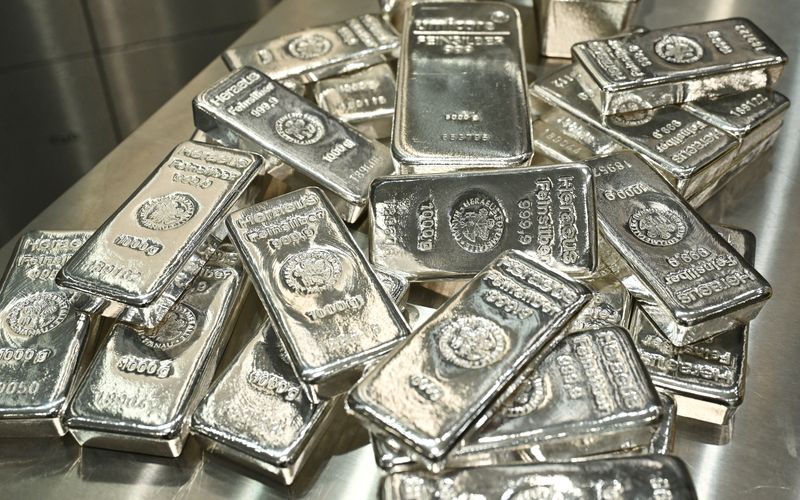
UBS cut silver price targets across all horizons, lowering June-end to $85 from $100, September to $85 from $95, December to $80 from $85, and March 2027 to $75 from $85. The bank also reduced its 2026 silver deficit estimate to 60–70 million ounces from about 300 million, citing weaker investment demand, softer photovoltaic/silverware/jewelry consumption, and higher mine supply of roughly 850 million ounces. UBS now expects silver to trade broadly sideways and prefers selling volatility rather than outright long exposure.
The key second-order read is that silver is shifting from a momentum/flow asset back toward a macro-beta industrial metal. When ETF holdings and speculative length stop acting as a marginal buyer, the market loses the reflexive upside that had been overpowering physical fundamentals; that matters because silver is structurally more thinly traded than gold and tends to overshoot on both the way up and down. The revised deficit still implies a market that is not in outright surplus, but the magnitude of the downgrade suggests price discovery is now being driven less by scarcity and more by positioning unwind risk.
The biggest loser is the solar/value-chain complex where silver intensity had been partly masked by expectation of endlessly rising module demand. If elevated prices are already pressuring photovoltaic demand, the next-order effect is slower restocking across fabricators and a more disciplined procurement cadence by industrial users, which can keep spot rallies capped even if broader PM sentiment improves. Mine supply at the margin also becomes more relevant: once prices remain above all-in cost for long enough, latent output, hedging, and byproduct recovery tend to appear with a lag, compressing the narrative premium.
The contrarian point is that the consensus may be underestimating how quickly silver can re-rate if gold continues higher and the gold-silver ratio mean-reverts faster than expected. Silver is one of the few metals where a modest improvement in investment demand can overwhelm relatively small physical balances, so a single macro catalyst — weaker real yields, a softer dollar, or renewed EM manufacturing strength — could trigger an outsized squeeze in 3-6 months. But near term, the cleaner setup is still for capped upside and elevated downside skew: implied volatility is rich enough that carry sellers are getting paid to wait for mean reversion, not for direction.
AI-powered research, real-time alerts, and portfolio analytics for institutional investors.
Request DemoOverall Sentiment
mildly negative
Sentiment Score
-0.25
Ticker Sentiment
