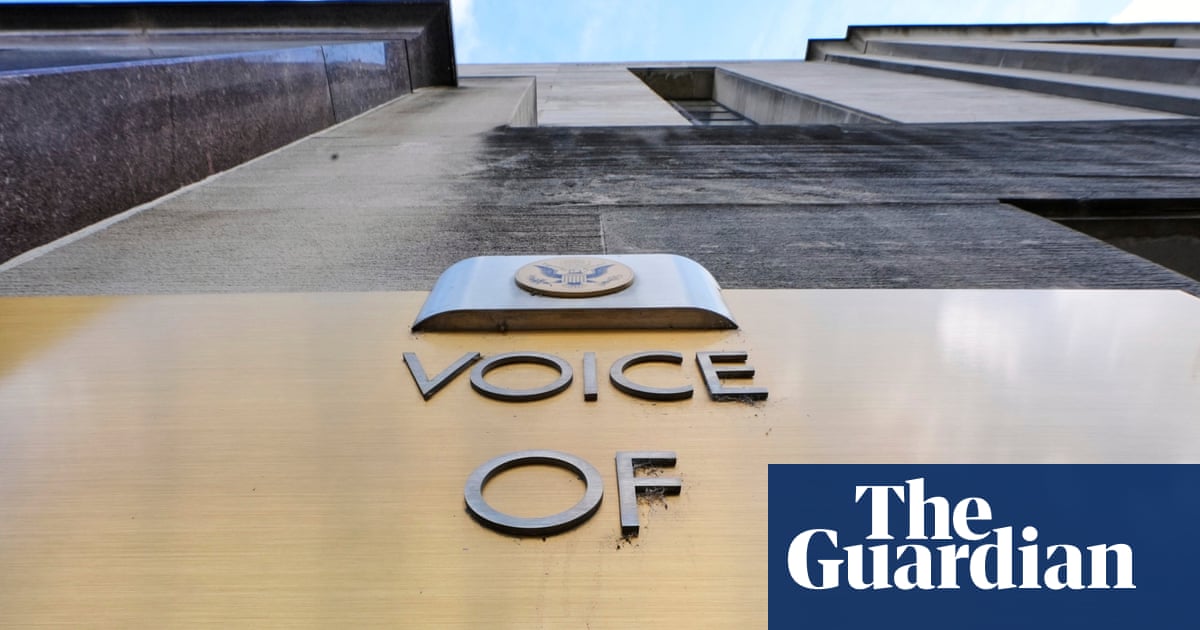
Judge Royce Lamberth ordered the reinstatement of more than 1,000 Voice of America employees and mandated that USAGM return VOA to the air, requiring staff to be back by March 23. The ruling found former USAGM director Kari Lake’s July 31–November 19, 2025 leadership unlawful; Lake plans to appeal. Employees have been on paid administrative leave for about a year after mass layoffs amid the Trump administration’s efforts since 2025 to defund and shrink the agency.
The court outcome creates a discrete event path for restoration of mission-critical government broadcast activity — that flow disproportionately benefits a narrow set of small-to-mid cap government contractors and satellite/telecom capacity providers. Typical task orders in this niche are often $5–50m; for vendors with $2–20bn revenue bases that can move near-term revenue and backlog growth by ~1–3%, enough to alter quarterly guidance or small-cap sentiment. Expect the clearest short-term market signal when the agency files its operational return plan (targeted within days of the ruling), which will list specific vendors, technology stacks and immediate procurement needs.
Timing and catalysts are layered: operational restart is the near-term catalyst (days–weeks) that can trigger contract awards and supplier revenue recognition; medium-term (3–12 months) hinges on appeals and FY appropriations fights that determine sustainability of those revenues; tail risk (12+ months) remains a full policy reversal via legislation or a higher-court ruling that could re-dismantle the agency or reroute funds. The spread between immediate procurement activity and longer-term funding certainty creates a classic event-driven window to capture upside while limiting exposure to policy reversal.
Second-order dynamics favor niche providers of secure distribution, circumvention and content-localization services — demand for geo-specific delivery and resilient satellite/IP backhaul rises if distribution into contested markets is prioritized. Counterparty risk concentrates in smaller vendors with single-source contracts; winning business now raises switching costs and entrenchment that can persist even if topline funding is contested later. The market likely underprices the durability of contract stickiness but overprices the permanence of agency funding, recommending tactical, short-dated exposures rather than large directional bets.
AI-powered research, real-time alerts, and portfolio analytics for institutional investors.
Request DemoOverall Sentiment
neutral
Sentiment Score
0.05
