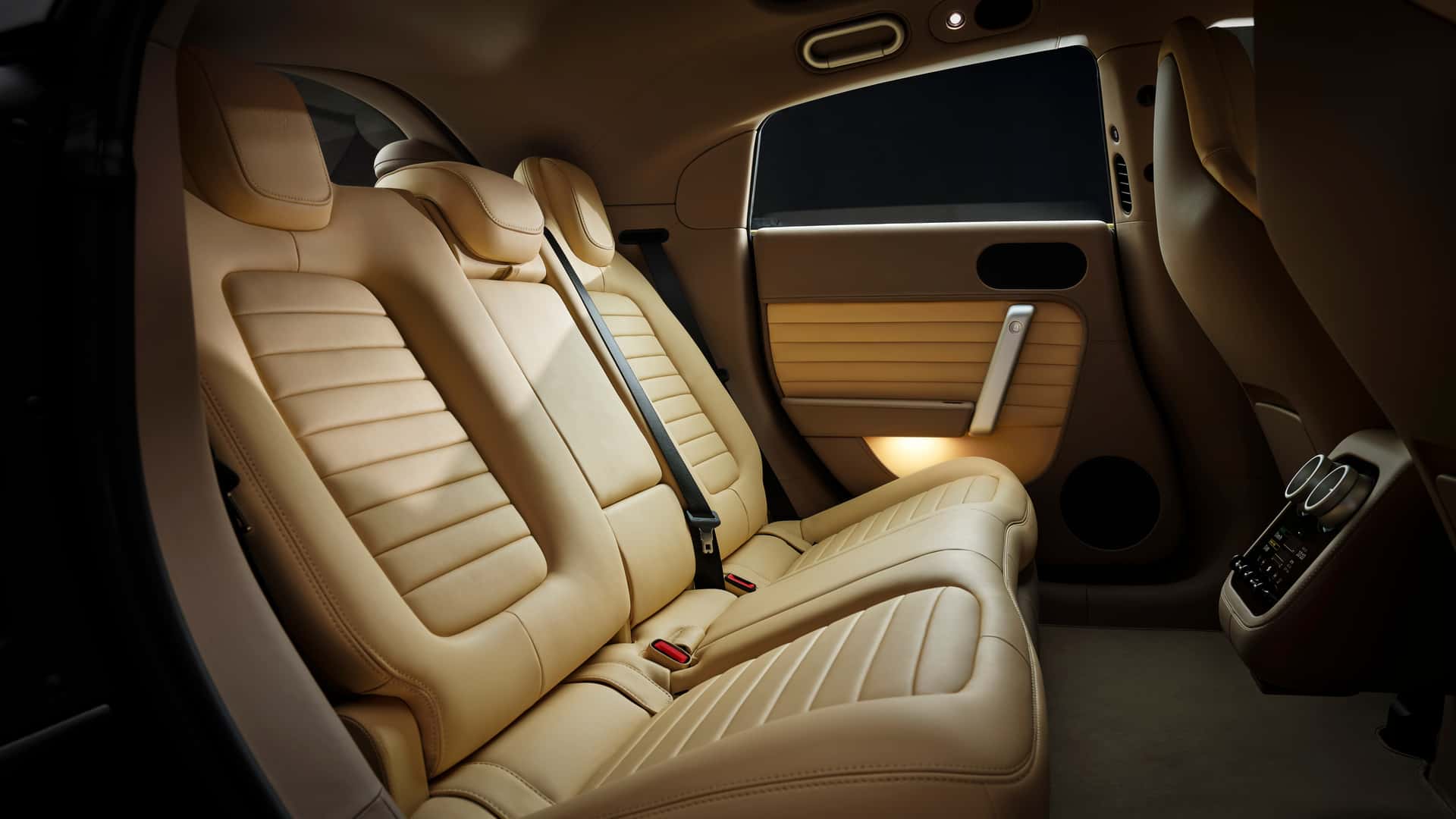
Ferrari's Luce is the company’s first EV and first five-seat model, measuring 197.8 inches long with a 122-kWh battery and a starting price of €550,000 before options. The article highlights several firsts, including a flat-floor EV platform, rear-hinged rear doors, active aerodynamic grilles, and 21 cubic feet of cargo space. The tone is positive on product innovation and practicality, but the immediate market impact should be limited given the niche pricing and positioning.
Ferrari is signaling that the EV transition does not have to mean volume dilution; the strategic move is to expand the addressable use case while preserving scarcity economics. The key second-order effect is that a more usable Ferrari broadens the buyer base beyond weekend-only collectors into ultra-high-net-worth households that can rationalize one car as both status object and family transporter, which should support order book depth even if the broader EV luxury segment softens.
The bigger competitive implication is not Tesla or Porsche, but the rest of the ultra-luxury ICE cohort. If Ferrari can package EV performance with genuine practicality, rivals reliant on emotional V12/V8 positioning lose one of their last defensible moats. That said, the product likely reinforces Ferrari’s pricing power more than unit growth; at this price point, the market is buying brand discipline and allocation scarcity, not a mass-market EV thesis.
Near term, the risk is that the launch is viewed as a compliance box-check rather than a halo product, especially if early reviews focus on mass, complexity, or if purist backlash creeps into order conversion for the broader lineup. Over the next 6-18 months, the main catalyst is proof that the EV can coexist with elevated margins and no slowdown in Purosangue-style demand. If the launch expands Ferrari’s customer funnel without discounting, the equity can re-rate on mix and pricing resilience rather than EV optics.
Contrarian view: the consensus may be overestimating the downside from Ferrari going electric. For Ferrari, electrification is less about competing on battery specs and more about removing packaging constraints that have historically capped everyday usability; that can actually strengthen the brand’s moat by making the product harder to substitute. The market is likely underappreciating the optionality from a second-order halo effect: the EV can normalize Ferrari as a multi-product luxury platform, which improves lifetime customer value across the whole fleet.
AI-powered research, real-time alerts, and portfolio analytics for institutional investors.
Request DemoOverall Sentiment
mildly positive
Sentiment Score
0.20
Ticker Sentiment
