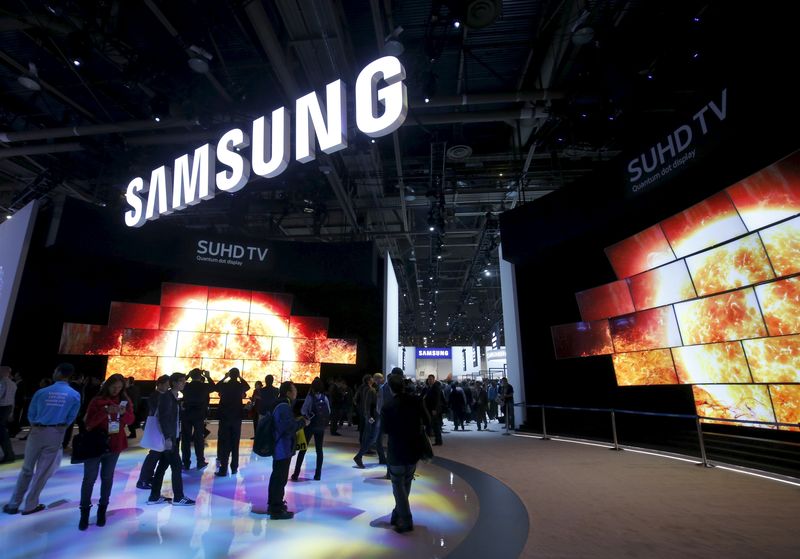
JPMorgan reiterated an Overweight rating on Samsung Electronics with a KRW350,000 price target, arguing investors should buy the dip despite an escalating labor dispute. The firm sees 6-10% downside risk to 2026 operating profit from higher labor costs and 1-2% revenue impact from production disruptions, but still expects a higher-for-longer memory upcycle and improving HBM execution. Samsung shares fell as much as 5% intraday on strike concerns before closing up 1.79%.
The market is treating this as a transient labor headline, but the more important signal is that both JPM and UBS are effectively underwriting a still-intact AI memory cycle while marking up only the friction around it. That matters because the labor issue is mostly a near-term sentiment and execution overhang, whereas the earnings power inflection in HBM is a 12-24 month story; if Samsung closes even part of the capability gap, the supply base for AI memory broadens and pricing power becomes less concentrated than the street currently assumes.
Second-order, the dispute may actually accelerate management’s willingness to pay up for labor to protect schedule certainty, which is economically rational if the alternative is losing design wins or delayed qualification in a market where node transitions and customer allocation decisions are path-dependent. For NVDA, the risk is not supply loss so much as mix volatility: any disruption that slows Samsung’s HBM ramp can temporarily reinforce SK Hynix’s share and near-term pricing, but a successful resolution and faster Samsung execution would cap the scarcity premium embedded in the HBM complex.
The consensus seems too focused on strike duration and not enough on the strategic implication of Samsung converging on 40% HBM share by 2027. If UBS is directionally right, the bigger trade is not the labor event itself but the erosion of single-vendor scarcity, which would compress future upside in memory ASPs while still leaving volume growth strong. In other words, the headline is a short-dated volatility event; the real debate is whether AI memory becomes a two-horse race sooner than consensus expects.
Tactically, the dip in Samsung is more attractive as a medium-term entry than as a pure event-driven rebound, because the downside from labor expense is bounded while the AI memory call remains intact. The best risk/reward is to fade any post-strike relief rally if it fails to restore momentum in execution metrics, because the market may be paying for an HBM catch-up that is already partially discounted.
AI-powered research, real-time alerts, and portfolio analytics for institutional investors.
Request DemoOverall Sentiment
mildly positive
Sentiment Score
0.15
Ticker Sentiment
