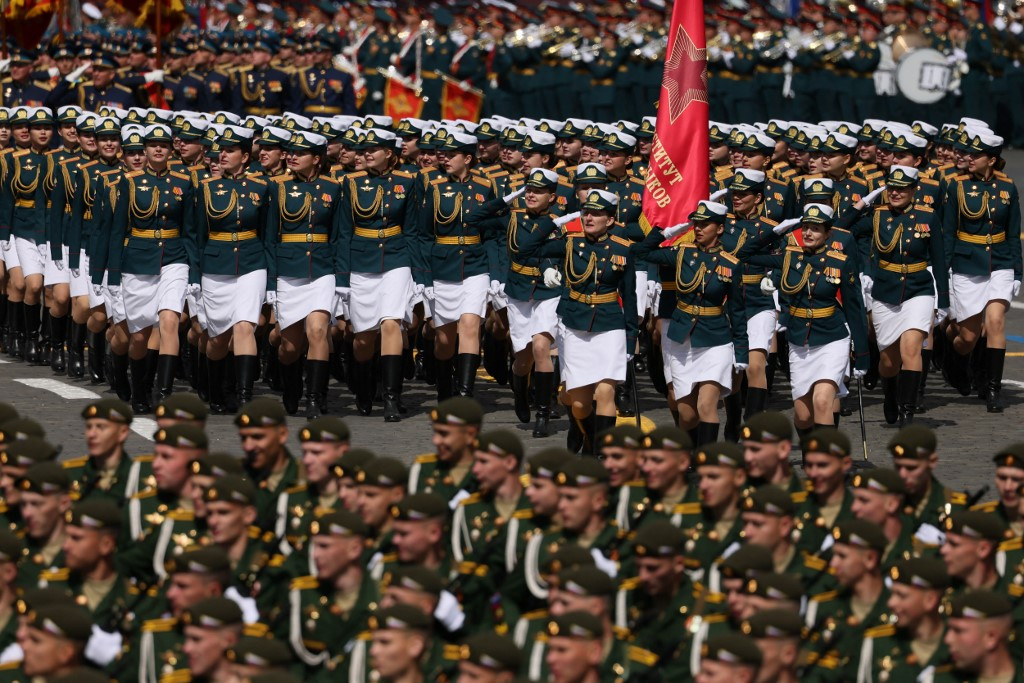
Russia is scaling back its May 9, 2026 Victory Day parade, with no military equipment column on Red Square for the first time in nearly two decades and severe communications restrictions planned in Moscow. Participation by foreign leaders has fallen sharply to just four confirmed attendees versus 27 in 2025, while similar reductions and war-participant substitutions are being made in other cities. The article points to a more restrictive, security-driven event environment with broader geopolitical implications, but limited direct market impact.
This is less a one-off security measure than a visible downgrade in the regime’s ability to stage confidence, and markets should read it as a governance signal before it is a military one. The combination of reduced spectacle, tighter communications control, and thinner foreign attendance suggests the state is prioritizing internal security over external signaling, which tends to correlate with higher operational paranoia and lower policy flexibility. That usually raises tail risk for any asset exposed to Russia-linked payment chains, logistics, or cross-border transport because ad hoc controls can expand quickly from ceremonial blackout to broader civilian restrictions.
The most investable second-order effect is not direct sanction risk, but increased friction in anything that depends on Russian consumer mobility or telecom continuity around major state events. Local travel, entertainment, and discretionary spending can get hit for days as authorities enforce shutdowns and route control; the bigger concern is normalization of intermittent network disruption in large urban centers. Over months, repeated “security” interruptions can accelerate capital flight from domestic-facing services and deepen the valuation discount on Russian-linked equities abroad, even where underlying earnings are not immediately impaired.
Contrarian view: the headline downside may be overread if investors treat the parade downgrade as evidence of imminent systemic weakness. In the short run, tighter control can actually reduce regime vulnerability by preventing public incidents, so the event is more likely to be an indicator of defensive adaptation than collapse. The real catalyst to watch is whether the blackout template spreads beyond May 9 into recurring citywide controls; that would mark a shift from episodic security theater to a more durable operating constraint with broader economic drag.
AI-powered research, real-time alerts, and portfolio analytics for institutional investors.
Request DemoOverall Sentiment
moderately negative
Sentiment Score
-0.25
