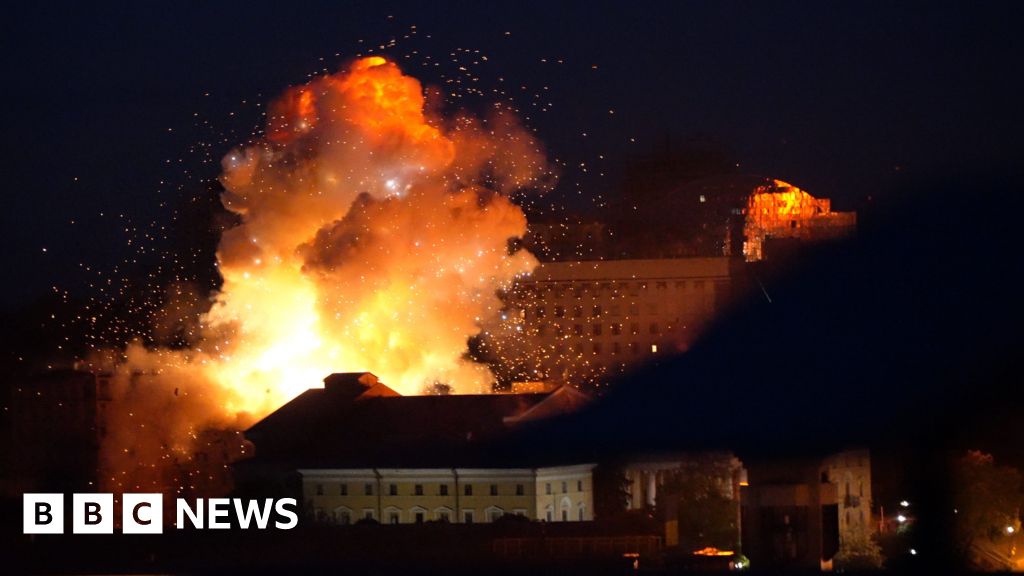
Russia has escalated threats against Kyiv, including warnings of "consistent, systematic strikes" and renewed calls for foreign diplomats to leave the city, after launching nearly 600 drones and 90 missiles in its latest attack. The article says Moscow is under battlefield pressure, facing rising casualties and industrial/manpower constraints, while Ukraine is seeking more air defenses as Patriot interceptors remain in short supply. The geopolitical risk backdrop is worsening for Ukraine and its allies, with potential implications for defense demand and broader risk sentiment.
The market implication is not a fresh escalation premium so much as a higher-probability tail of sustained air-defense attrition. The key second-order effect is that Russia appears to be optimizing for repeated saturation rather than breakthrough land gains, which shifts value from front-line maneuver outcomes toward the producers, integrators, and interceptors tied to air defense, EW, and missile inventory replenishment. That creates a more durable demand signal for Western defense supply chains than a one-off headline spike, because the binding constraint for Ukraine is now stockpiles, reload rates, and manufacturing capacity rather than platform quality alone.
The most asymmetric near-term risk is not Kyiv-specific damage but a degradation in Ukraine’s ability to preserve economic continuity and air-defense coverage over a 1-3 month window. If missile and drone volumes remain elevated, the marginal effect compounds: more civilian infrastructure downtime, higher grid repair costs, and a greater need for emergency procurement of interceptors from the US and Europe. That in turn should tighten delivery schedules for Patriot-class systems and compatible munitions, benefiting names exposed to replenishment cycles while pressuring any suppliers already facing backlog execution risk.
The contrarian read is that this rhetoric may signal strategic exhaustion rather than imminent operational breakout. When a belligerent leans harder on narrative justification and long-range punishment, it often reflects limited options on the ground and an attempt to buy time for industrial mobilization. If that’s right, the trade is not a sudden change in battlefield probability but a prolonged war-of-attrition regime, which favors defense equities and select European security beneficiaries more than broad risk-off assets.
AI-powered research, real-time alerts, and portfolio analytics for institutional investors.
Request DemoOverall Sentiment
strongly negative
Sentiment Score
-0.55
Ticker Sentiment
