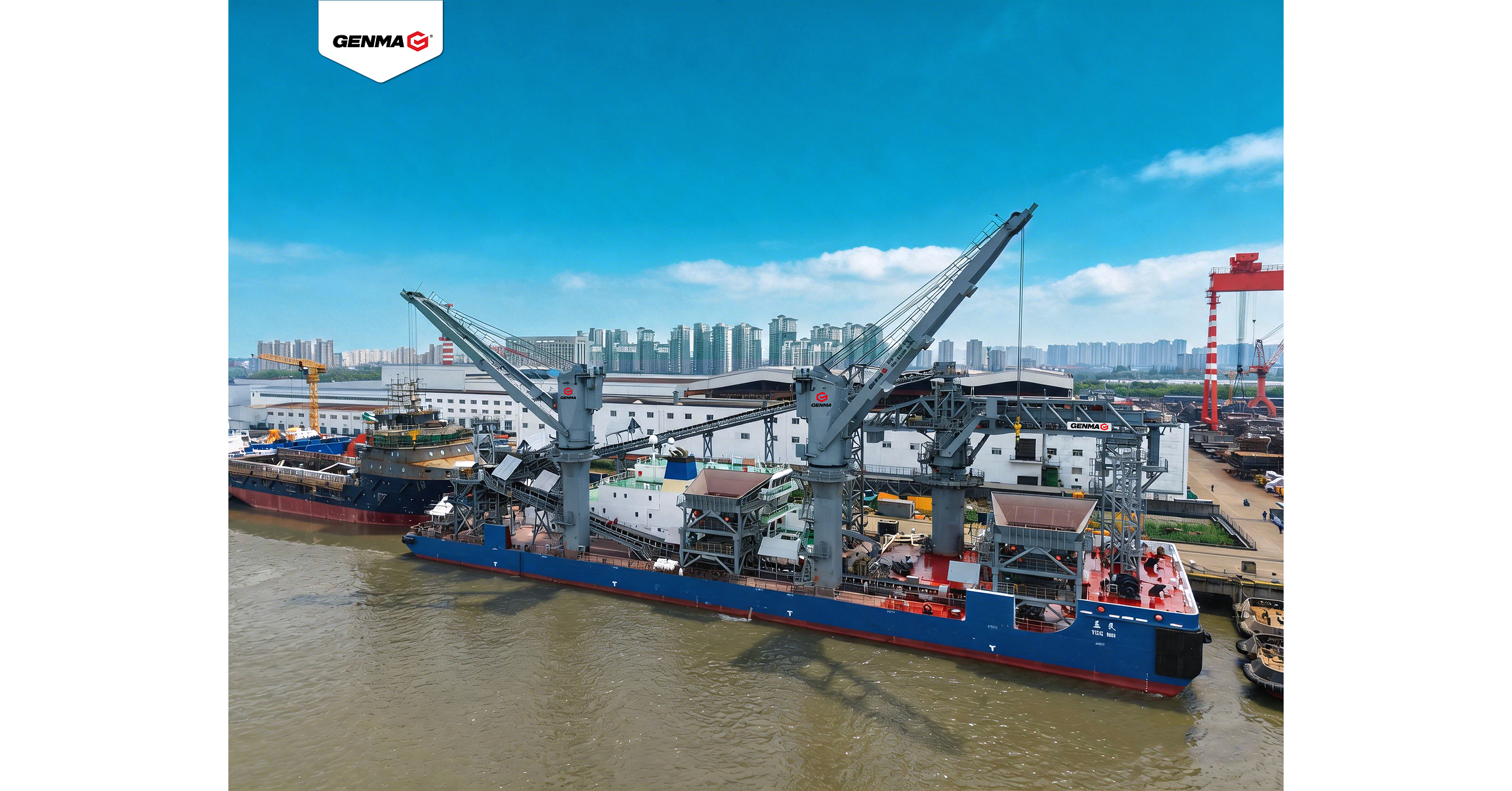
GENMA a annoncé la mise en service réussie d’un système de transbordement flottant pour soutenir l’exportation de minerais d’Afrique de l’Ouest, avec un objectif de chargement pour des navires ne pouvant pas accoster (ex. minéralier de 300 000 tonnes à Boffa, Guinée). Le système combine 2 grues de pont, 2 trémies, un convoyeur à bande et un chargeur de navires, conçu pour des débits élevés et la résistance à la corrosion, avec une maintenance facilitée via une assistance locale en Afrique. L’information est surtout opérationnelle (pas de données financières), donc impact attendu limité sur les marchés.
The investable signal is not the equipment; it is the removal of a “stranded asset” bottleneck. In West Africa, shallow-water export constraints have historically discounted project valuations because every tonne faced extra handling cost, delay risk, and vessel inefficiency; if this setup actually runs at scale, it improves the economics of marginal ore bodies and makes financing easier for the next wave of mines and terminals.
Near term, the market impact is probably muted because commissioning is not throughput. The first real read-through will come from utilization, demurrage, and export tonnage over the next 1-3 months; if the system is only partly used, the press release will have little P&L relevance. The bigger second-order winner is dry bulk shipping: more offshore transshipment can increase tonne-miles and support Capesize demand, but only if Guinea volumes ramp faster than the new logistics capacity absorbs slack.
The contrarian point is that investors may overstate the supply unlock. The binding constraints in Guinea are often rail, power, permitting, and political continuity, not the last-mile ship-to-ship transfer itself; if any of those slip, the installed system becomes an underutilized fixed-cost asset. Over 6-18 months, the real bearish implication is for iron ore pricing only if this is the first of several terminals that collectively pull meaningful Atlantic Basin supply into the market; absent that, the move is mostly a local execution story, not a global commodity regime shift.
AI-powered research, real-time alerts, and portfolio analytics for institutional investors.
Overall Sentiment
mildly positive
Sentiment Score
0.20
