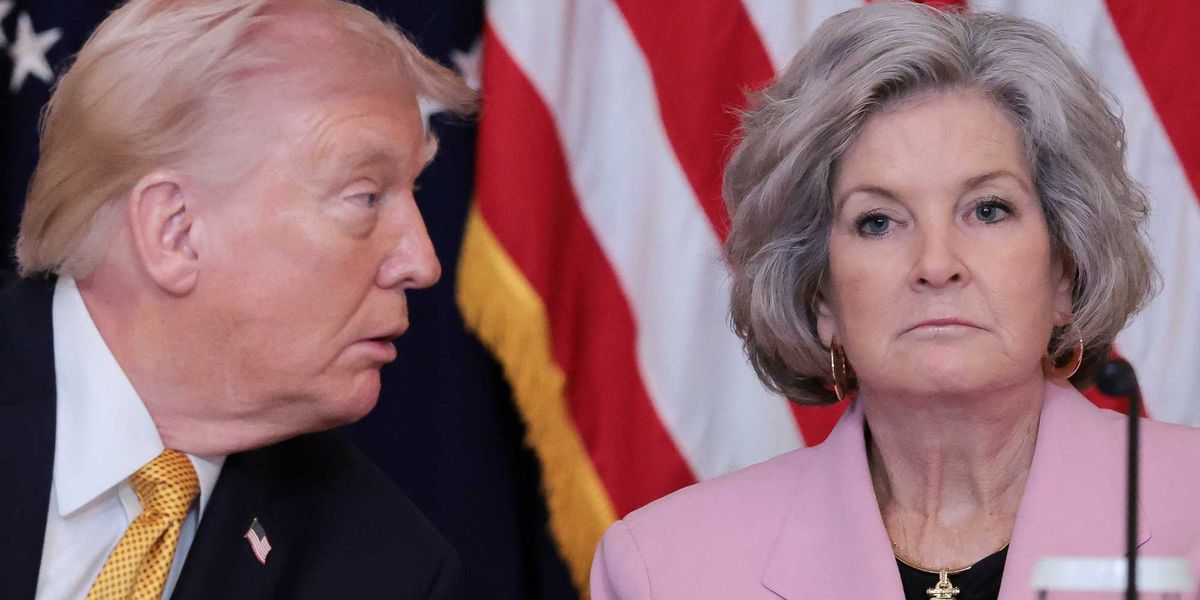
The White House postponed a voluntary AI testing executive order amid internal divisions over whether to take a more regulatory or pro-innovation approach. Trump said he feared the order could become a blocker to U.S. innovation, while tech leaders including David Sacks, Elon Musk, and Mark Zuckerberg appeared to have significant influence over the decision. The delay increases policy uncertainty around federal AI governance and leaves room for state-level action such as California's AI-related order.
The market read-through is less about near-term AI spending and more about the probability distribution of federal policy. A White House that cannot sustain a coherent governance process effectively raises the odds of a laissez-faire regime in the next 6-12 months, which is incrementally bullish for frontier-model builders and compute suppliers because it lowers compliance drag and decision latency. The second-order loser is any company whose thesis depends on a stable national framework for liability, auditability, or procurement standards; those names tend to trade on policy clarity, not raw model progress.
The more important dynamic is that policy vacuum shifts power to states, courts, and private contracts. That fragments the regulatory map, which usually benefits the largest incumbents because they can absorb multi-jurisdiction compliance and shape de facto standards, while smaller model labs and enterprise software vendors face higher integration costs. In practice, that favors the hyperscalers and the handful of frontier-model platforms with distribution, while pressuring “AI governance” vendors whose pitch depends on mandatory federal adoption.
A contrarian angle: the market may be overestimating how pro-growth this is for the entire AI complex. If federal preemption fails and states move independently, the result is not deregulation but selective regulation, which can slow enterprise rollouts and lengthen sales cycles over the next few quarters. The near-term catalyst is political signaling, but the real risk is a 3-9 month period where uncertainty suppresses budget commitments even as headlines sound innovation-friendly.
AI-powered research, real-time alerts, and portfolio analytics for institutional investors.
Overall Sentiment
mildly negative
Sentiment Score
-0.15
