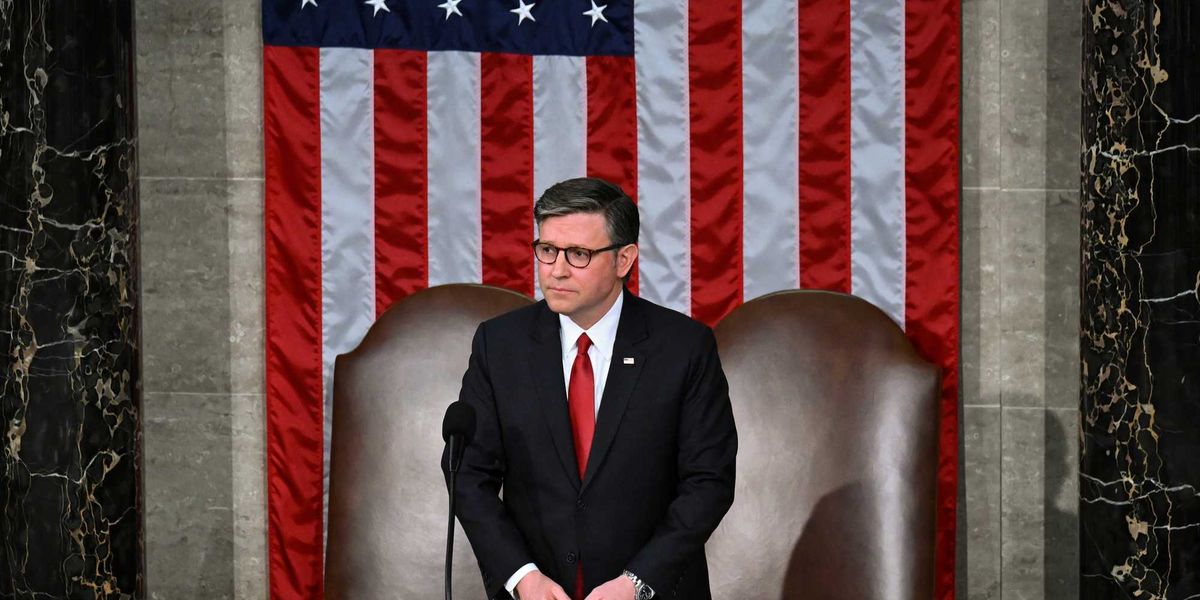
House Republicans are struggling to pass a procedural rule needed to advance key bills, including an extension of a government surveillance program and DHS funding, both facing Thursday deadlines. The internal GOP breakdown increases the risk of legislative delay and raises the chance that the Senate may need to step in. The article frames the episode as a sign of dysfunction in House Republican leadership, with political fallout more than immediate market impact.
The immediate market read is not about the underlying bills so much as process risk: when the majority loses control of its own floor mechanics, the tail probability of a self-inflicted policy shock rises sharply. That matters most for contracts and sectors that rely on statutory continuity rather than headline appropriations, because even short gaps can force federal buyers to slow awards, push out invoices, or pause procurement decisions. The first-order damage is to sentiment; the second-order damage is to execution velocity across defense, homeland security, and regulated contractors.
The more important signal is that repeated governance failures can widen the spread between “must-pass eventually” and “must-pass on time.” In practice, that tends to create a steepening in near-dated event volatility for names with heavy U.S. government revenue exposure, while leaving longer-duration fundamentals mostly intact. If leadership has to pull the chamber into weekend session or burn recess days, the market will start pricing a higher probability of either a stopgap or a deadline extension, which benefits firms with balance-sheet flexibility and hurts those dependent on timely working-capital conversion.
The contrarian angle is that the situation may be more tradable than investable: dysfunction can be noisy but fleeting, and once a procedural path is found, some of the political premium can unwind quickly. The real risk is not a broad equity drawdown but a narrow set of beta pockets where delays intersect with contract starts, renewals, or surveillance-related spending. That creates a tactical opportunity to fade complacency in the most exposed procurement beneficiaries while avoiding overreaction in the broader index.
If the majority ultimately punts to the Senate or accepts a short extension, the market may interpret that as de-risking rather than capitulation, which would compress the event premium within days. If instead the impasse lasts into next week, expect fresh headlines to keep lifting implied volatility in defense-adjacent names and raising the odds of temporary federal spending interruption, especially for vendors with high receivables outstanding to the government.
AI-powered research, real-time alerts, and portfolio analytics for institutional investors.
Request DemoOverall Sentiment
moderately negative
Sentiment Score
-0.35
