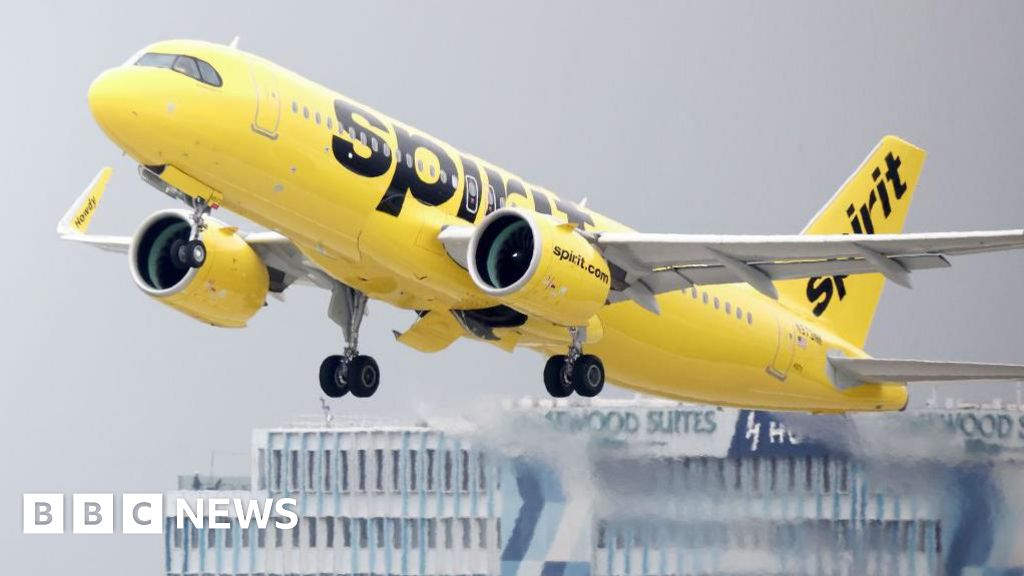
Spirit Airlines is shutting down immediately after rescue talks for a $500m bailout collapsed, ending its operations and cancelling all upcoming flights. The carrier said customers with tickets are not expected to be refunded through the winding-down process, and customer service is no longer available. Management and analysts cited surging jet fuel costs tied to the Iran war as the final catalyst after the airline's second bankruptcy filing.
This is not just an idiosyncratic airline failure; it is a pricing reset event for the domestic leisure market. The immediate winners are the ultra-low-cost peers and the legacies with strong leisure exposure, because a distressed capacity exit tends to be absorbed first through higher ancillary fees and then through fare compression easing in the weakest routes. The bigger second-order effect is on aircraft lessors and financiers: a failed turnaround increases the probability of residual-value markdowns across older narrowbody fleets and pushes counterparties to demand tighter lease covenants from similarly levered operators.
The oil/fuel channel is the key cross-asset transmission. A sustained jet-fuel spike tends to hit the lowest-balance-sheet airlines disproportionately within weeks, but the broader industry effect usually shows up over 1-2 quarters as capacity rationalization and a more disciplined fare environment. That means the market may underappreciate how quickly pricing power can shift upward for carriers that can hedge, re-route, or simply survive long enough for weaker players to disappear. On the flip side, this is also a warning signal for travel demand elasticity: if consumers absorb higher fares after a capacity shock, the sector may be more resilient than the immediate sentiment suggests.
The contrarian read is that the shutdown could be mildly bullish for airline equities despite the headline. When a structurally weak competitor exits, the survivors often see better load factors and less promotional pricing, which can offset some fuel pressure if the shock lasts only a few months. The real risk is that this becomes a template for further bankruptcies if fuel stays elevated; in that case, spreads widen first in airline credit, then equity beta follows with a lag. I would treat any indiscriminate selloff in higher-quality carriers as a potential entry point, but avoid the weakest balance sheets until fuel normalizes or capacity reductions are visible in monthly traffic data.
AI-powered research, real-time alerts, and portfolio analytics for institutional investors.
Request DemoOverall Sentiment
extremely negative
Sentiment Score
-0.97
