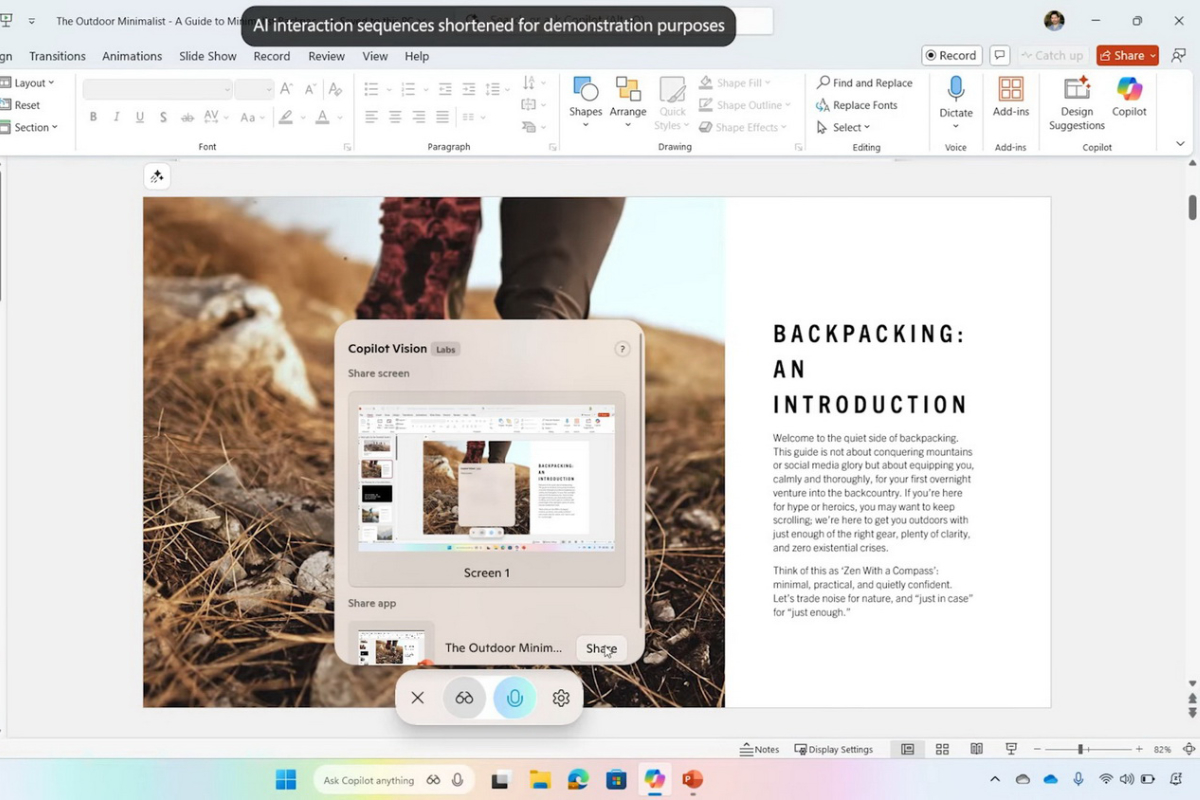
Microsoft is testing an 'AgentWorkspace' in the Windows 11 Insider Build that creates a dedicated environment for AI agents to execute tasks (opening apps, reading files, organising documents and interacting with the UI) and requires explicit access to sensitive directories such as Desktop, Documents and Downloads. The feature is optional but raises significant security and privacy concerns—analysts warn that broad file/system permissions, continuous background operation and comprehensive logging could introduce attack vectors and long-term privacy risks—while Microsoft has not disclosed concrete CPU/RAM limits; the rollout signals a strategic push toward a fully 'agentic OS' despite potential reputational and adoption headwinds.
Market structure: Microsoft’s AgentWorkspace increases MSFT’s endpoint control and creates direct upside for OS monetization (Copilot/enterprise subscriptions) and for edge-accelerator demand (NVDA, AMD, INTC). Short-term losers are mid-range OEMs (DELL, HPQ) and any incumbents that rely on non-Microsoft bundles for endpoint security; independent security vendors face a bifurcation—either displacement or outsized demand for EDR/zero-trust services (CRWD, ZS). Cross-asset: expect modestly higher implied volatility in MSFT options (20–40% IV skew expansion on security news), slight widening of MSFT credit spreads on regulatory headlines, and incremental support for DRAM/NAND pricing if local agents drive refresh cycles.
Risk assessment: Tail risks include a high-impact breach or regulatory penalty (GDPR/FTC) that could cost MSFT $1–5bn and trigger a 3–8% market-cap haircut; probability in next 12 months is non-trivial given early access tests. Near term (days–weeks) risk is volatility around tester reports; medium term (3–12 months) is enterprise adoption patterns and independent performance/security audits; long term (1–3 years) is monetization vs. regulatory constraint that will determine revenue uplift (estimate +0–3% revenue CAGR if widely adopted).
Trade implications: Prefer calibrated longs: MSFT core position sized 2–3% with protective 3–6 month 3% OTM puts; buy NVDA/AMD exposure via 3–9 month call spreads (1–2% each) to capture edge-accelerator demand. Long cybersecurity plays (CRWD, ZS) 1–2% each to capture increased EDR/zero-trust spend; trim or underweight DELL/HPQ by 20–30% over 6–12 months due to UX/performance complaints on lower-end devices.
Contrarian angle: Consensus fear about privacy may be overstated—historical OS shifts (Windows 7→10) produced hardware refresh cycles that benefited semis and security vendors more than they harmed OS incumbents. Key mispricing: options IV likely overprices short-term downside; buy defined-risk bullish structures instead of outright long equity. Watch for rapid adoption signals (>=10% of enterprise pilots in 6 months) or a major breach (within 90 days) to reweight positions.
AI-powered research, real-time alerts, and portfolio analytics for institutional investors.
Request DemoOverall Sentiment
moderately negative
Sentiment Score
-0.35
Ticker Sentiment
