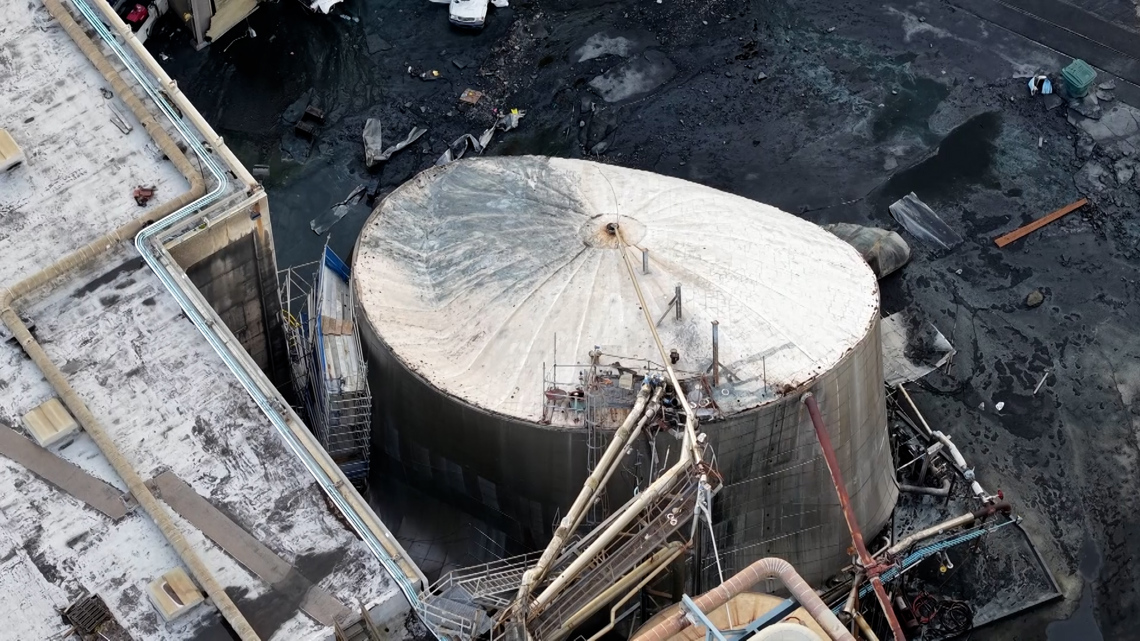
A massive tank implosion at Nippon Dynawave Packaging's Longview paper mill killed at least two workers and released hundreds of gallons of caustic white liquor. The incident likely involves equipment, venting, maintenance, or shutdown failures, and Washington Labor & Industry investigators said the probe could take weeks or months. Cleanup will be difficult because the tank’s glass lining may be shattered and corrosive chemicals may remain pooled in the wreckage.
This is a classic idiosyncratic industrial accident, but the broader read-through is about latent operational fragility in old-line process industries. The second-order risk is not just cleanup cost; it is production downtime, permitting scrutiny, and a likely step-up in maintenance capex across comparable mills and chemical-handling assets as regulators and insurers react. That tends to favor firms with newer stainless/FRP containment systems, robust process controls, and better balance sheets, while pressuring operators with deferred capex and thinner liquidity.
The market usually underprices how long these events persist. A single severe corrosion/containment failure can cascade into weeks of lost output, months of regulatory remediation, and a multi-quarter drag from higher insurance premiums and more restrictive operating conditions. If investigators find a venting, shutdown, or maintenance lapse, expect a wider review of similar pressure-vessel systems across pulp, paper, and adjacent industrial facilities; the cleanest beneficiaries are specialized inspection, testing, and industrial safety contractors.
The contrarian point is that the equity impact on any one paper producer is often overstated unless the asset is already highly leveraged or concentrated. The real opportunity may be in the service ecosystem: environmental remediation, industrial maintenance, and non-destructive testing names can see recurring order flow without headline risk. Shorting the sector outright is usually low-conviction unless there is evidence of industry-wide underwriting or insurance repricing.
Near term, the catalyst path is binary: incident report, OSHA-style findings, insurance disclosures, and any announced outage duration. If the investigation points to systematic maintenance shortcomings, the reaction should last 1-3 quarters; if it is framed as a one-off mechanical failure, the trade fades quickly. The key is to separate temporary earnings hits from structural compliance costs, because the latter can re-rate a basket.
AI-powered research, real-time alerts, and portfolio analytics for institutional investors.
Request TrialOverall Sentiment
strongly negative
Sentiment Score
-0.85
