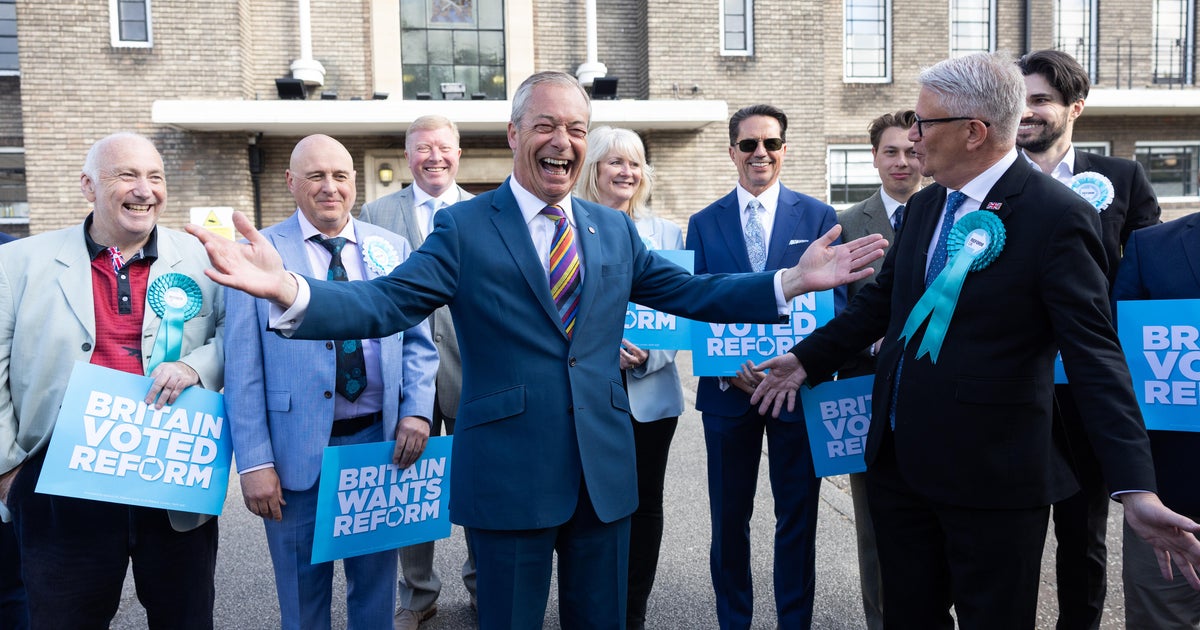
Labour and the Conservatives both suffered major losses in a large round of U.K. local elections, with Labour losing more than half its council seats and Reform UK making significant gains. Prime Minister Keir Starmer called the results a clear warning but refused to resign, while Nigel Farage described the outcome as a historic shift in British politics. The results point to rising voter dissatisfaction and a weakening of the traditional two-party system, but the direct market impact is likely limited.
The immediate market read is not about Westminster policy, but about governance friction at the local level: when the governing party looks vulnerable in the provinces, execution risk rises for any agenda that depends on coordinated municipal and regional buy-in. That matters for U.K.-exposed domestics with heavy dependence on public-sector procurement, housing, social care, and infrastructure permitting; the more fragmented the political map, the higher the odds of delayed capex decisions and slower project awards over the next 6-18 months.
The bigger second-order effect is that Reform’s strength increases the probability of a more permanently split opposition field, which can keep the U.K. in a low-confidence equilibrium even if the current government survives. That typically compresses valuation multiples for U.K. domestics relative to global peers because investors price policy drift, labor-market friction, and a higher noise floor around regulation and taxation. The tradeable implication is not a broad U.K. macro short on day one, but a relative underweight to names whose earnings are most exposed to discretionary local spending and politically sensitive service contracts.
Contrarian angle: the move may be overread as a national regime change. Local-election protest votes often revert when general-election stakes rise, and a fragmented electorate can actually improve the incumbent’s legislative latitude if the alternative is too diffuse to unify. If that happens, the current selloff in U.K.-oriented domestics could mean-revert over the next 1-3 months, especially if macro data stabilize and policy headlines shift back to rates and wages rather than politics.
For investors, the cleaner expression is relative-value rather than outright directional exposure: long globally diversified U.K. earners versus short domestic political beta. The catalyst path is a steady drip of polling and by-election headlines over the next several months, with the real repricing window coming only if the opposition fragmentation persists into the next national-election cycle.
AI-powered research, real-time alerts, and portfolio analytics for institutional investors.
Request DemoOverall Sentiment
mildly negative
Sentiment Score
-0.20
