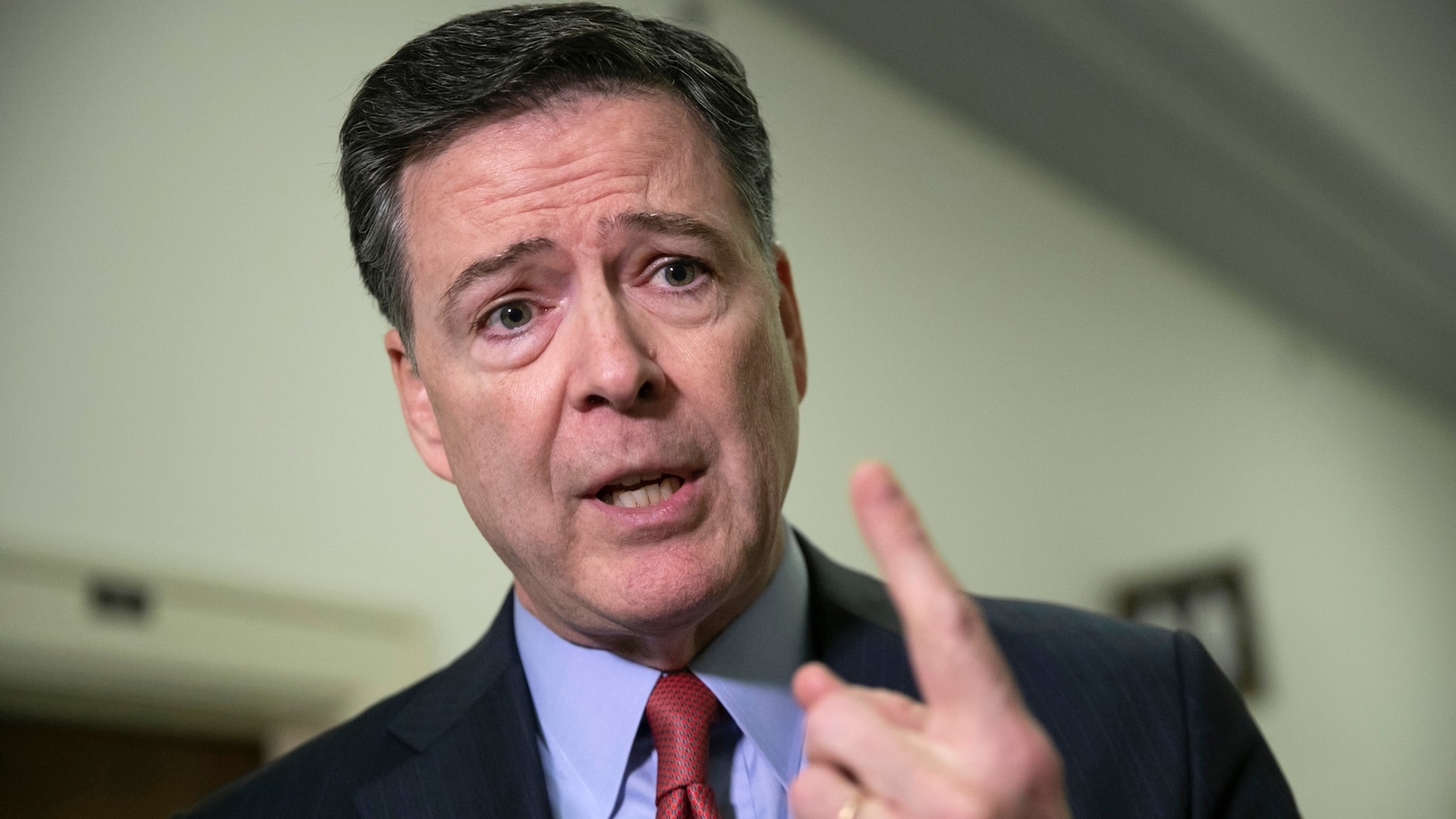
Former FBI Director James Comey was indicted on two counts in North Carolina and is expected to self-surrender in the Eastern District of Virginia. The case centers on an Instagram post featuring "86 47," which prosecutors say could be interpreted as a threat against President Trump. The development is primarily a legal and political story with limited direct market impact.
This is less a market event than a governance event, but the second-order effect is a slow bleed in institutional trust. A politically charged DOJ action against a former FBI director raises the perceived probability of future retaliatory enforcement around media, tech platforms, and political-adjacent disclosures, which can widen the discount rate on “policy risk” for companies with regulatory overhangs. The near-term market impact should be limited, but the real price is paid in elevated headline volatility around legal risk assets and in any business dependent on stable federal process assumptions.
The beneficiaries are political-media platforms and event-driven vol sellers if the story fades quickly; the losers are firms with existing government scrutiny, especially those exposed to investigations, subpoenas, or election-related content moderation. A more subtle second-order effect is on DC lobbying and compliance spend: management teams will likely treat this as another data point that litigation and political exposure can become personalized, which supports demand for outside counsel, crisis comms, and regulatory strategy services over the next several quarters.
The key catalyst window is days to weeks, not months: if the case is dismissed, narrowed, or portrayed as procedural overreach, the trade becomes a short-lived volatility spike. If it survives and becomes a broader symbol of politicized enforcement, the market may begin to price a higher “regime risk” premium into companies with active federal touchpoints. The contrarian view is that investors may overestimate the economic spillover; absent direct corporate defendants, this is mainly sentiment noise unless it migrates into agency behavior or election-related regulatory actions.
For positioning, the cleanest expression is to own volatility rather than direction: use short-dated call spreads on a political-risk basket or keep a tactical long in litigation-beneficiaries only if premium is cheap. If we want a hedge against escalation, a small tactical short in media/regulatory-exposed names with active Washington sensitivity makes more sense than broad index exposure. The risk/reward is asymmetrical only if this evolves into a pattern of selective enforcement; otherwise the move should mean-revert within 1-2 weeks.
AI-powered research, real-time alerts, and portfolio analytics for institutional investors.
Request DemoOverall Sentiment
mildly negative
Sentiment Score
-0.35
