
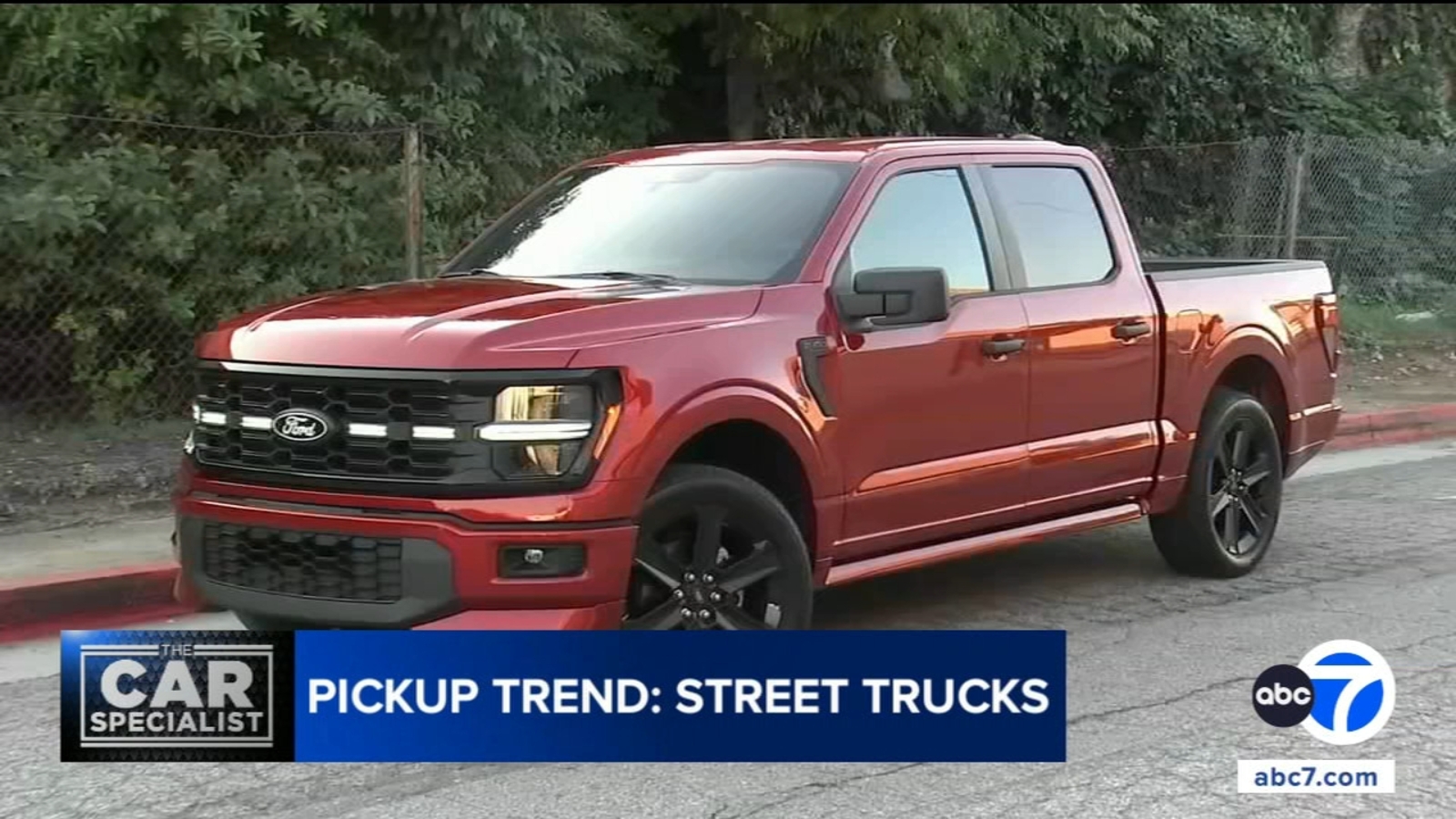
Ford has expanded its street-truck strategy with the F-150 Lobo, a factory-custom variant based on the F-150 STX that features a lowered suspension, 22" wheels, a 5.0L V8 producing 400 hp, and a $59,995 base price. Debuted to truck-club enthusiasts in Los Angeles, the model represents a niche, brand-building play as Ford leans into organic customer trends; rivals Ram (with The Dude concept and a returning Hemi V8) and Chevrolet are noted as watching the segment for potential competitive responses. The release is likely to boost enthusiast engagement and dealer showroom interest but is unlikely to be materially market-moving for the broader auto sector or Ford's financials.
Market structure: Ford (F) is the direct beneficiary — factory-backed “street truck” SKUs (F-150 Lobo) allow capture of higher ASPs and accessory-dollar margins; a $3k–$8k premium on limited trims sold at ~<5% of F-150 volume implies potential ATP lift of ~0.5%–2% on U.S. truck revenue if adopted across >50k units/year. Competitors (GM, Stellantis/RAM) face choice to match or cede niche pricing power; commodity impact (steel/aluminum) is immaterial, but aftermarket suppliers (e.g., LKQ) and wheel/suspension vendors see upside. Options vol for F will tick up around SEMA/launch windows, bonds/FX largely unaffected.
Risk assessment: Tail risks include a sustained fuel-price shock (+$0.50/gal within 3 months) or tightened EPA/California rules that raise fleet compliance costs — a modest V8 mix shift could add $100M–$500M/yr in penalties or offsets if scaled. Immediate (days): headline-driven choppiness; short-term (weeks–months): dealer order cadence and ATP reconciliation; long-term (quarters–years): margin mix and potential reputational/ESG re-pricing. Hidden dependencies: supplier capacity for bespoke wheels/suspensions and limited-run logistics can cap upside and create delivery delays.
Trade implications: Tactical long in F (small, 2–3% portfolio weight) ahead of the next 6–12 week reporting cycle to capture mix repricing, paired with a short in GM (1.5%) to express product leadership divergence; use a capped options strategy (buy 3-month call spread on F, +10%/+25% strikes) sized to 0.5–1% risk. Rotate into aftermarket parts (LKQ) 0.5–1% for 6–12 months if dealer accessory attachment rates rise >200 bps. Exit triggers: +10–15% profit, or if special-edition sales <2% of F-150 orders after two months.
Contrarian angles: Consensus may overstate impact — historical parallels (1990s Lightning/454SS) were niche and didn’t shift OEM margins materially; if Lobo remains <3–5% of F-series mix its P&L impact is trivial. The market may be underpricing regulatory downside and cannibalization of higher-margin trims; conversely, the stock reaction could be underdone if Ford scales limited editions nationally, producing a 5–12% EPS lift over 12–24 months.
AI-powered research, real-time alerts, and portfolio analytics for institutional investors.
Request TrialOverall Sentiment
mildly positive
Sentiment Score
0.30
Ticker Sentiment
