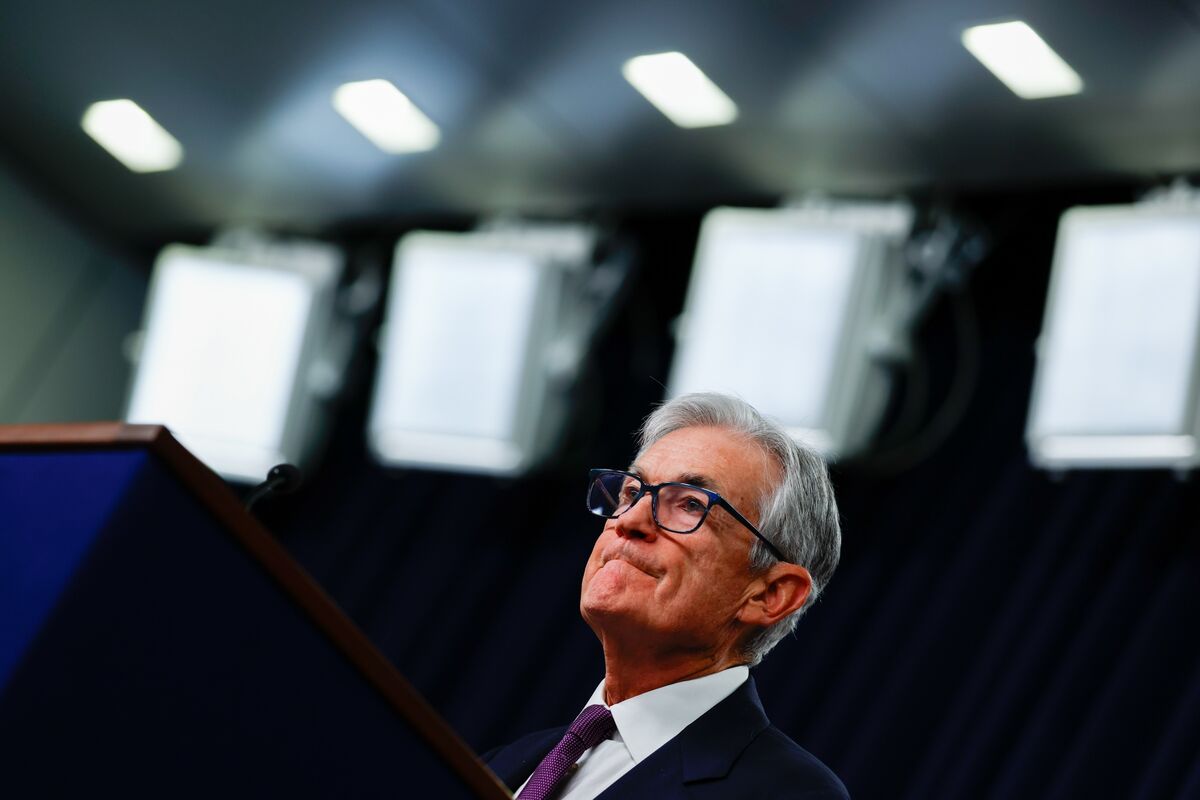
Fed Chair Jerome Powell dug in on policy as the Middle East war forced a 'new path' for the Fed; the central bank called the economic implications 'uncertain,' precipitating a sharply negative day in global markets. The development raises policy ambiguity and market volatility, increasing downside risk to growth and complicating the Fed's rate path. Powell's embattled status and political/legal pressure add an extra layer of risk to Fed credibility and market confidence.
Markets are now caught between two opposing forces: a geopolitical-driven growth shock (lower demand expectations, higher commodity premia) and a Fed that appears committed to retaining restrictive policy. In practice that should increase cross-asset dispersion — risk-off flows bid safe havens and front-end rates while energy and defence risk premia lift, producing outsized moves in sector-relative returns over days-to-weeks. Expect headline-driven 10–30 bp gyrations in 10y yields on news, but the Fed’s credibility makes sustained front-end easing unlikely without clear GDP weakness over the next 2–6 months.
Second-order winners are firms with long-dated contracted cashflows and limited cyclical demand exposure: integrated energy majors (scale to capture higher margin realization), defense primes (multi-year backlog), and commodity input producers (fertilizers, shipping insurance). Losers are high-duration growth and discretionary names with concentrated China/EM exposure and firms reliant on just-in-time Gulf shipping lanes — input cost passthrough will pressure margins 1–3 quarters out. Supply-chain knock-ons — higher freight/insurance and fertilizer/pricing cascades — make nominal agriculture and chemicals vulnerable to margin squeezes if energy stays elevated beyond three months.
Key catalysts to monitor: (1) a political/diplomatic de-escalation that can erase risk premia in 1–4 weeks; (2) sustained Brent move above ~$90–100 that forces a durable inflation re-anchoring over 1–6 months; (3) any Fed communication tightening forward guidance that can invert the perceived pivot and reprice long-duration risk. Tail risk is an extended disruption to Gulf exports or a wider regional conflagration, which would materially raise oil and insurance premia and force central banks into a high-inflation, low-growth policy trap.
Contrarian read: consensus is leaning toward a quick Fed pivot because of geopolitical growth fears. That is underestimating Powell’s willingness to protect inflation expectations. Tactical trades that assume headline-driven yield rallies will persist without a growth collapse are exposed — fade headline extremes on disciplined stops and prefer relative-value sector and curve trades over directional long-duration bets.
AI-powered research, real-time alerts, and portfolio analytics for institutional investors.
Request DemoOverall Sentiment
mildly negative
Sentiment Score
-0.25
