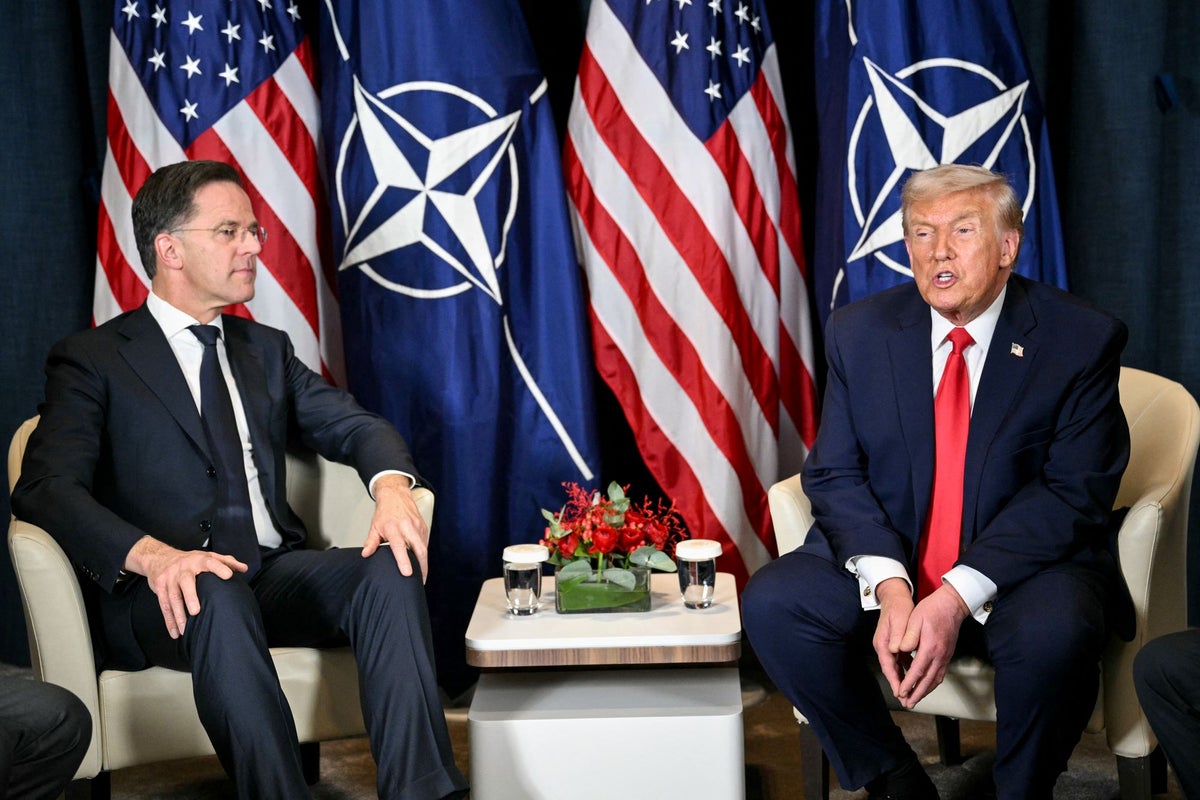
NATO chief Mark Rutte held a 'frank and open' meeting with US President Trump over NATO's response to the Iran war, but Trump publicly denounced the alliance on Truth Social stating 'NATO wasn't there' and reiterated threats about US commitment. Rutte noted that over 30 nations joined a virtual military-planners meeting and highlighted UK efforts to secure the Strait of Hormuz, while friction centers on the UK's refusal to join the US-led Operation Epic Fury and restrictions on base access. Implication: sustained geopolitical friction raises near-term risk to shipping through the Strait and could boost volatility in defense and energy sectors, prompting a modest risk-off market stance.
The public frictions within the North Atlantic security architecture raise a persistent geopolitical risk premium concentrated on the Strait of Hormuz, not just a headline shock. In the near term (days–weeks) expect insurance and war-risk surcharges to spike and freight rates for tankers and container vessels to reprice higher — a 20–50% reinsurance/war-risk premium move is plausible on acute escalation, with corresponding passthrough to charter rates within 1–3 weeks. Over 3–12 months, the more durable effect is likely a structural rebalancing of basing and logistics: expect accelerated EU/UK defense procurement and bilateral US base arrangements, which benefits defense contractors and European ship-maintenance/logistics integrators while hurting low-margin global shippers that can’t quickly re-route.
Second-order supply-chain effects favor firms that reduce Strait exposure or offer alternatives (transshipment hubs, insurance layering, risk-management software). Rerouting around the Cape or increased convoying can add ~7–14 days of voyage time and 10–25% higher per-voyage fuel and operating cost for vulnerable routes, accelerating de-integration of “just-in-time” inventory models for critical energy and intermediate goods. Tail risks include a sustained US–allies decoupling or a unilateral US drawdown from alliance commitments; that would compress certain risk premia in months (if diplomatic repair occurs) or institutionalize higher defense spending in years, altering fiscal backstops for European sovereigns.
The market may be overstating a permanent NATO breakdown: political incentives and defense-industrial interdependence make a full US exit unlikely within a 12–36 month horizon, so some risk premia are probably transitory. Trading the transient shock (insurance/freight) versus the structural response (defense capex, European MRO beneficiaries) creates asymmetric opportunities if timed to the volatility window and policy calendar (NATO/defense spending announcements over next 3–9 months).
AI-powered research, real-time alerts, and portfolio analytics for institutional investors.
Request DemoOverall Sentiment
mildly negative
Sentiment Score
-0.25
