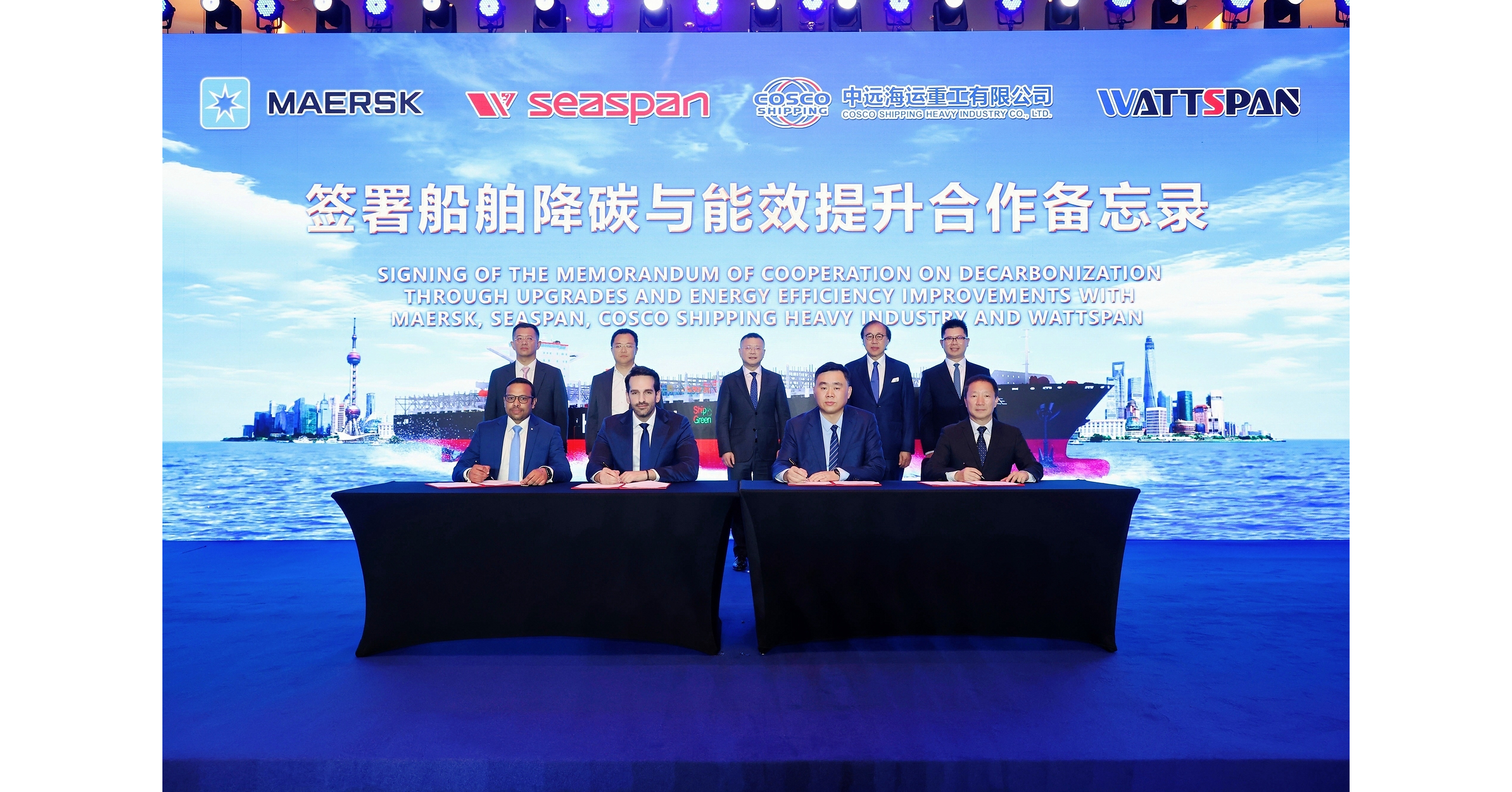
Seaspan and Maersk are expanding a long-term efficiency program covering 18 time-chartered vessels, with modernization for four 13,000-TEU ships. The initiative targets fuel-efficiency and capacity improvements and is expected to cut the ship “cost of occupancy” by ~10–13%, alongside emissions-reduction capability via carbon capture readiness and propulsion upgrades. Combined modernization investments are ~US$75M to date (planned included), while a 1-year framework via WattSpan and COSCO supports further energy-efficiency and decarbonization technology projects.
The key takeaway is not “green capex,” but a more durable asset-efficiency monetization loop: retrofit spend on long-duration charters can convert fuel savings into higher effective vessel utilization and a wider moat for modern tonnage. That is supportive for charterers with scale and procurement power, but it also reinforces a bifurcation in the fleet between ships that can be economically upgraded and ships that cannot. Over time, that tends to widen the charter-rate spread between eco/retrofit-ready vessels and older hulls that will need discounting or scrapping.
Second-order, the move is mildly bearish for freight pricing if it scales beyond this one program. Extra TEU capacity and lower voyage cost are deflationary at the margin because carriers can add effective supply without ordering new ships, which matters more in a soft demand tape than the press release suggests. The immediate impact is probably negligible, but the 6-18 month implication is that carriers may choose retrofit-led margin defense instead of rate discipline, especially if bunker prices stay high.
Contrarian view: the market may underappreciate how economic these upgrades can be versus outright replacement, so ESG spend here is not necessarily margin dilution. The real winners are likely the lessors and technical operators that can package retrofit execution at scale, while the losers are owners of older tonnage whose obsolescence risk rises as compliance becomes a commercial requirement. The thesis breaks if bunker prices fall hard, if retrofit paybacks prove longer than expected, or if management frames this as one-off optics rather than a repeatable fleet program.
AI-powered research, real-time alerts, and portfolio analytics for institutional investors.
Request DemoOverall Sentiment
mildly positive
Sentiment Score
0.25
