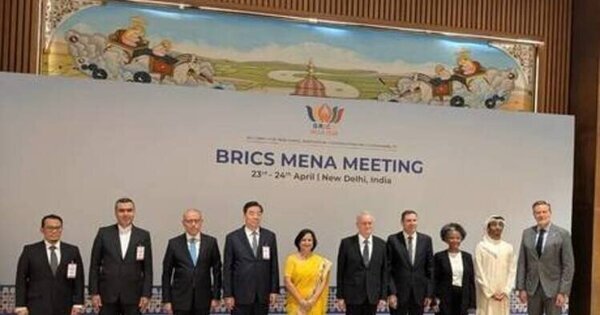
Russia says the Middle East crisis was caused by US and Israeli aggression, with BRICS members discussing Iran and regional security at the MENA consultations. The conflict is already disrupting transportation routes and lifting oil and gas prices, creating broader global economic hardship. Moscow signaled it is ready to help resolve the situation if Iran’s right to a peaceful nuclear program is respected.
The market implication is less about the rhetoric and more about the probability distribution for supply-chain friction staying elevated for longer. Even without a direct supply shock, sustained risk premium in crude, refined products, and shipping insurance tends to bleed into freight-sensitive cyclicals, EM sovereign spreads, and import-heavy industries; the second-order winner is any producer with low-cost, non-Middle East barrels and strong domestic logistics optionality. The loser set is broader than energy consumers: airlines, chemicals, trucking, and retailers with weak pass-through can see margin pressure before headline oil prices fully re-rate.
The more important catalyst path is not a one-day spike but a sequence of smaller disruptions: convoy rerouting, port delays, higher tanker rates, and inventory hoarding. That kind of friction usually shows up first in distillates and freight before it is obvious in front-month Brent, which means the tradeable move may be better expressed through energy equities, tanker names, and industrial hedges rather than trying to time spot crude. If tensions persist for weeks, EM assets with external funding needs will likely underperform as oil import bills widen current-account deficits and tighten local monetary policy.
Contrarianly, the consensus may be overestimating the durability of the risk premium if diplomatic signaling increases or if physical flows remain intact. Geopolitical shocks often fade fastest when inventories are adequate and producers outside the conflict zone have spare capacity, so a spike in oil can reverse in days while shipping and insurance costs normalize over months. That argues for owning convexity on the upside while avoiding outright chase-buying of energy after a gap higher.
For macro, the key question is whether this becomes a transient headline trade or a broader inflation impulse; if it spills into gasoline and jet fuel, rate-cut expectations can get pushed out 1-2 quarters, which is negative for duration-sensitive assets. The highest-beta losers are exactly the businesses with fixed-price contracts and weak pricing power, where a 5-10% input-cost move can erase a quarter of EBITDA leverage. In that setup, the right expression is relative value: long domestic energy/security beneficiaries versus transport, consumer discretionary, and EM importers.
AI-powered research, real-time alerts, and portfolio analytics for institutional investors.
Request TrialOverall Sentiment
moderately negative
Sentiment Score
-0.35
