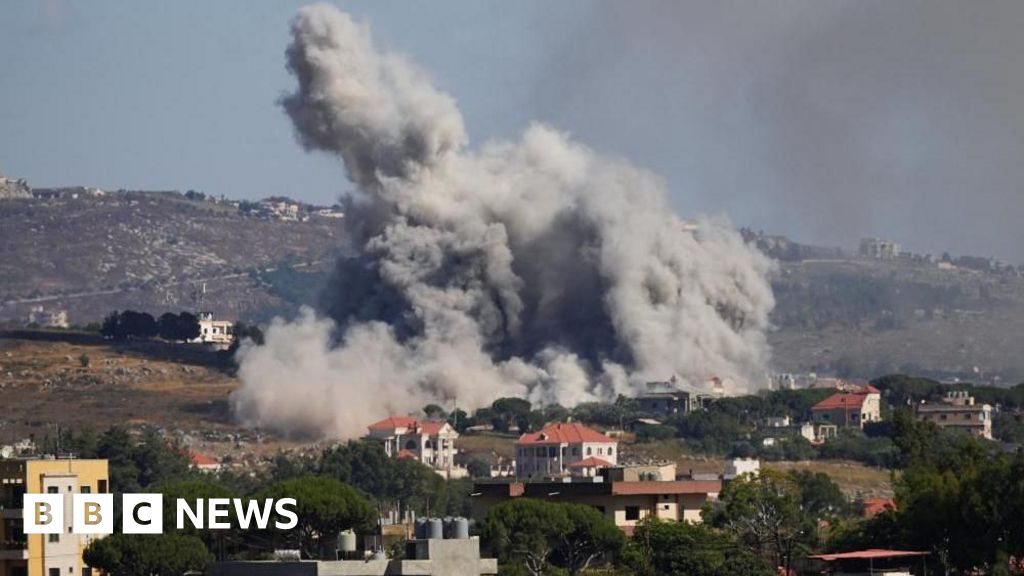
A US-brokered ceasefire between Israel and Hezbollah was announced, but renewed air strikes in southern Lebanon reportedly killed 47 people and wounded 97, while Hezbollah said it had killed four Israeli soldiers. The ceasefire remains fragile, with Israel saying it will continue to remove immediate threats and Hezbollah yet to formally confirm the deal. The conflict has now killed more than 3,900 people in Lebanon and displaced around 1 million, underscoring a major geopolitical and regional security risk.
The immediate market read is not about a local ceasefire; it is about the credibility discount being applied to any US-mediated security arrangement in the region. When hardliners on both sides can still drive kinetic events after a declared pause, the tail risk shifts from a clean de-escalation trade to a stop-start conflict that keeps defense procurement elevated while delaying any meaningful reconstruction bid.
That matters because the second-order winners are less the obvious primes than the supply chain names tied to ammunition, air defense, ISR, and counter-drone systems, which can see order acceleration without needing a full-scale regional war. Conversely, infrastructure, cement, power equipment, and Lebanese reconstruction proxies are premature longs until there is at least 4-6 weeks of verified compliance; otherwise they are hostage to headline risk and repeated asset destruction.
The biggest macro risk is that the ceasefire becomes a political cover rather than an operational reality, which would widen the gap between diplomatic headlines and physical damage. In that case, volatility is the asset class to own: defense equities should hold a bid on any renewed strikes, while regional risk assets and credit can reprice sharply lower on each breach, especially over a 1-3 month horizon.
The contrarian angle is that the market may be underestimating how much domestic pressure in Israel and Lebanon can force partial compliance even when rhetoric is maximalist. If Washington can impose verification mechanisms and limit retaliatory cycles, the current geopolitical premium could compress faster than expected, creating a tactical fade in defense beta and a rebound in longer-duration reconstruction names once enforcement is demonstrated.
AI-powered research, real-time alerts, and portfolio analytics for institutional investors.
Request DemoOverall Sentiment
strongly negative
Sentiment Score
-0.78
