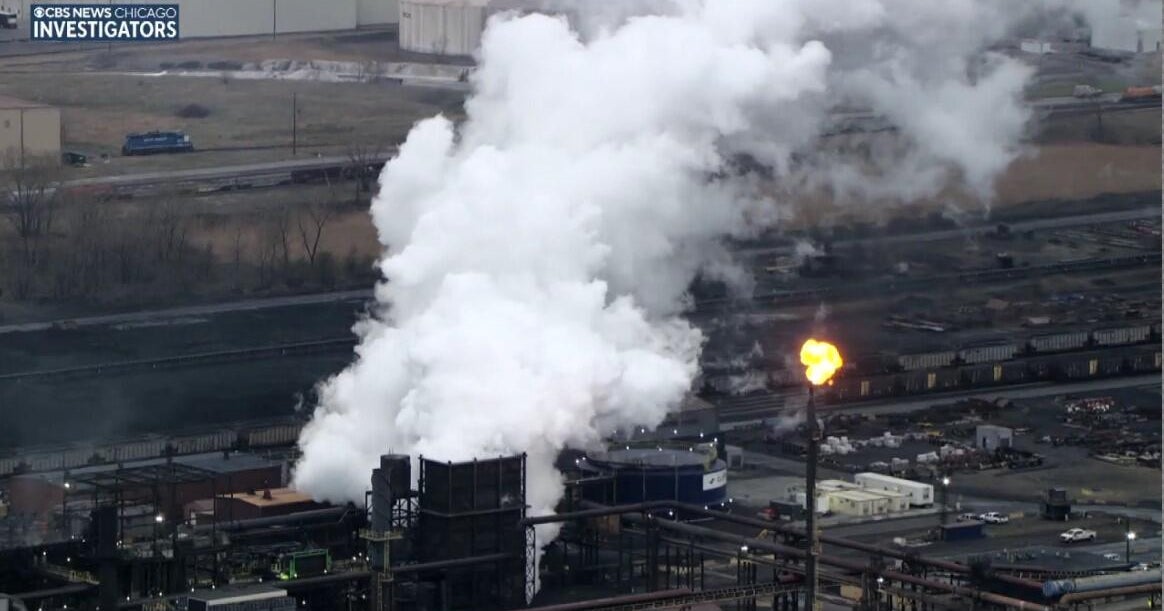
The Trump administration and EPA have revoked the federal 'endangerment finding,' removing the legal basis for regulating greenhouse-gas emissions from cars, trucks and power plants and, according to the president, eliminating over $1.3 trillion in regulatory costs to lower auto prices. Environmental and public-health experts warn the rollback will lead to weaker automobile, truck and power-plant standards, worse air pollution and climate-driven risks, and union and advocacy groups pledge opposition; legal challenges are widely expected, creating regulatory uncertainty for the auto and energy sectors.
Market structure tilt: revoking the endangerment finding reduces near‑term compliance capex for heavy emitters, improving EBITDA by an estimated 3–8% for integrated oil & gas (XOM, CVX) and legacy coal/gas utilities (DUK, DTE) over 12–24 months versus renewables peers. Auto OEMs (F, GM) gain pricing flexibility and lower fleet compliance cost, potentially improving margins by ~50–150 bps next 1–2 years. Carbon-related assets and clean-energy ETFs (ICLN) face demand collapse risk; oil and natural gas prices have asymmetric upside vs. renewables down, pressuring long-duration clean-energy valuations.
Risk assessment: low-probability/high-impact tail risks include immediate injunctive relief from federal courts or state-level preemption (California/Mass), which would re‑impose costs and spark 20–40% snapbacks in affected stocks within 30–90 days. Hidden dependency: corporate capex decisions are path-dependent—firms may defer green projects causing multi-year revenue displacement for EPC/renewable contractors. Catalysts to watch: court filings/temporary injunctions (30–90 days), state regulatory escalations, and upcoming auto sales cycles (next 6–12 months).
Trade implications: favor 6–12 month directional longs in XOM/CVX (call spreads) and selective long positions in fossil‑heavy utilities (DUK, DTE) while shorting clean-energy ETFs (ICLN) and renewable developers (NEE) via put spreads. Use pairs: long XOM vs short ICLN to isolate regulatory beta; size 1–3% portfolio each leg. Options: buy 6–12 month ATM call spreads on XOM/CVX and 3–6 month put spreads on ICLN/NEE to limit capital and exploit volatility.
Contrarian angles: consensus underestimates state and corporate ESG lock‑in—large corporates (TSLA, NEE) may still win on demand momentum or long‑term contracts, creating oversold opportunities after legal resolution. Reaction could be overdone in clean-energy public equities (20–35% down moves) providing selective value entry if courts block the repeal. Unintended consequence: regulatory patchwork increases compliance complexity, benefiting integrated players with scale and lobbying power, not necessarily smaller independents.
AI-powered research, real-time alerts, and portfolio analytics for institutional investors.
Request DemoOverall Sentiment
moderately negative
Sentiment Score
-0.45
