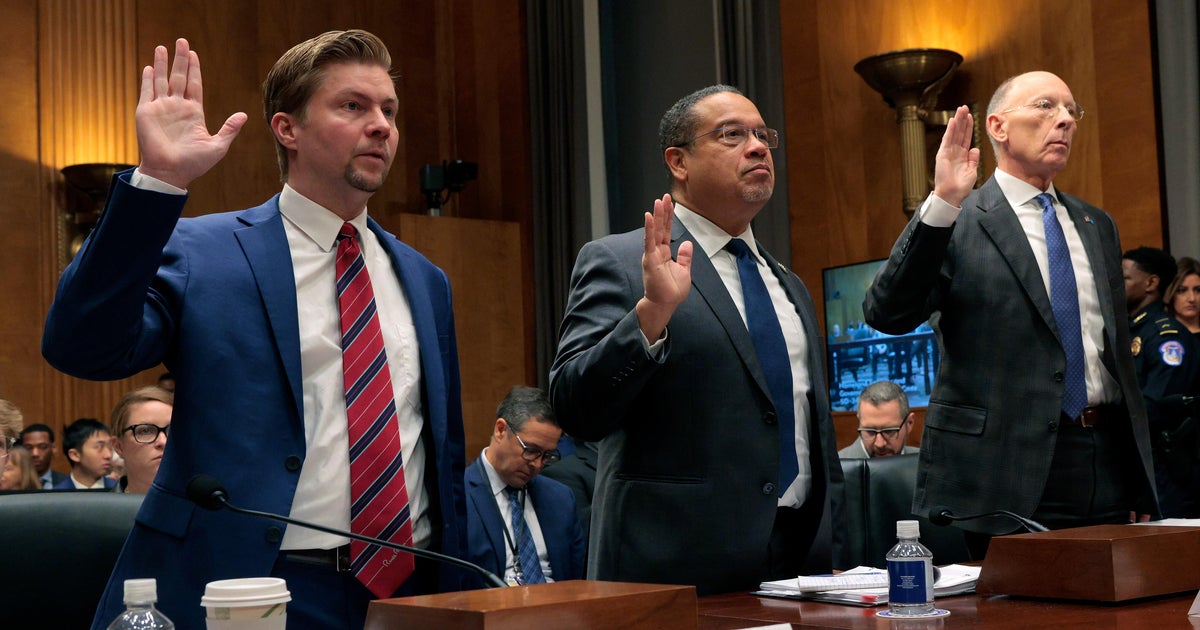
Top Minnesota and federal officials testified before the Senate Homeland Security Committee about the Trump administration's Operation Metro Surge in Minneapolis after two deadly shootings linked to federal agents, with state AG Keith Ellison and Corrections Commissioner Paul Schnell criticizing coordination, misinformation and the operation's human and fiscal costs. Federal immigration leaders (ICE, CBP, USCIS) defended the enforcement campaign while facing questions about use-of-force, oversight and detainee handling; senators pressed for accountability and greater transparency. The hearing comes as DHS funding is in limbo — set to expire Saturday absent an agreement — creating a political oversight risk even though ICE/CBP operations continue on prior appropriations.
Market structure: The immediate winners are compliance/legal services, homeland-security systems vendors (cyber, surveillance, detention-IT) and municipal-bond insurers; the clear losers are private-detention operators (GEO, CXW) and vendors with concentrated ICE/CBP revenue. Reduced federal-local cooperation and potential policy curbs signal a 10–30% drop in incremental bed demand over 6–12 months and margin pressure from higher compliance costs. Cross-asset: expect MN GO spreads to widen +10–40bp, short-term safe-haven bids in Treasuries (+1–3bp), and a 20–50% jump in implied vol for GEO/CXW/PLTR-type names around hearings/funding votes.
Risk assessment: Tail risks include a DHS funding lapse (near-term probability 20–40%) causing temporary payment/contract freezes, or sweeping ICE reform that could cut private-prison revenues by 20–40% over 12 months. Immediate horizon (days): volatility spike and muni spread moves around the funding cliff; short-term (weeks–months): oversight legislation and contract repricing; long-term (quarters–years): litigation and reprivatization dynamics altering market structure. Hidden dependencies: state fiscal hit (Minnesota) can reciprocally pressure local contractors and munis; catalysts include the DHS funding vote (within 3–7 days) and DOJ/FBI findings into the shootings (30–90 days).
Trade implications: Short-biased trades on GEO/CXW and volatility buys are highest-probability moves; rotate proceeds into larger, diversified homeland-security contractors (LHX, LDOS, BAH) and cyber/security software providers with recurring revenue. Use 60–180 day options to capture event-driven vol; reduce concentrated MN muni exposure and favor insured/AAA paper. Entry should be front-loaded before the funding deadline and dialed back 4–8 weeks after major legislative outcomes.
Contrarian view: The market may overprice permanent contract loss—historically (2015–2019) enforcement swings produced 30–60 day dislocations but only multi-year revenue erosion when federal law changed; if reforms are incremental, survivors could see day-rate increases and consolidation benefits. A tactical buy-the-dip in core operators 6–12 months after policy clarity (if share prices fall >40%) offers asymmetric upside. Key monitors: DHS appropriation vote, DOJ investigative milestones, and MN state budget revisions (watch spread moves >30bp as buy/sell triggers).
AI-powered research, real-time alerts, and portfolio analytics for institutional investors.
Request DemoOverall Sentiment
mildly negative
Sentiment Score
-0.25
