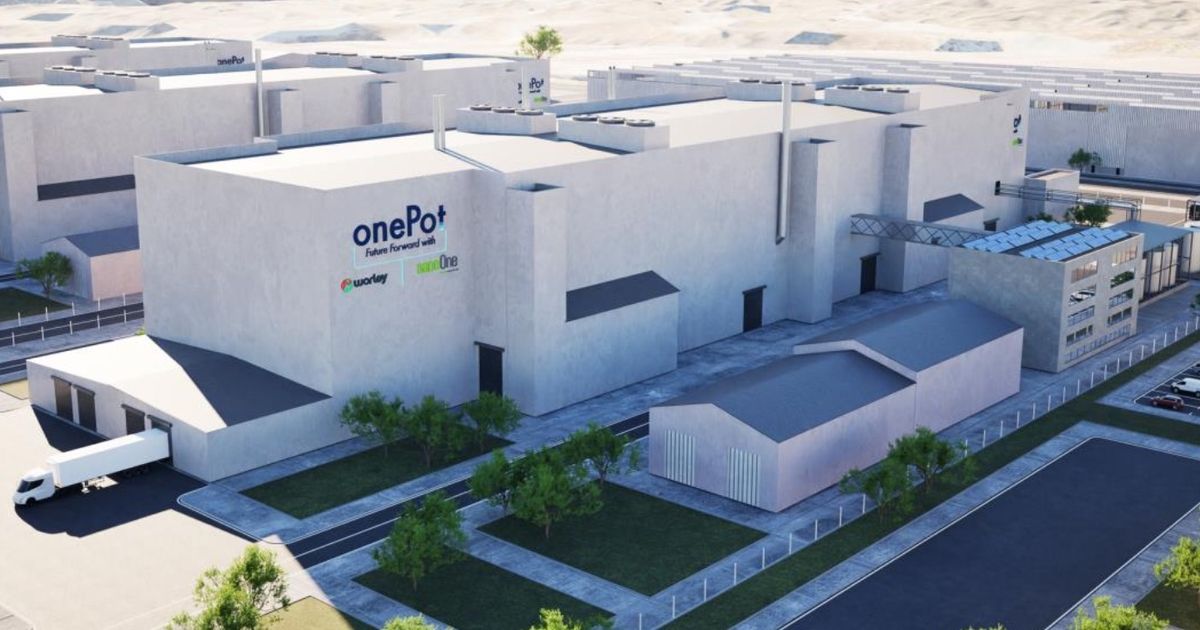
Nano One is advancing commercialization of its One‑Pot LFP cathode technology, targeting initial commercial LFP supply agreements and first revenue by end‑2026 with a Q1‑2026 launch of its One‑Pot LFP CAM licensing package. Its operational Pilot Line (≈200 tpa) and an automated Demonstration Line planned to reach ≈800 tpa in early 2027 underpin customer qualification and sampling, while partnerships with Sumitomo Metal Mining, Rio Tinto and Worley support scale-up and supply‑chain localization outside Asia. Financially, the company completed equity financing in Dec 2025, cites >$63m in non‑dilutive capital since early 2024, held $17.8m cash at Sept 30, 2025, subsequently raised $7m gross and secured a $5m NRCan award, plus $25.8m undrawn government funding as of Dec 2025 to fund expansion and licensing initiatives.
Market structure: Nano One (NANO.TO) is a potential winner in localized LFP supply-chain initiatives—its pilot (200 tpa) and demo (target ~800 tpa) volumes are strategically valuable for OEM qualification but immaterial to global cathode supply in 2026 (<<1% of global LFP output). Partners (Sumitomo, Rio Tinto) and engineering/service suppliers gain optionality; incumbent Asian LFP incumbents face longer-term margin pressure if licensing scales and reduces capex/time-to-market. Expect downward pressure on LFP finished-pricing over 2–5 years if multiple licensors accelerate capacity, but near-term pricing power remains with cell OEMs during qualification cycles.
Risk profile: Tail risks include failed scale-up/qualification (>6–12 month delays), conditional government-funding clawbacks, or patent/tech-transfer disputes that could force dilution; each has >10% probability conditional on missed milestones. Immediate risk (days–weeks): market reaction to Q1 2026 CAM launch; short-term (3–12 months): LOI/qualification outcomes; long-term (2–5 years): royalty/licensing adoption. Hidden dependencies: undrawn $25.8M government facilities and third-party partners are milestone-conditional—if not accessed, dilution likely.
Trade implications: Event-driven directional exposure to NANO.TO is appropriate; initial size should be small (1–3% portfolio) until a customer LOI or demo-800 tpa validation occurs. Use calendar/vertical call spreads to express upside to Q1–Q4 2026 catalysts while limiting drawdown. Rotate modest allocation from speculative lithium juniors into upstream/engineering winners (Rio Tinto RIO for raw-material optionality and equipment/automation vendors) over 6–18 months.
Contrarian angles: The market is understating commercialization friction—qualification cycles often take 9–18 months and licensing conversion rates can be <20% in the first 2 years. Sentiment may be overpricing NANO.TO’s near-term revenue prospect given demo capacity; conversely, barriers could create buyable drawdowns if core partners (Sumitomo/Rio) publicly commit. Watch for unintended margin compression across cathode suppliers if LFP licensing accelerates, which could ripple into miners’ capex decisions.
AI-powered research, real-time alerts, and portfolio analytics for institutional investors.
Request DemoOverall Sentiment
moderately positive
Sentiment Score
0.45
Ticker Sentiment
