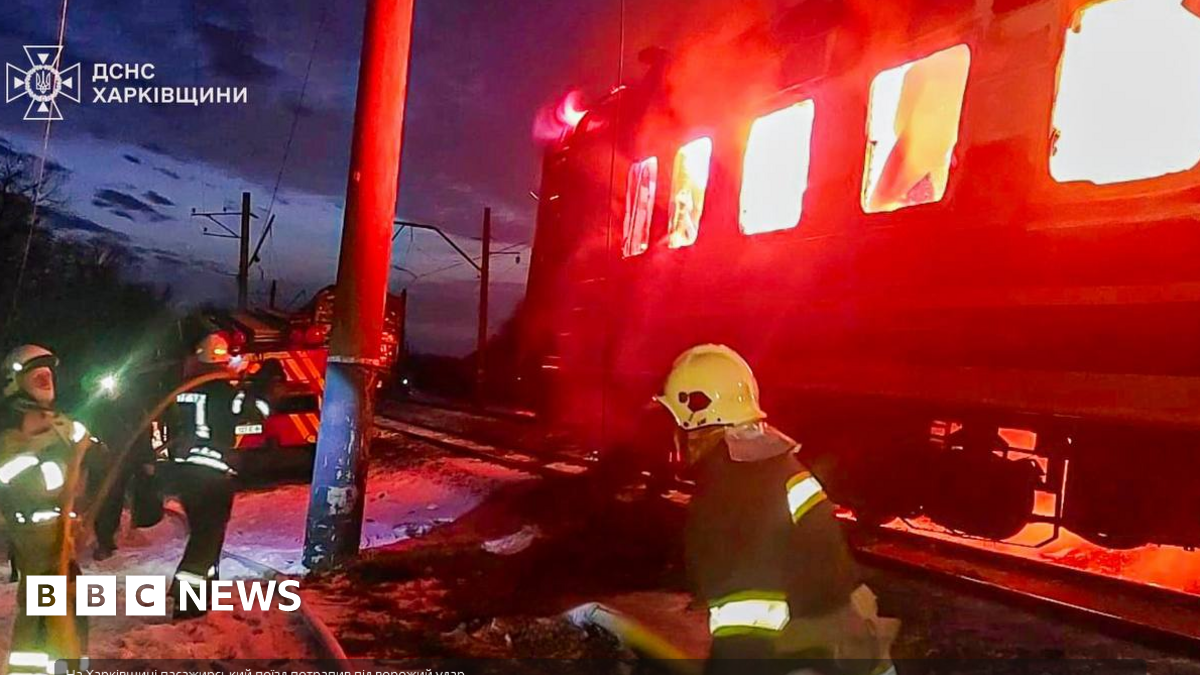
A Russian drone strike struck a crowded passenger train in Kharkiv region, killing at least five people (18 were in the carriage hit) and injuring others; more than 200 people were on the train. Concurrent assaults included over 50 drones against Odesa (three killed) and further strikes on energy and transport infrastructure that left millions without heating, electricity and water. The attacks increase near-term geopolitical risk, threaten regional transport corridors and energy supply reliability, and are likely to sustain risk-off flows and volatility in energy and Eastern European assets.
Market structure: Immediate winners are defense primes and aerospace suppliers (higher order visibility, pricing power from sustained military demand) and commodity exporters (energy, grains) due to repeated strikes on energy/transport nodes. Losers include Ukrainian logistics/rail operators, regional insurers/reinsurers, European utilities and civilians-dependent services; expect accelerated capex for backup generation and supply-chain rerouting that raises short-term freight and energy prices by a material few percent (>5%) in constrained corridors. Competitive dynamics favor large diversified defense contractors (scale, backlog >$100bn across primes) and vertically integrated commodity firms that can redirect volumes; small regional carriers, Ukrainian logistics firms, and localized utilities face pricing pressure and credit stress.
Risk assessment: Tail risks include rapid escalation (Russia expands strikes to NATO-adjacent logistics → 1–3 month shock to European gas and grain flows; oil spike >10% in 72 hours) and major sanctions disrupting Russian energy exports (medium-term). Near-term (days–weeks) see volatility spikes in gas, wheat, and shipping rates; short-to-medium (months) credit stress in regional insurers/reinsurers and EM spreads; long-term (quarters–years) structural increases in defense budgets and European energy security capex. Hidden dependencies: insurance capacity, Baltic/Black Sea shipping routes, and bank exposure to Ukrainian counterparties; catalysts include progress/failure in peace talks (next 7–14 days), OPEC moves, and EU emergency energy policy announcements.
Trade implications: Tactical plays: 1) establish 2–3% long in ITA or selective LMT/RTX/GD for 6–12 months (defense backlog and likely sustained procurement); 2) pair trade long ITA (or LMT 2%) and short JETS (U.S. Global Jets ETF 1.5%) to capture relative outperformance; 3) add 1–2% exposure to energy via XLE or BNO and 1% in WEAT for wheat supply risk for 3–9 months. Use options: buy 3–6 month call spreads on LMT/RTX (e.g., buy 6-month ATM call, sell 25% OTM for cost control) and buy 3-month UNG calls (25–35% OTM) to express winter energy squeeze while limiting premium spend. Hedge core with 1–2% allocation to TLT for 1–3 months as a flight-to-quality hedge.
Contrarian angles: The market may be overpaying broad “defense” ETFs; prefer names with execution/backlog and FCF (LMT, GD) rather than small cap suppliers where demand is binary. Energy/commodity investors may underprice systemic shipping reroutes — asymmetric payoff to owning WEAT and selective oil exposure (BNO) if Black Sea exports are disrupted >30 days. Historical parallels (2008 Georgia, 2014 Crimea) show defense budget re-rates take 6–18 months; avoid levering short-term headlines and trim positions if negotiated ceasefire progress is confirmed within 14 days or if volatility contracts >30% from peak.
AI-powered research, real-time alerts, and portfolio analytics for institutional investors.
Request DemoOverall Sentiment
strongly negative
Sentiment Score
-0.65
