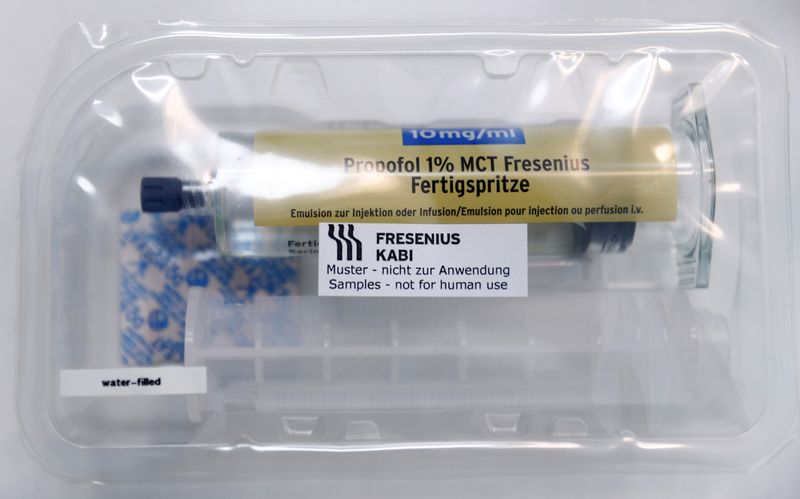
Fresenius Medical Care shares fell more than 3% after first-quarter U.S. same-market treatment growth slowed to 0.4%, missing full-year flat-growth guidance and overshadowing otherwise largely in-line results. Revenue was €4.61 billion versus €4.59 billion consensus, adjusted operating income was €467 million in line with estimates, and adjusted EPS rose 8% to €0.91. The company reaffirmed its 2026 outlook, but margin pressure, China headwinds, and €181 million in special items weighed on sentiment despite strong cash flow and buybacks.
The key signal is not the headline miss/match set but the quality of earnings: the business is increasingly leaning on one-off support and financial engineering to offset structural pressure in U.S. volumes and China sourcing. That is a classic late-cycle mix for a healthcare services platform — good reported cash generation today, but deteriorating visibility on the two operating levers that matter most: treatment growth and procurement economics. The market should treat the beat on cash flow and EPS as partially non-recurring, especially with buybacks masking softer underlying earnings power.
Second-order, the weakest read-through is for other dialysis and outpatient care names that rely on the same reimbursement and utilization backdrop. If U.S. same-market growth is stalling while full-year guide still assumes flat, the setup implies second-half reacceleration must come from either patient mix improvement or pricing, both of which are hard to force quickly. That raises the probability of further guidance pressure over the next 1-2 quarters if TDAPA-like support rolls off or clinic closures create temporary disruption beyond management’s modeled timeline.
The contrarian view is that the stock may not be cheap enough for a business with low organic elasticity and rising execution complexity. Buybacks can support per-share optics for several quarters, but they do not fix the underlying issue: the transformation program is destroying reported margin now in exchange for uncertain future savings, and China tender pressure could become a recurring drag rather than a one-time headwind. If the market is extrapolating stable full-year operating income, that looks too optimistic given the gap between reported and adjusted quality.
For broader market implications, this is mildly negative for TSM at the margin through the China procurement channel narrative only if healthcare capex and equipment sourcing remain under pressure, but the direct read-through is small. The real opportunity is relative value within healthcare services where companies with cleaner organic growth and less transformation noise should command a premium as investors rotate away from “earnings managed by adjustments” stories.
AI-powered research, real-time alerts, and portfolio analytics for institutional investors.
Request DemoOverall Sentiment
mildly negative
Sentiment Score
-0.15
Ticker Sentiment
