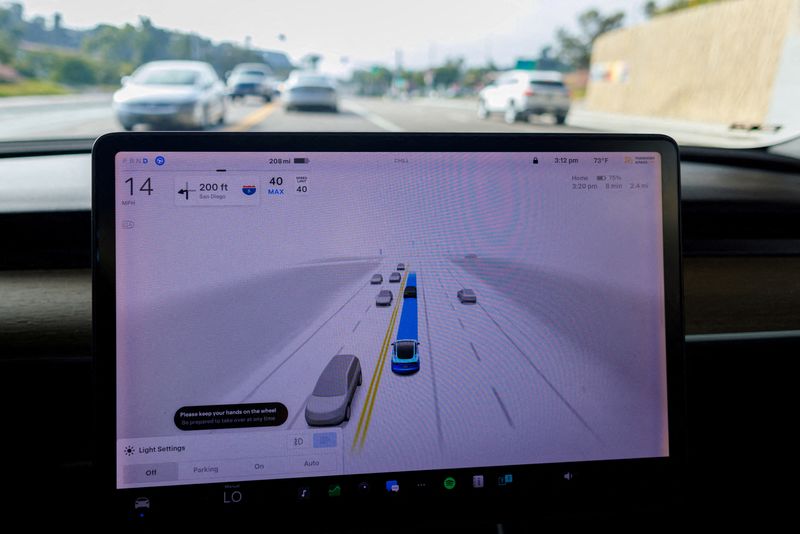
Tesla plans to expand Full Self-Driving (FSD) to additional international markets after the expected U.S. rollout of V14 Lite for HW3 vehicles. The rollout depends on technical validation, region-specific adaptations, and regulatory approvals, so Tesla gave no firm timeline. The update supports continued software coverage for HW3 owners and reinforces Tesla’s recurring-revenue software strategy.
This is less about near-term revenue and more about preserving the installed-base monetization model. Extending software support to older hardware reduces the risk that HW3 owners become a stranded cohort, which would have created a reputational overhang and accelerated skepticism around Tesla’s subscription/up-sell economics. The key second-order effect is that software revenue durability improves if management can keep a large legacy fleet “alive” long enough to convert a meaningful share into recurring FSD payers.
The international angle matters because it broadens the addressable pool without requiring a step-change in vehicle deliveries. However, the rollout is gated by region-specific validation and approvals, so the market is likely to overestimate the speed of monetization and underestimate the cost of localization, testing, and regulatory friction. In practice, the earnings impact is more likely to be a 2H26 story than a near-term catalyst, unless Tesla surprises with faster-than-expected approvals in Europe or parts of APAC.
The contrarian risk is that supporting HW3 may implicitly cap the premium Tesla can charge for newer hardware, because it signals software can be backported rather than requiring immediate fleet refresh. That can be positive for retention, but it also weakens the urgency of replacement-cycle demand. A more subtle bearish read is that if FSD remains heavily market-by-market, the company may continue to face a patchwork rollout that limits the multiple expansion investors hope for from a truly global autonomy platform.
From a competitive standpoint, this is mildly negative for legacy OEMs and ADAS suppliers that rely on Tesla’s software execution lag to justify their own autonomy narratives. If Tesla can demonstrate that older cars still participate in the AI/software upgrade path, it reinforces the perception that software-defined vehicles have higher lifetime monetization than hardware-first peers. The real stock reaction driver will be whether follow-up disclosures show accelerated attach rates or just a slow drip of regulatory milestones.
AI-powered research, real-time alerts, and portfolio analytics for institutional investors.
Request DemoOverall Sentiment
mildly positive
Sentiment Score
0.15
Ticker Sentiment
