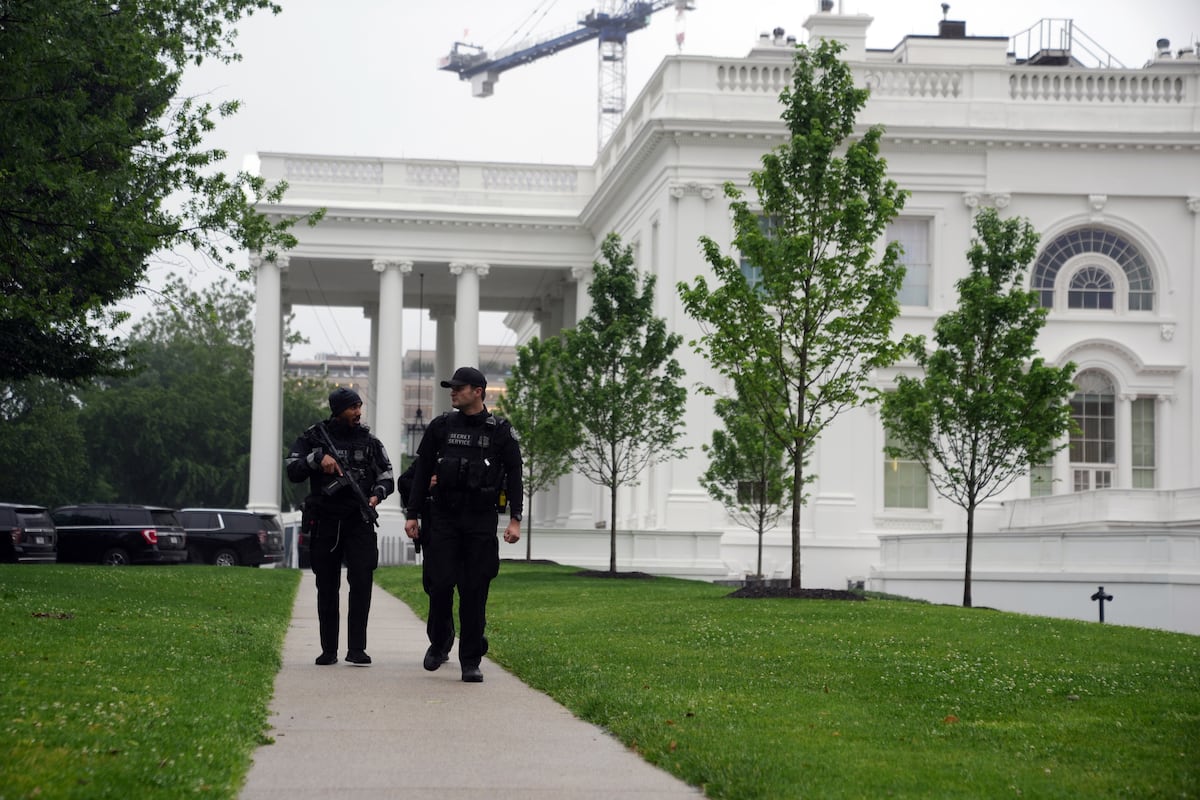
One person was killed after exchanging gunfire with U.S. Secret Service officers near the White House on Saturday evening, while President Donald Trump was inside the building. The incident underscores elevated security risk around a critical government location, but it is primarily a public safety and political-security event rather than a direct market-moving economic development.
This is not an isolated security headline; it is a regime reminder that the domestic threat environment remains elevated and highly visible. The near-term market read-through is a modest but broad risk-off impulse: higher implied volatility around DC-based events, slightly better bid for defense, surveillance, and physical security names, and a smaller but real political-premium embedded in sectors exposed to federal budget sensitivity. The second-order effect is not about direct damage, but about how quickly policymakers and agencies will be pushed toward visible spend on perimeter security, monitoring, and rapid-response capabilities.
The larger implication is for the election/security narrative: whenever a high-salience incident occurs near the executive branch, it tends to harden attitudes around domestic security, immigration, and law-and-order messaging. That can support contractors with exposure to federal protective services, access control, screening, and command-and-control software over the next 1-3 months, especially if the event becomes part of a broader campaign narrative. Conversely, any names tied to public-facing urban real estate, tourism, and event-driven foot traffic can see a small sentiment drag, though that effect usually fades quickly unless followed by additional incidents.
The contrarian view is that the initial market reaction may be overextended if investors assume a durable policy step-up from a single event. Historically, unless there is evidence of coordination or a repeated pattern, the spend response is often incremental and slow, translating into contracting cycles measured in quarters rather than days. The best trade is therefore not a blunt ‘buy defense’ basket, but a selective tilt toward companies with near-term procurement leverage and low execution risk, while fading any knee-jerk move in politically sensitive consumer or travel proxies once the headline premium decays.
AI-powered research, real-time alerts, and portfolio analytics for institutional investors.
Request DemoOverall Sentiment
strongly negative
Sentiment Score
-0.70
