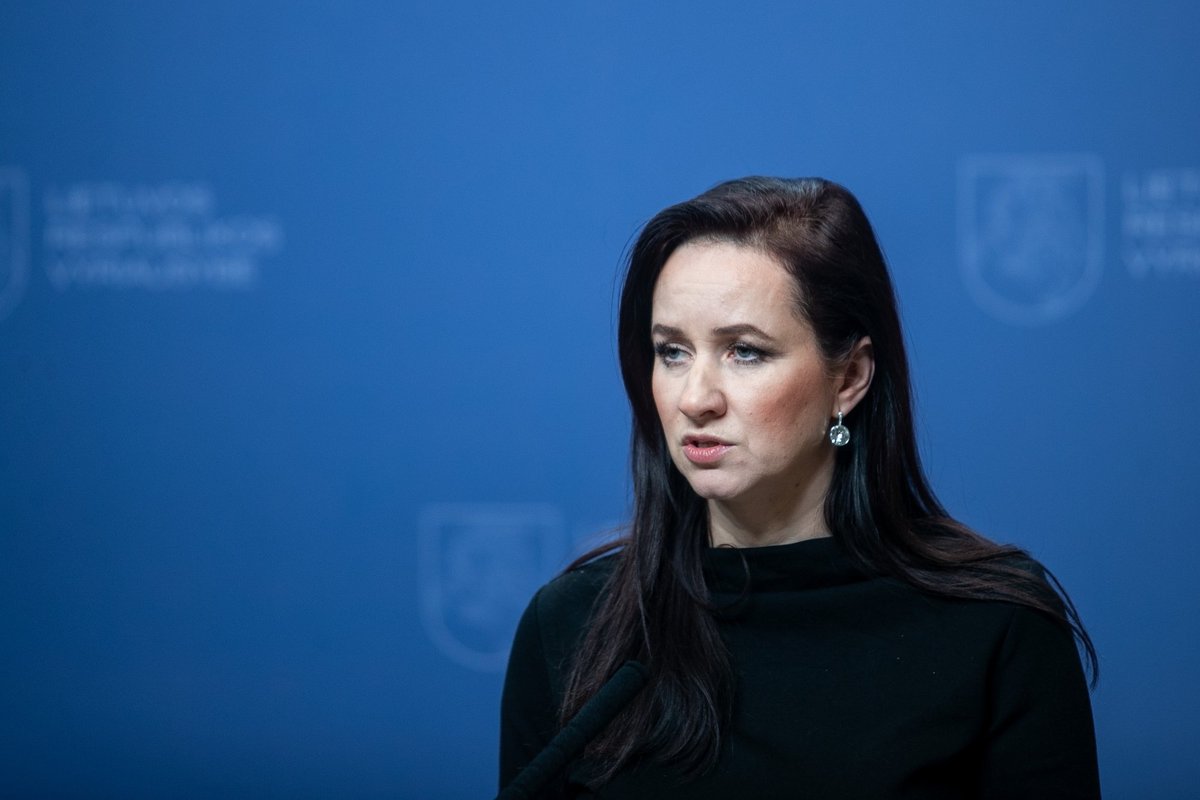
Lithuanian public broadcaster LRT faces a governance crisis after more than 400 employees expressed no confidence in the LRT Council amid contentious proposed amendments to the LRT law; the Council will consider collective resignation at a 20 January meeting, a move that under law would also force the management to resign. Prime Minister Ingrida Šimonytė (Ruginienė in article) and President Gitanas Nausėda signaled support for a reset and for the Cabinet to lead drafting a new bill to ensure independent editorial activity, while parliamentary debate was criticized and an unscheduled sitting to discuss the bill was cancelled. The situation raises political and regulatory uncertainty around public-broadcaster governance rather than direct financial implications, but could prompt legislative changes impacting media oversight and institutional stability.
Market structure: This is a localized governance shock to Lithuania’s public media with limited direct corporate winners, but it raises political-risk premia for Baltic-focused banks, telecoms and domestic advertisers. Expect a 10–50bp knee-jerk widening in short-term Lithuanian sovereign yields and a small (~1–3%) relative underperformance in Swedish banks with Baltic exposure (SEB, SWED) versus Nordic peers if tensions persist beyond 2–6 weeks. Cross-asset: safe-haven flows could push 2–5bp tighter in German bunds and lift EUR volatility; commodity impact is immaterial. Risk assessment: Tail risks include (A) rapid politicization leading to legislative limits on editorial independence and EU funding frictions (low-probability, high-impact) and (B) a protracted strike/brand damage to LRT reducing ad revenues and increasing fiscal backstop talk. Immediate window (days): headlines drive volatility; short-term (weeks): bond/cash-flow stress on local media and banks; long-term (quarters): governance reforms or EU intervention reset pricing. Hidden dependency: Baltic consumer sentiment and ad spend are levered to banking stress and credit lines from Nordic banks. Trade implications: Tactical plays favor small-duration sovereign and bank risk trades: buy 3–6M protection via iTraxx Europe if Lithuania-specific CDS available, or short 3-month futures/ETFs on SEB (SEB.ST) and SWED A (SWED-A.ST) sized 1–2% NAV each, paired with a 1–2% long in Nordea (NDA-SE) to isolate Baltic political risk. Use 1–3 month put spreads (10–20% OTM) on SEB/SWED to cap cost; add 0.5–1% allocation to long German bund futures if headlines worsen >30% probability of legislative escalation. Contrarian angles: Consensus will treat this as purely domestic; miss is that resignation + transparent rewrite could materially reduce political risk in 60–120 days, compressing spreads by 10–30bp and reversing bank underperformance. If you’re short Baltic exposure, size max 1–2% NAV and plan to cover if (a) Council resigns within 14 days or (b) Seimas publishes a bill that explicitly protects editorial independence — both are triggers to unwind quickly.
AI-powered research, real-time alerts, and portfolio analytics for institutional investors.
Request DemoOverall Sentiment
mildly negative
Sentiment Score
-0.25
