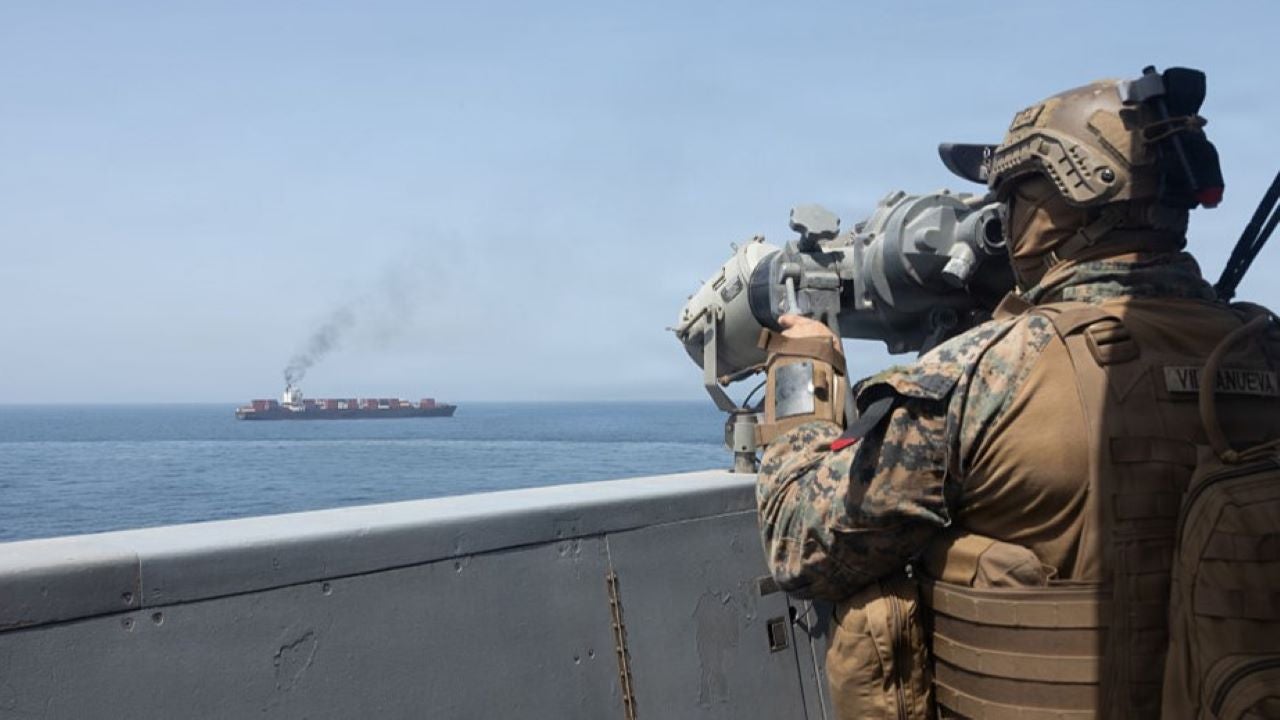
Iran reportedly fired upon two ships near the Strait of Hormuz, including a cargo vessel 8 nautical miles west of Iran and a container ship 15 nautical miles northeast of Oman, raising fresh disruption risk in a critical global shipping chokepoint. The incidents come as Trump extended the U.S. ceasefire with Iran until Tehran presents a unified proposal for talks, while initial Wednesday talks were cancelled. The escalation is likely to pressure shipping, insurance, and energy markets and keep risk sentiment defensive.
This is less a one-off headline than a credibility test on maritime risk premia. The immediate beneficiaries are not just energy producers but the entire security stack: naval contractors, ISR/surveillance vendors, and insurers/reinsurers that price Gulf transit risk daily. The second-order effect is wider than crude — even absent sustained volume disruption, a higher probability of “routine” harassment pushes freight rates, war-risk premiums, and inventory buffers up, which is mildly stagflationary for import-heavy industries and refinery feedstock logistics.
The key market issue is convexity: nothing has to be fully blocked for earnings damage to show up. If ship operators reroute, effective tanker supply shrinks, voyage times extend, and spot rates can gap higher within days; if cargo owners respond by building precautionary inventories, working capital needs rise over weeks. That tends to hit airlines, chemicals, and industrials first via fuel and input-cost pass-through friction, while upstream energy and defense names gain operating leverage with little volume risk.
The market may be underestimating how quickly this can become self-reinforcing. Even a brief lull can keep traders long volatility because the downside for shipping and energy-sensitive sectors is asymmetric, while the upside for security-related beneficiaries is capped only by budgetary lag. The main reversal catalyst is diplomatic signaling that materially lowers the probability of further maritime incidents; absent that, each additional incident increases the odds of a non-linear response from insurers, shipowners, and regional states within 1-3 weeks.
Contrarianly, the biggest miss is that this may be more positive for certain logistics and defense names than for crude itself. If the market is already pricing in some disruption, the sharper trade may be relative value: long assets that monetize persistent risk, short sectors that suffer from higher transport/fuel costs without pricing power.
AI-powered research, real-time alerts, and portfolio analytics for institutional investors.
Request TrialOverall Sentiment
strongly negative
Sentiment Score
-0.72
