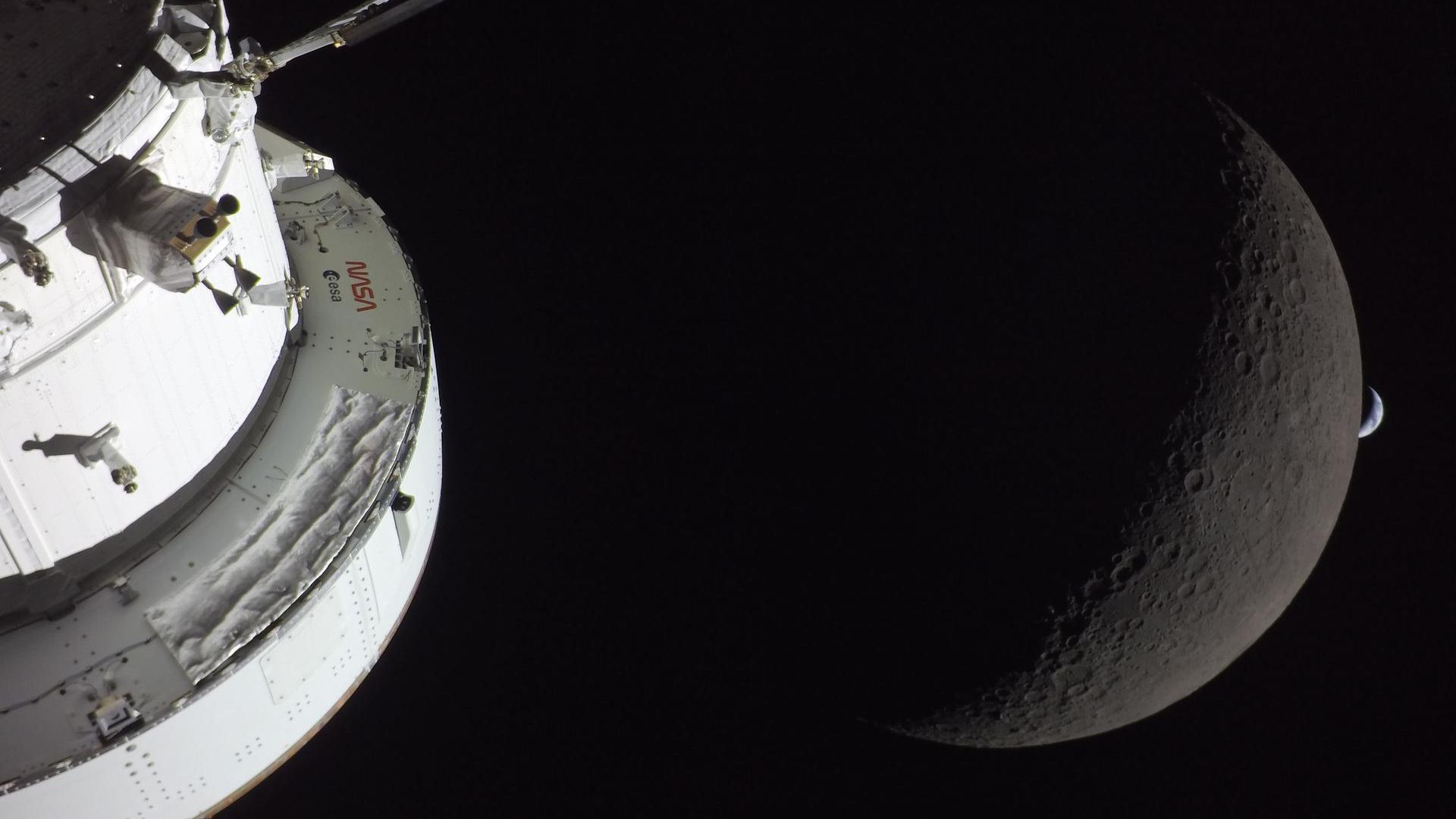
Artemis 2 and China’s Tiangong space station set a new record on April 6 for the farthest distance between humans, with Orion 'Integrity' reaching 260,754 miles (419,643 km) from Tiangong. The prior benchmark was Apollo 13 in April 1970, before any space stations existed. The article is primarily historical and scientific, with no direct financial or market-moving implications.
This is not a direct equity catalyst for ORN, but it is a useful signal for the funding and procurement backdrop in U.S. space infrastructure. The key second-order effect is that “record-setting” crewed lunar operations keep the Artemis narrative politically alive at a time when budgets are increasingly contested; that tends to support a multi-year floor under NASA-related services, test infrastructure, range operations, and launch-adjacent contractors even when flight cadence is lumpy.
The more interesting implication is competitive: as China’s crewed program becomes a peer benchmark, the U.S. is incentivized to sustain visible progress in cislunar operations, which typically translates into more spending on ground systems, safety certification, mission support, and infrastructure hardening rather than only on the marquee vehicle itself. That favors diversified defense/infrastructure primes with content across mission control, launch site services, and systems integration, while pure-play launch names remain more binary and milestone-driven.
Near term, this is mostly a sentiment catalyst rather than a revenue event. Over the next 3-12 months, the risk is political disappointment or schedule slippage that compresses expectations for Artemis-adjacent budgets; over 2-5 years, the opportunity is a broader space-industrial base re-rating as cislunar activity moves from symbolic to operational. The contrarian view is that headline prestige can mask procurement timing risk: unless mission tempo accelerates, the spend may remain episodic and more helpful to backlog than to near-term EPS.
For ORN specifically, there is no obvious direct read-through from the article, but the theme reinforces the value of owning infrastructure names with federal program exposure versus chasing pure space enthusiasm.
AI-powered research, real-time alerts, and portfolio analytics for institutional investors.
Request TrialOverall Sentiment
neutral
Sentiment Score
0.05
Ticker Sentiment
