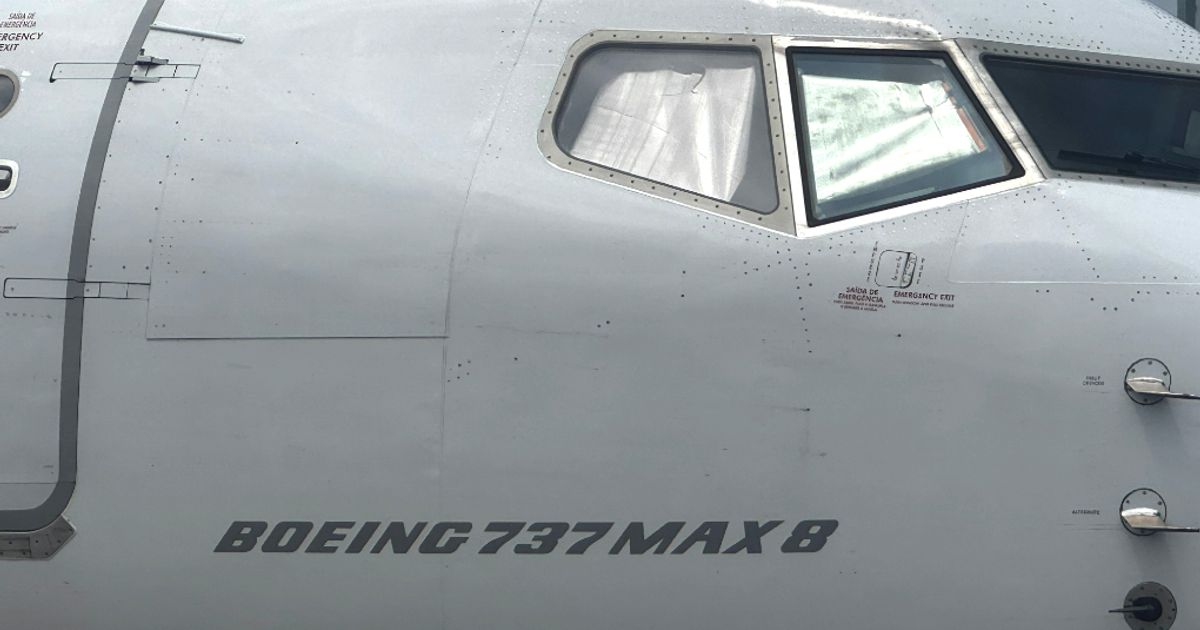
Boeing reported a strong Q4 with revenue of $23.95 billion (+57% YoY) beating consensus of $22.6 billion, led by 160 commercial airplane deliveries and commercial airplane revenue of $11.38 billion (consensus $10.72B). Q4 net earnings were $8.22 billion ($10.23 diluted EPS) and adjusted EPS was $9.92 versus an expected loss of $0.39, driven materially by a $9.6 billion gain from the Digital Aviation Solutions sale; full-year 2025 revenue was $89.5 billion (+34%) with net earnings of $2.24 billion and a record $682 billion backlog (>6,100 aircraft). The company completed the Spirit AeroSystems acquisition in December, but shares traded down ~1.8% as investors question the sustainability of profitability despite the beat.
Market structure: Boeing is the clear direct beneficiary—a record $682bn backlog and 600 deliveries in 2025 restore near-term revenue visibility and improve pricing leverage with airlines; OEMs and large-tier suppliers that can scale with Boeing (engines, landing gear) gain optionality while smaller specialty suppliers risk margin pressure as Boeing internalizes more content via the Spirit AeroSystems acquisition. The $9.6bn one‑time DAS gain inflates GAAP EPS; true operating earnings depend on delivery cadence and margin ex‑oneoffs, so commercial aircraft pricing power will hinge on Boeing converting backlog at or above ~50 aircraft/month industry-wide to keep lead times long and prices firm.
Risk assessment: Key tail risks are renewed safety/regulatory actions (groundings/FAA audits), Spirit integration overruns, or demand shock from a recession raising cancellation/default risk on widebody orders—each could wipe 10–30% off near‑term EBITDA. Immediate (days) risk is sentiment reversal as street marks out the one‑off; short term (weeks–months) depends on Q1 2026 deliveries and FY26 guidance cadence; long term (quarters–years) hinges on successful Spirit synergies, defense wins, and sustained airline demand. Hidden dependencies include aftermarket services margins and working‑capital funding needs that can swing Free Cash Flow by hundreds of millions.
Trade implications: For equity exposure, favor a capped asymmetric long on BA to capture backlog conversion while limiting downside: use a 12‑month call spread to control capital, and size modestly (2–3% portfolio). Hedge short‑term tail risk with 3‑month 5% OTM puts or collars; consider adding corporate credit exposure if Boeing 5‑10y senior spreads widen >30bps vs. A‑index as a high‑probability yield pickup. Reduce conviction in standalone mid/small suppliers that lose content share to Boeing vertical integration and reallocate into OEMs or aerospace dividend/IG credit.
Contrarian angles: Consensus celebrates headline EPS but underestimates execution risk—if the market demands two consecutive quarters of >150 deliveries before re‑rating higher, current price is vulnerable to mean reversion. The reaction may be underdone on downside (stock only −1.8% intraday despite earnings quality questions); historical parallels (post‑grounding recoveries) show the stock often rallies only after sustained delivery stability. Unintended consequence: Spirit integration could create short‑term supply bottlenecks that temporarily slow output—this is a buy‑the‑dip catalyst if resolved within 6–9 months, but a sell trigger if not.
AI-powered research, real-time alerts, and portfolio analytics for institutional investors.
Request DemoOverall Sentiment
moderately positive
Sentiment Score
0.50
Ticker Sentiment
