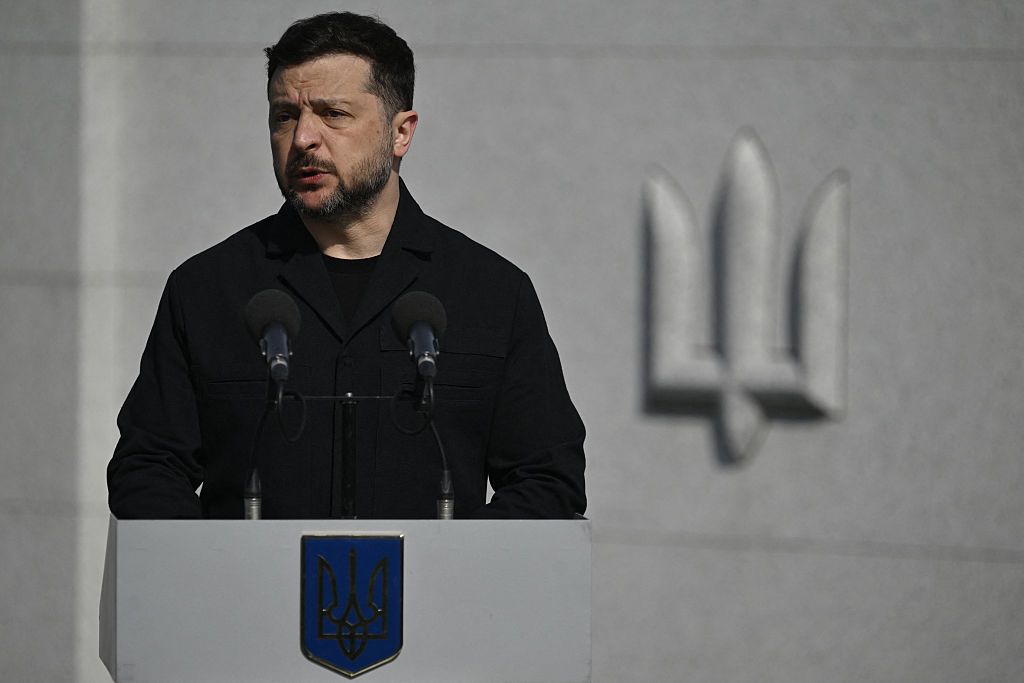
Zelensky said the window for effective peace talks with Russia may remain open until winter 2026, arguing Ukraine's battlefield position improved after regaining the initiative in December 2025. He said Russia is losing up to 35,000 soldiers a month and that renewed pressure on Putin could help restart negotiations, while U.S.-mediated talks have stalled and Washington's focus has shifted to the Middle East. The article also highlights continued Russian attacks on Ukraine's energy infrastructure and ongoing requests for additional U.S. air defenses, sanctions, and diplomacy.
The market implication is not a broad war-risk repricing, but a narrower timing trade: the next 3-6 months are the highest-probability window for diplomatic optionality, while the next winter reintroduces an energy-infrastructure shock premium. That creates a classic event-driven asymmetry for European assets exposed to Ukrainian power generation, grid repair, and air-defense replenishment — not because peace is likely, but because even failed talks can suppress the worst-case tail in near-term pricing.
The second-order effect is that Moscow’s escalation path likely shifts toward cheaper coercion: missile salvos, drone saturation, and infrastructure attacks rather than large territorial pushes. That is supportive for defense-adjacent suppliers with consumable inventory cycles and for European utilities that can pass through higher security and backup-power capex, but it is bearish for any early cyclicals levered to a clean postwar reconstruction narrative. Reconstruction trades may be premature here; the more durable monetization is in repair, hardening, and replacement, not greenfield rebuilding.
The contrarian read is that the negotiation window may actually reduce pressure on the most obvious winners from sustained conflict, because markets tend to front-run peace while underestimating how often talks simply reset the clock. If U.S. attention stays fixed elsewhere, Ukraine’s ability to convert battlefield momentum into leverage may decay faster than the headlines imply, making the setup less about a near-term settlement and more about intermittent escalation with periodic diplomatic false dawns. That argues for owning volatility rather than directionality.
AI-powered research, real-time alerts, and portfolio analytics for institutional investors.
Request TrialOverall Sentiment
neutral
Sentiment Score
-0.10
