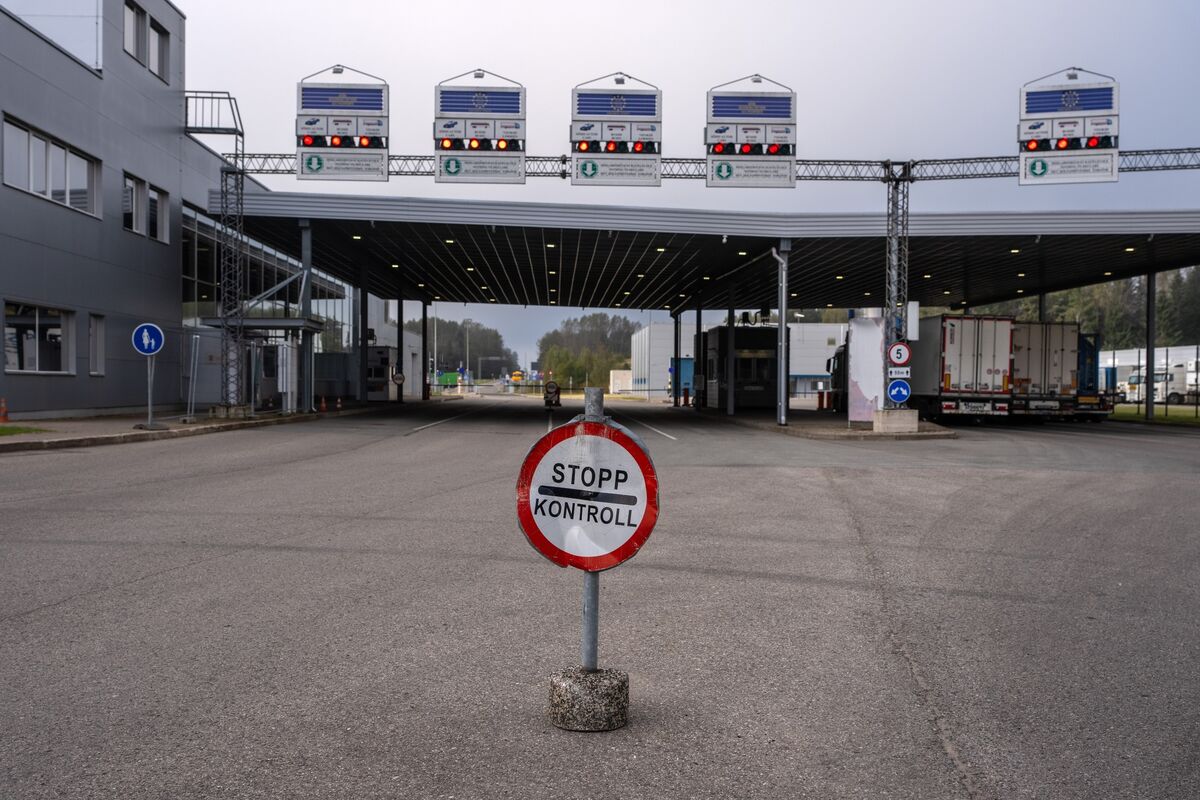
The article highlights the Baltics’ continued hard line on Russia, with Estonia, Latvia and Lithuania maintaining sanctions-era trade restrictions and rejecting a return to pre-war business ties. Estonian timber producer Puidukoda replaced more than half of its spruce and pine supply by shifting to 30 new Scandinavian suppliers after Russia shipments were cut off. The piece underscores ongoing supply-chain rerouting and geopolitical fragmentation, but it is primarily descriptive rather than market-moving.
The investable implication is not the headline sanction itself, but the permanent re-engineering of Baltic supply chains away from any Russia-linked input pool. That shifts bargaining power toward Scandinavian forestry, Baltic ports, Nordic ferry operators, and inland logistics networks that can absorb rerouted cargo flows; the second-order winner is whoever controls reliable cold-climate, short-haul maritime capacity. Over a 12-24 month horizon, this should support pricing power for compliant suppliers because buyers will pay a premium for certainty, traceability, and lower geopolitical risk.
The losers are the legacy intermediaries and commodity buyers whose working capital and freight costs rise when supply is fragmented. Even if unit costs only move a few percent, the real margin hit comes from higher inventory buffers, longer procurement cycles, and more frequent supplier qualification work — a persistent drag on operating leverage. For timber-adjacent industries, this is a hidden tax on throughput rather than a one-time shock, and it favors larger logistics platforms over small shippers.
Catalyst risk is asymmetric: a de-escalation in sanctions would not fully restore the old trade pattern because counterparties have already spent years de-risking vendor lists. That creates a structural floor under re-shoring/near-shoring and under non-Russian commodity flows. The contrarian miss is that the market may still think of sanctions as reversible price shocks; in practice, they often become durable network rewiring that survives the policy headline cycle by multiple years.
AI-powered research, real-time alerts, and portfolio analytics for institutional investors.
Overall Sentiment
mildly negative
Sentiment Score
-0.15
