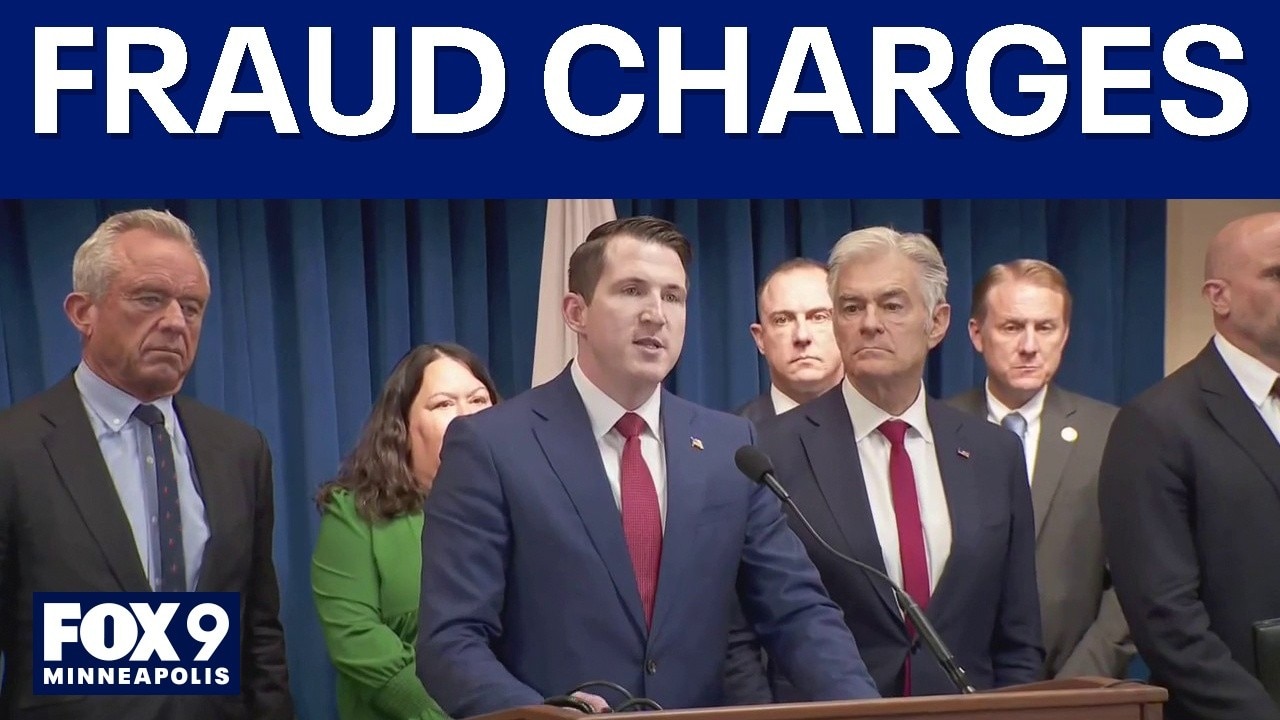
The DOJ announced fraud charges against 15 people in Minnesota over a scheme that allegedly targeted more than $90 million in taxpayer-funded Medicaid programs, including Housing Stabilization, autism, Integrated Community Support, and Individualized Home Supports. Prosecutors say the defendants billed for services that were inflated, unprovided, or impossible, with individual allegations ranging from $975,000 to $46.6 million in false claims. Federal officials also said they will expand health care fraud enforcement with 15 new trial attorneys and a new task force in Minneapolis.
The immediate market read is not about the accused entities so much as the signaling effect: state-administered, fee-for-service welfare channels are now politically toxic, and that raises the probability of a broader federal reimbursement squeeze. The second-order loser is the ecosystem of small, privately run providers that depend on rapid claim processing and light-touch oversight; even compliant operators should expect delayed payments, tougher documentation audits, and higher denial rates over the next 1-3 quarters. That tends to compress working-capital-dependent business models first, then revenue growth.
The bigger systemic risk is that this becomes the template for a national fraud sweep across Medicaid-adjacent programs. If CMS responds by tightening eligibility, cross-checking utilization, and slowing enrollment, the near-term effect is not just lower spend but a step-down in demand for outsourced care coordination, behavioral health, home health staffing, and billing/RCM vendors serving the lower end of the market. The political backdrop also makes this one of the few healthcare stories where both parties can justify action, so the downside duration is months, not days.
Contrarianly, the headline could be modestly bullish for scaled incumbent managed-care and large provider platforms. Public scrutiny usually forces a move from fragmented local contractors toward more centralized, software-driven administration with stronger compliance infrastructure, which favors larger payers, HCIT vendors, and national home-health operators with audit capacity. The better short is not healthcare broadly, but the subscale gray-zone operators whose margins depend on lax supervision; the better long is anything that monetizes fraud detection, claims integrity, and prior-auth workflows.
AI-powered research, real-time alerts, and portfolio analytics for institutional investors.
Request DemoOverall Sentiment
extremely negative
Sentiment Score
-0.92
