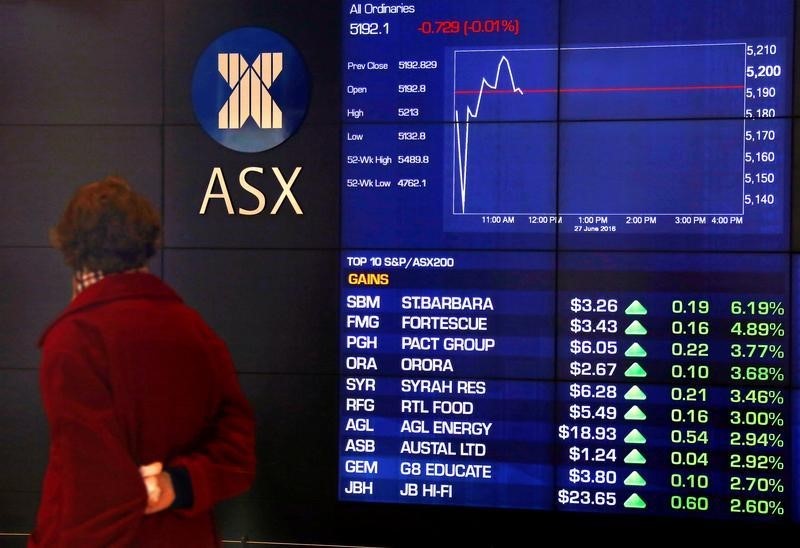
Worley now expects about A$60 million of full-year underlying operating earnings impact from the Middle East conflict, nearly double its prior A$30 million-A$40 million estimate. The company also flagged an additional A$50 million translation hit from a stronger Australian dollar, with ongoing project delays but no cancellations so far. Shares fell as much as 10.7% to A$10.96 on the revised outlook.
WOR is a good reminder that geopolitical disruption is rarely a one-off margin hit; it usually shows up twice, first as project slippage and then as a mix shift toward lower-quality backlog. The bigger issue is not the absolute earnings drag but the probability that delayed awards in the Middle East bleed into FY26, which can compress utilization across engineering teams and hurt bid discipline globally. In this kind of environment, the first-order loser is the contractor with the most exposed delivery cadence, while less geo-sensitive peers with cleaner domestic order books can quietly take share.
FX is the second-order kicker here. A stronger AUD does not just reduce reported earnings; it also makes offshore-origin revenue less valuable while leaving much of the cost base sticky, so the operating leverage works against WOR in both nominal and reported terms. If the AUD remains near highs for another 1-2 quarters, consensus may still be too slow to mark down forward margins because project delays can mask the issue until awards convert.
The market may be underestimating how quickly this becomes a valuation problem rather than a temporary noise issue. Engineering names often trade on backlog visibility, and when visibility weakens simultaneously from geopolitics and FX, the de-rating can persist for months even if the fundamental damage is only mid-single-digit percentage points. The contrarian view is that a 10% air-pocket may be enough to flush out weaker hands, but until there is evidence of new awards re-accelerating, the path of least resistance is lower.
Near term, the catalyst window is the next two reporting cycles: any further project delay commentary or FX-driven guidance cuts would likely force estimate revisions. A reversal would require either a de-escalation in the Middle East that restores award timing or a softer AUD that relieves translation pressure; absent that, the setup favors selling rallies rather than bottom-fishing.
AI-powered research, real-time alerts, and portfolio analytics for institutional investors.
Request DemoOverall Sentiment
moderately negative
Sentiment Score
-0.45
Ticker Sentiment
