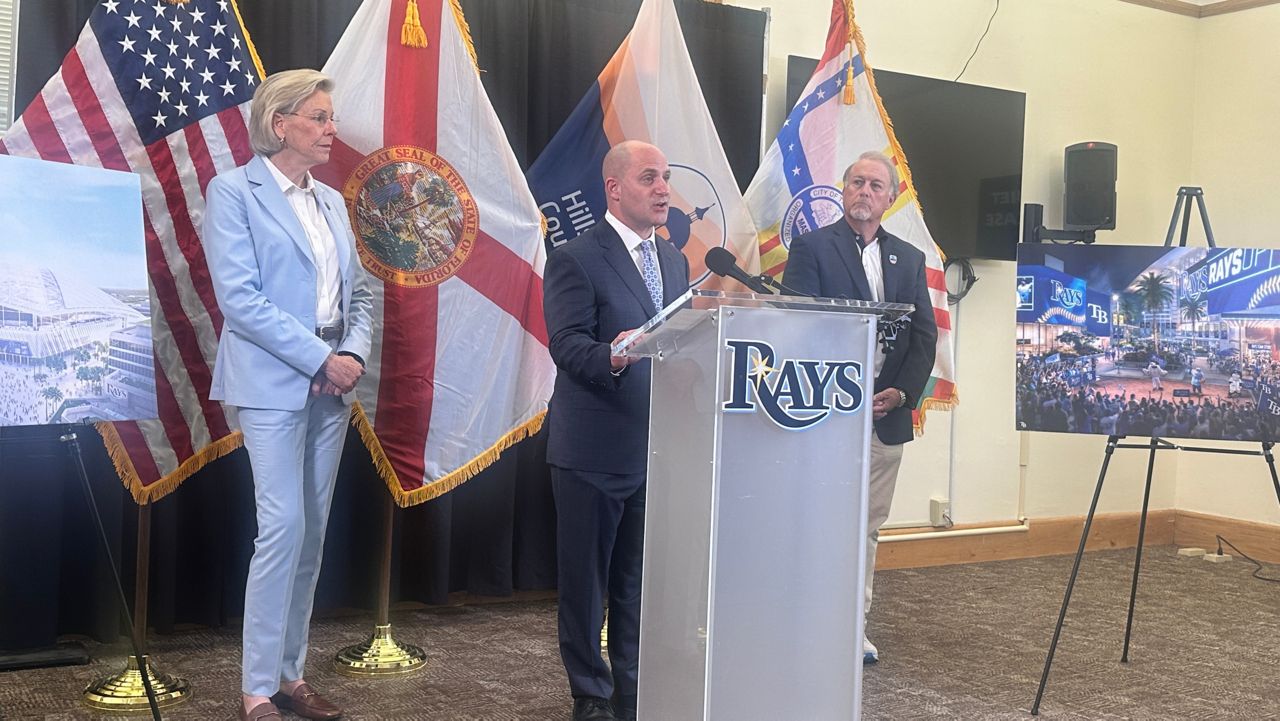
Tampa Bay Rays officials and local leaders outlined a proposed $2.3 billion stadium deal that would include nearly $976 million in public funding. Officials said the project could generate $55 million in economic impact, create 12,000 jobs, and would not require tax increases, while also emphasizing protection of Hillsborough County’s AAA credit rating. The memorandum of understanding remains non-binding, and county/city meetings plus a college ground-lease vote are scheduled next week.
The first-order read is pro-development, but the more important market signal is that local officials are explicitly subordinating economic upside to rating preservation. That usually means financing structures will be engineered to minimize near-term visible fiscal stress, which reduces the probability of an abrupt credit event but increases the chance of slow-leak taxpayer exposure through land, infrastructure, and operating subsidies over several budget cycles.
The second-order winner is not the team asset itself but the adjacent real-estate ecosystem: contractors, landholders, hospitality, and transit-linked parcels could see option value re-rated if the project advances through approvals. The loser is any competing venue district or underutilized commercial footprint in the same metro area; the development narrative tends to cannibalize discretionary capital and political attention, so nearby landlords without redevelopment optionality may face a relative valuation headwind.
The key risk is governance rather than economics. A non-binding framework with stated material deficiencies creates a months-long review window in which cost inflation, lease terms, or a public backlash can still derail the process; that makes this a catalyst-rich but binary path. If cost estimates continue to drift higher, the political burden shifts from “public-private partnership” to “hidden subsidy,” which would likely pressure county/city approval probabilities and widen spreads in any financing tied to the district.
The contrarian angle is that the market may be overpricing the headline job/economic-impact numbers while underpricing execution risk and the time value of delayed ground truth. Stadium projects often create visible construction activity but only modest incremental net-new regional demand after substitution effects are netted out, so the real equity upside sits in parcel assembly and redevelopment rights, not the venue economics themselves. Expect the strongest signal over the next 1-3 months to come from agenda language and lease disclosure, not the MOU headline.
AI-powered research, real-time alerts, and portfolio analytics for institutional investors.
Request DemoOverall Sentiment
neutral
Sentiment Score
0.15
