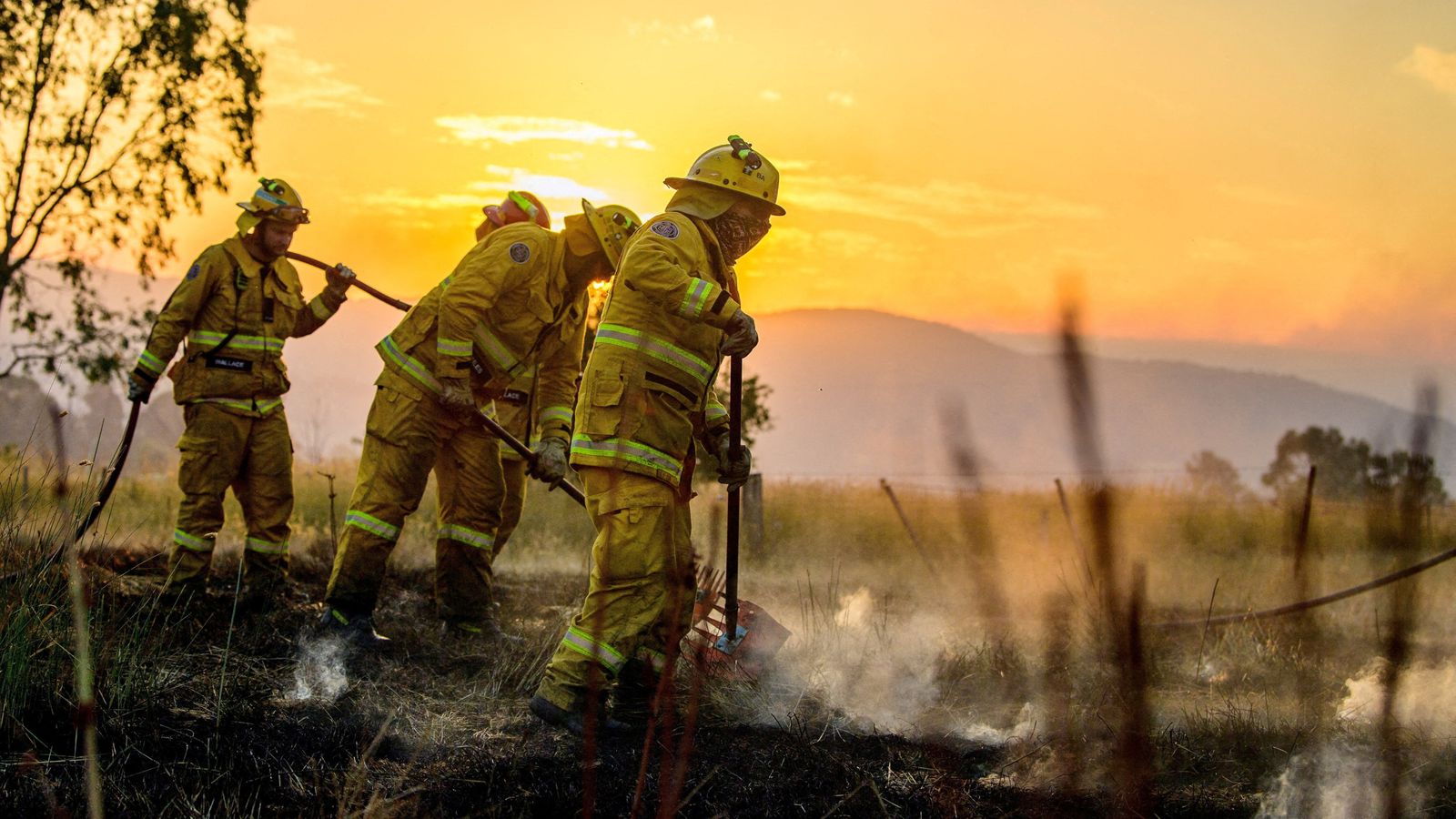
Severe bushfires stretching across southeastern Australia have burned more than 860,000 acres in Victoria since midweek, destroyed over 300 structures and cut power to thousands, while human remains were found beside a vehicle in Longwood about 70 miles north of Melbourne. Authorities report more than 30 active fires in Victoria and neighboring New South Wales at high danger ratings; firefighters warn containment will take weeks, and Prime Minister Anthony Albanese has pledged emergency funding—outcomes likely to drive near-term local economic disruption, insurance losses and pressure on power and emergency-service infrastructure.
Market structure: Immediate winners are building-materials and construction contractors (Boral BLD.AX, CSR.CSR.AX, James Hardie JHX.AX) from reconstruction demand; losers are domestic property insurers (IAG.IAG.AX, SUN.AX, QBE.QBE.AX) facing claims and higher loss ratios. Pricing power will shift short-term to materials suppliers (potential volume uplift of 10–25% over 3–12 months) and to reinsurers for next renewals; insurers will seek double-digit premium increases and tightened underwriting within 6–12 months.
Cross-asset impact: Expect AUD weakness of ~1–3% in days as risk-off flows hit Australian assets; short-term safe-haven demand pressures sovereign yields lower but fiscal issuance for relief could raise spreads over quarters. Diesel and emergency fuel prices should rise 3–7% near-term, and cat-bond spreads/ILS risk premia will widen, increasing volatility in reinsurer equities (MUV2.DE, SREN.S).
Risk assessment: Tail risks include systemic insurer solvency strains prompting regulatory capital injections or policy moratoria (low-probability, high-impact across 1–6 months) and a prolonged heatwave causing repeated loss events over seasons. Hidden dependencies: reinsurance renewal dates, availability of skilled construction labor, and Chinese raw-material shipments — each can amplify or blunt recovery; key catalysts are government relief package size (threshold A$1bn) and Q1 insurer earnings.
Trade implications & timing: Favor near-term long exposure to building materials and infrastructure for 3–12 months and short selective insurers for 1–6 months while hedging AUD/Fuel risk. Use options to cap downside: buy put spreads on AUD and buy call spreads on selected materials names to express reconstruction exposure without open-ended downside.
AI-powered research, real-time alerts, and portfolio analytics for institutional investors.
Request DemoOverall Sentiment
strongly negative
Sentiment Score
-0.60
