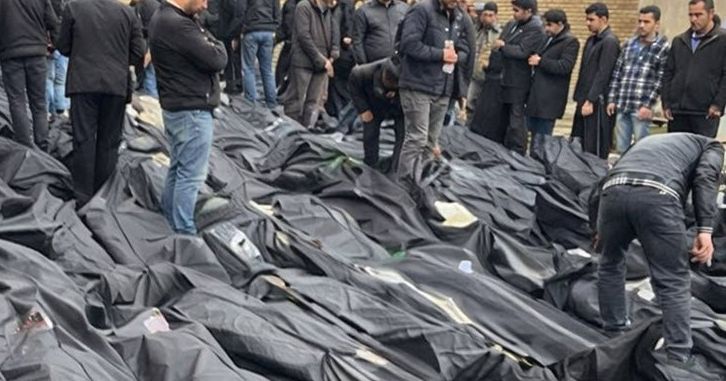
Iran’s January 2026 crackdown reportedly resulted in thousands of deaths, with official figures near 3,000, rights groups alleging at least double that, and Iran International citing more than 36,000 based on internal briefings. The response included live fire, snipers, hospital detentions, body-handling restrictions, and targeted internet shutdowns, indicating a highly coordinated repression campaign. The article highlights a major domestic political crisis with significant geopolitical implications and elevated risk for the broader emerging markets backdrop.
The investable read-through is not just “Iran risk up,” but a deterioration in the state’s operating model: faster, more lethal suppression plus better information control lowers the probability that unrest self-organizes into a negotiated opening. That usually strengthens hardliners in the near term, but it also raises regime fragility over a 6-18 month horizon because it substitutes coercion for legitimacy and deepens elite dependence on security services, which tends to crowd out reform and policy flexibility.
For markets, the immediate second-order effect is a higher Iran premium across Gulf risk assets, shipping, and cyber/telecom security budgets, even without a direct commodity shock. The bigger medium-term issue is that domestic instability increases the tail risk of asymmetric retaliation, covert disruption, or miscalculation in the Strait of Hormuz; the market often underprices this until a catalyst forces repricing, then volatility gaps higher very quickly. Countries and corporates tied to regional project finance, aviation, and cross-border logistics are more exposed than headline country indices imply.
The information blackout is itself a catalyst for persistent uncertainty: when verification collapses, every subsequent incident can be framed as escalation, which is bullish for defense, satellite imagery, secure comms, and cyber monitoring providers. The contrarian point is that the crackdown may reduce near-term protest frequency enough to compress headline risk premia, so the best trade is not a blanket short-beta EM position, but selective long volatility and long defense/cyber against regional travel/logistics names that depend on stable Gulf traffic.
Over 3-12 months, the key reversal trigger is an external shock that forces the regime to trade repression for economic stabilization — sanctions relief, a controlled elite reshuffle, or a tacit security bargain. Absent that, the base case is a colder, more securitized Iran with periodic bursts of unrest and a structurally higher tail risk premium.
AI-powered research, real-time alerts, and portfolio analytics for institutional investors.
Request TrialOverall Sentiment
extremely negative
Sentiment Score
-0.92
