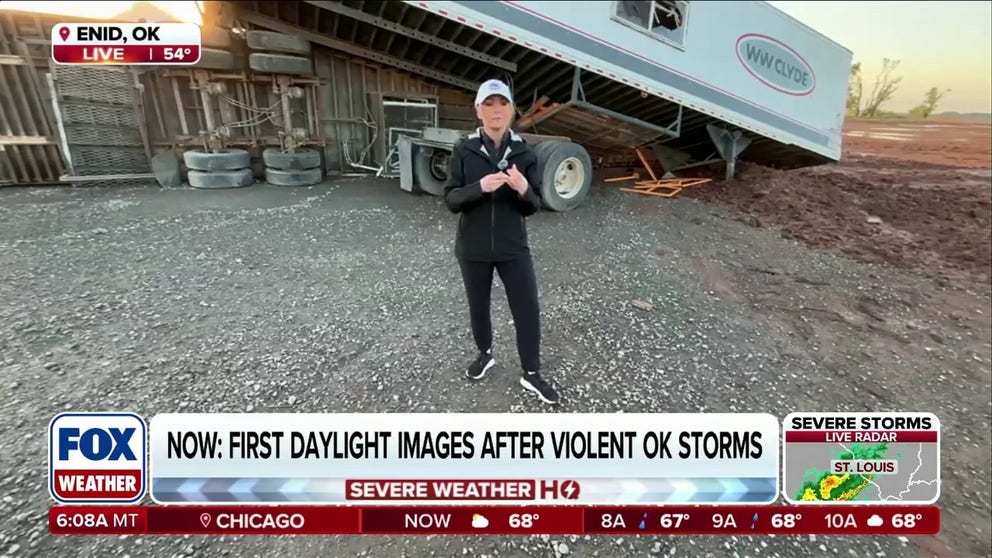
A dangerous tornado tore through Enid, Oklahoma on Thursday night, prompting a Tornado Emergency for Southeast Enid and forcing Vance Air Force Base to remain closed until further notice. Officials reported only minor injuries so far, but secondary searches continue and damage assessments are still underway, including in the Grayridge area and near the base. The event is materially negative for the local community and base operations, though the broader market impact should be limited.
The immediate market read is not the headline damage, but the forced friction on mission-critical infrastructure. A closed Air Force base plus utility restoration creates a short-duration demand shock for local logistics, fuel distribution, repair crews, temporary housing, generators, and telecom restoration; those revenues tend to accrue to incumbent regional providers with existing emergency response contracts, not broad-market names. The bigger second-order effect is execution risk: once access roads and power are impaired, inspection/insurance timelines slow, which pushes cash outflows into the next 1-3 weeks while claim recognition and federal/municipal reimbursement can take months.
From a trading standpoint, this is a classic localized disaster where the cleanest upside sits in supply chain bottleneck relief rather than obvious "rebuild" beta. Diesel, portable power, roofing, and industrial equipment rental names can see a temporary utilization spike, but the market usually overprices the duration of that bump; the more durable winners are firms with sticky municipal, utility, or DoD vendor relationships that can monetize emergency work without meaningful incremental SG&A. The defense angle is subtle: if base operations are disrupted longer than expected, readiness and training schedules may be deferred, creating a small but real near-term headwind for on-base support contractors even if it doesn’t change annual guidance.
The contrarian view is that the equity market may do too little with this event because it is geographically contained and not a national macro shock. However, that misses the compounding effect of repeated severe-weather events on regional utility maintenance capex, distribution resilience spending, and insurance loss inflation across the southern Plains. If severe weather persists into the weekend, the incremental catalyst is not the tornado itself but the likelihood of wider outage duration and a larger commercial interruption bill, which can matter more than physical damage totals for earnings revisions.
AI-powered research, real-time alerts, and portfolio analytics for institutional investors.
Request TrialOverall Sentiment
strongly negative
Sentiment Score
-0.55
The highest-probability risk is not a direct listed-equity repricing, but a longer-tail increase in claims severity and municipal repair backlog that pressures regional insurers and utility O&M margins over the next quarter. Any sign that power/water restoration extends beyond 72 hours should raise concern that the event is becoming a multi-day operational disruption rather than a one-night damage event, which would meaningfully increase the odds of second-round economic losses.
