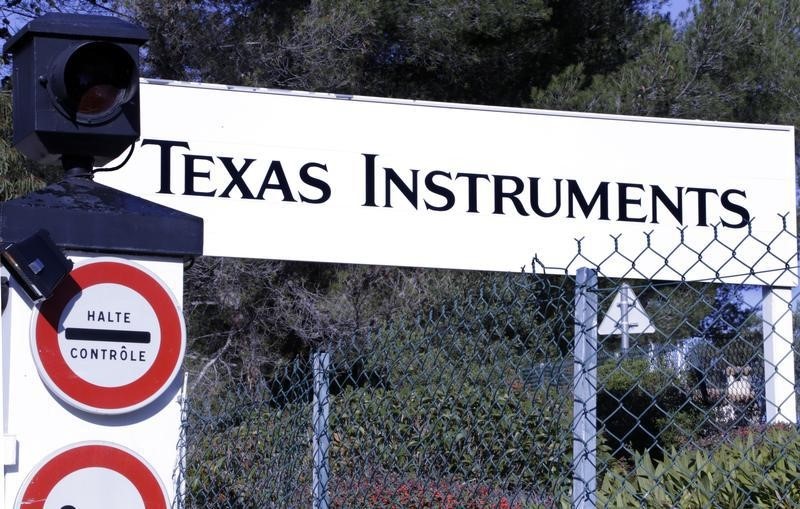
Texas Instruments disclosed that Senior Vice President Gary Mark sold and then exercised 13,689 shares on April 30, 2026, leaving him with 45,547 directly held shares. The article also highlights strong first-quarter results that beat expectations by roughly $300 million to $335 million in revenue and by $0.32 to $0.34 in EPS, prompting multiple analysts to raise price targets to $278-$320 while maintaining Buy ratings. The tone is constructive for TXN fundamentals, though the insider transaction itself is routine and the stock is already trading near its 52-week high.
TXN’s setup is a classic “good business, rich stock” regime: the operating print is supporting estimate revisions, but the equity is now priced for sustained outperformance across multiple end markets. The bigger second-order effect is not the insider sale itself; it is that management is monetizing delta while still retaining meaningful exposure, which usually signals confidence in the business but less confidence in near-term multiple expansion from already-elevated levels.
What matters next is whether industrial and data-center strength can keep offsetting the longer-cycle softness in other semiconductor pockets. If that mix holds for another 1-2 quarters, TXN can defend premium valuation; if it merely normalizes, the stock is vulnerable to de-rating even with flat-to-up EPS because the market is already paying for durability. In semis, rich analog names tend to lag when investors rotate from “quality growth” to “cycle recovery” because the multiple compression can overwhelm incremental earnings beats.
The hidden winner here may be peers with similar analog exposure but lower expectations and cheaper multiples. If TXN becomes the bellwether for a broad industrial demand rebound, the trade is to own the second derivative beneficiaries rather than chase the leader at peak optimism. The main risk to this view is a continued multi-quarter reacceleration in factory automation, power, and edge infrastructure demand that forces further estimate revisions and keeps the premium intact.
Contrarian view: the consensus is treating the earnings beat as proof of a new secular upcycle, but the stock’s implied bar is much higher than the business’s growth rate. With valuation already stretched, even strong execution may only justify sideways price action unless margins inflect materially; that creates a better risk/reward for relative-value or options structures than outright long equity.
AI-powered research, real-time alerts, and portfolio analytics for institutional investors.
Request DemoOverall Sentiment
mildly positive
Sentiment Score
0.35
Ticker Sentiment
