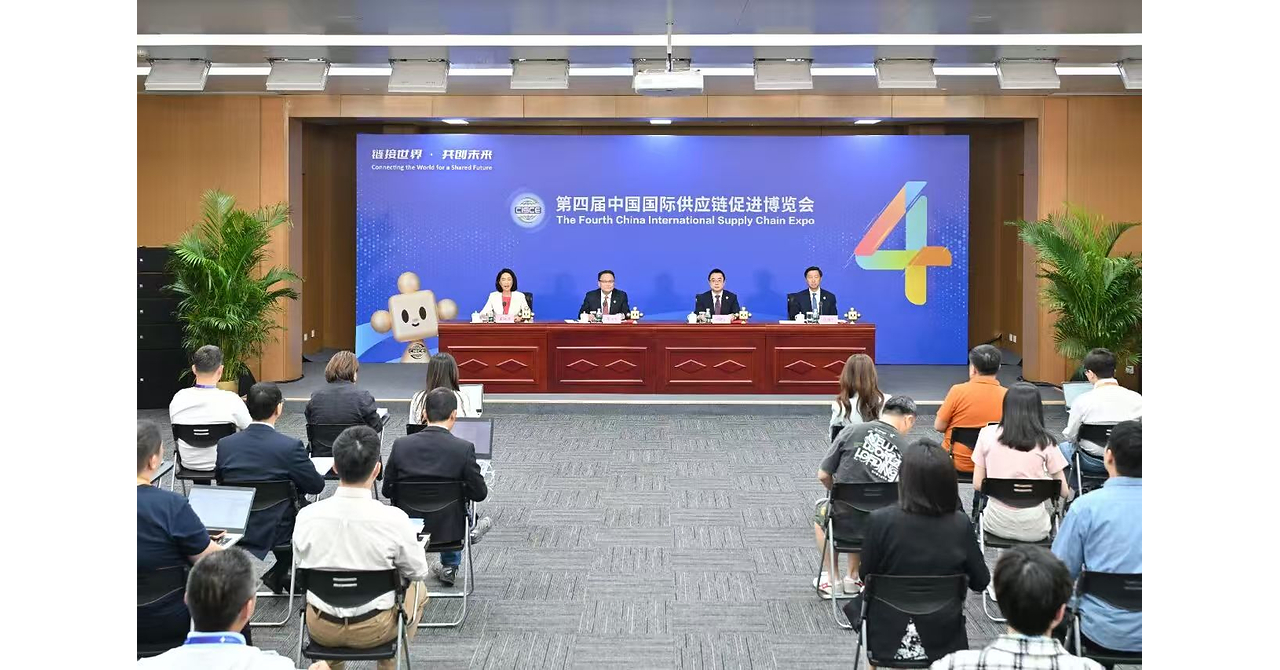
Le 4e CISCE à Pékin a attiré 676 exposants de 85 pays, dont 36,5% d’acteurs étrangers, avec une hausse de 29,7% des délégations commerciales à 223. Le salon a aussi lancé l’initiative « CISCE numérique et intelligent » et présenté 161 nouveaux produits/technologies, notamment dans un espace dédié à l’IA. Les réservations anticipées pour la 5e édition progressent de 12,7% (115 lettres d’intention), soutenant l’activité de coopération internationale sur la chaîne d’approvisionnement.
This reads more like a coordinated signaling event than a fresh earnings catalyst, but the market implication is that China is still trying to anchor itself as the default node in global manufacturing and supplier discovery. That matters most for industrials with China-facing order books: the near-term effect is not revenue surprise, but lower perceived probability of an abrupt supply-chain reroute, which supports utilization and pricing power for domestic logistics, automation, and industrial software ecosystems. For multinationals, the second-order effect is that “de-risking” may remain a slogan faster than a capital-allocation reality, especially for firms that still need China scale to hit ROIC targets.
The more tradable signal is in sentiment and capital access rather than immediate trade flows. A record attendance/multi-year booking backdrop suggests private-sector participants are still willing to commit to China-linked supplier relationships, which should modestly support selected China industrials and logistics proxies over the next 1-3 months if policymakers do not re-escalate tariffs or export controls. The AI-themed expansion is also relevant: it reinforces the idea that Chinese industrial AI is moving from demo to procurement narrative, which can lift domestic automation beneficiaries while keeping pressure on foreign vendors whose China exposure depends on local partnerships.
The contrarian point is that this is probably underwhelming for the broad market but potentially meaningful at the margin: consensus is likely to dismiss it as exhibition theater, yet the real insight is persistence of network effects in supply chains. The thesis breaks if the next catalyst is a U.S.-China policy shock, renewed export restrictions, or evidence that foreign attendance does not convert into actual purchase orders over the next quarter. Absent that, the move is more about preserving China’s share of global industrial decision-making than generating a discrete one-day price reaction.
AI-powered research, real-time alerts, and portfolio analytics for institutional investors.
Request DemoOverall Sentiment
mildly positive
Sentiment Score
0.25
