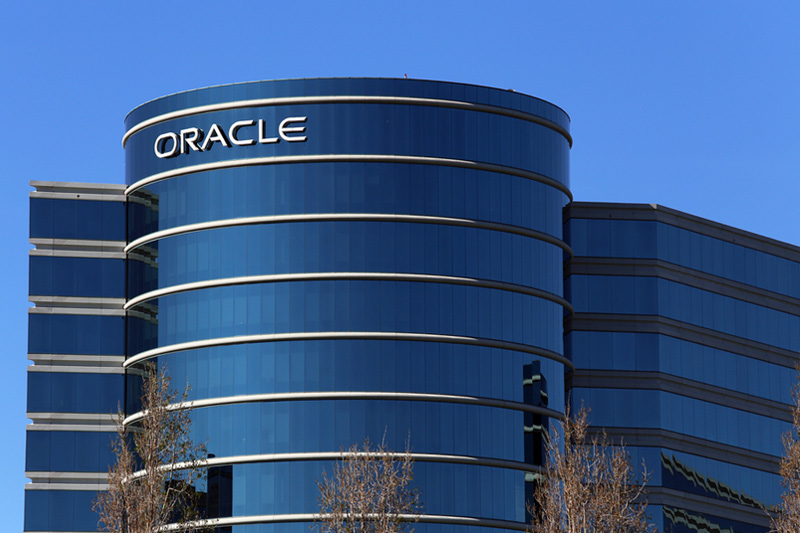
Oracle reported fiscal Q3 revenue of $17.2B versus a $16.9B consensus, with Infrastructure-as-a-Service revenue up 84% YoY to $4.9B and Cloud Database growth accelerating 35% YoY. The stock has fallen ~45% over six months and trades at $159.16 (52-week high $345.72); Argus cut its price target to $225 from $384 and Stifel cut PT to $220 while Mizuho and others remain bullish (Mizuho PT $400). Management raised guidance, increased FY2026 capex and debt to expand cloud capacity to meet strong demand for generative AI, and 16 analysts have raised earnings estimates despite some valuation concerns.
Oracle’s push to become the enterprise “steward” of data and its multicloud distribution deals create a two-tier capture: hyperscalers get model hosting economics while Oracle captures higher-margin management, support and data-control annuities. The obvious beneficiary chain is server/accelerator OEMs and memory vendors — incremental AI workloads translate into sustained hardware refresh cycles rather than one-off migrations, extending the monetization window beyond a single migration project.
The immediate execution risk is capacity and go-to-market cadence: elevated capex and incremental debt buy time but compress free cash flow for quarters, making the story binary over a 6–18 month window — either backlog converts as customers ramp AI workloads or enterprise buyers pause while hyperscalers bundle cheaper model access. Market catalysts to watch are explicit capacity utilization disclosures, large multi-year enterprise AI contracts (including revenue recognition timing), and any hyperscaler moves to bundle first-party AI models into infra credits.
Consensus is underweighting the stickiness of enterprise data governance and the resulting switching friction: customers with regulated or sensitive data are more likely to accept higher unit costs for demonstrable data control, which favors Oracle’s positioning and could support sustained ASPs for database plus AI stack. Conversely, the crowd is overlooking a credible downside path where hyperscalers win via model bundling and developer ecosystems — that would depress pricing and materially extend the conversion timeline.
If Oracle successfully converts a material tranche of the backlog into recurring AI workloads, expect a multi-quarter re-rating driven by margin expansion on software/managed services and higher gross leverage on capex; failure to do so would show up quickly in bookings-to-revenue conversion and push multiple compression. Timeframes: watch for 3–6 month signals in bookings cadence and 6–18 month signals in capacity utilization and free cash flow trends.
AI-powered research, real-time alerts, and portfolio analytics for institutional investors.
Request DemoOverall Sentiment
moderately positive
Sentiment Score
0.35
Ticker Sentiment
